
Identifying the best countries for property investment requires a forensic analysis of rental yields, capital growth prospects, tax efficiency, and regulatory stability. In an era of shifting economic tides, savvy investors must look beyond familiar territories to uncover opportunities that deliver both immediate income and long-term appreciation. This guide moves past the hype to provide a data-driven breakdown of the world's most compelling property markets.
We compare established strongholds like the United Kingdom with high-growth emerging destinations such as Turkey, offering a clear-eyed view of the risks and rewards each presents. Our methodology, grounded in economic data from bodies like the ONS and local housing authorities, prioritises fundamental drivers over fleeting trends. This ensures you have the actionable intelligence needed to build a resilient global portfolio.
Each entry provides a concise investment thesis, covering everything from rental yields and capital growth forecasts to foreign ownership rules. Whether you are a first-time international buyer seeking a high-yield buy-to-let or an experienced investor diversifying assets, this analysis will illuminate the optimal path forward, helping you navigate complex markets with confidence.
1. Portugal – High Yield & Golden Visa Gateway
Portugal has firmly established itself as one of Europe's premier destinations for property investment, offering a potent mix of lifestyle appeal and strong financial incentives. Its inclusion as one of the best countries for property investment stems from robust rental yields, a favourable tax environment, and the sought-after Golden Visa programme.
The Investment Thesis
The core appeal lies in Portugal's economic stability within the EU, coupled with property prices that remain competitive compared to other Western European hubs. Strong tourism and a growing expatriate community fuel high demand for rentals, pushing gross rental yields to an attractive 4-7% in prime urban centres like Lisbon and Porto.
Beyond rental income, the country's Golden Visa programme offers a direct route to EU residency for non-EU nationals through a qualifying property investment, typically starting from €280,000 in designated low-density areas. This dual-purpose potential makes it ideal for those seeking both a tangible asset and enhanced global mobility.
Actionable Investor Strategy
- For Yield-Focused Investors: Target high-demand neighbourhoods in Lisbon (e.g., Príncipe Real) or Porto’s riverside districts. A two-bedroom apartment in these areas can generate significant rental income.
- For Capital Growth & Residency: Explore commercial properties or regeneration projects qualifying for the Golden Visa. Purchasing a share in a hotel refurbishment project in the Algarve can meet the investment threshold while tapping into the booming tourism sector.
- Tax Optimisation: Investigate the Non-Habitual Resident (NHR) tax regime if you plan to become a resident. It offers significant tax benefits on foreign-sourced income for a ten-year period.
Before committing, it is crucial to understand the nuances of the market. For a deeper dive, you can find valuable guidance on investing in overseas property. Always factor in transaction costs, which typically range from 8-10% of the purchase price, and research local Alojamento Local (short-term let) licensing restrictions.
2. United States – Diverse Markets & High Absolute Returns
The United States property market remains the world's largest and most diverse, offering a scale unmatched by any other single country. Its strength as one of the best countries for property investment comes from its deep, liquid markets, transparent legal systems, and a multitude of investment strategies, from high-yield rentals in the Midwest to significant capital appreciation in coastal tech hubs.

The Investment Thesis
The core investment appeal is the ability to tailor a strategy to specific financial goals. Investors seeking strong cash flow can find gross rental yields of 7-12% in stable secondary markets like Memphis, Tennessee. For example, a multi-family building in such a city can be acquired for under £200,000 and generate double-digit net yields.
Conversely, those prioritising capital growth can target cities with robust economic and demographic growth, such as Austin, Texas. The market also offers robust short-term rental opportunities in tourist destinations like Florida. The availability of financing and a clear regulatory framework makes it highly accessible for international investors.
Actionable Investor Strategy
- For Yield-Focused Investors: Target Class B or C multi-family properties in Midwest cities like Indianapolis or Cleveland. These assets offer a lower entry point and consistently high rental demand, often managed effectively by a local property manager for 8-12% of the monthly rent.
- For Capital Growth: Focus on single-family homes or condominiums in high-growth corridors of primary markets like Austin. A property purchased for $400,000 (£320,000) in Austin in 2020 could be valued at over $650,000 (£520,000) by 2024.
- Tax Optimisation: US-based or savvy international investors can utilise the 1031 exchange strategy to defer capital gains tax by reinvesting sale proceeds into a similar property. Forming a Limited Liability Company (LLC) can also provide personal asset protection.
It is vital to understand the Foreign Investment in Real Property Tax Act (FIRPTA), which requires a 15% withholding tax on the sale price for foreign sellers. To properly evaluate potential returns, it's wise to first learn how to calculate your real estate return on investment. Always engage with legal and tax professionals familiar with cross-border transactions.
3. Spain – Mediterranean Lifestyle & EU Entry Point
Spain consistently ranks as a top choice for international property investors, blending a world-renowned lifestyle with the security of a major EU economy. Its position as one of the best countries for property investment is cemented by affordable property prices, a robust tourism sector driving rental demand, and accessible residency programmes.
The Investment Thesis
Spain's investment appeal is rooted in its economic recovery and its perennial popularity among tourists and expatriates. This creates strong, consistent demand for both holiday lets and long-term rentals, with gross rental yields in major cities like Barcelona and Madrid averaging between 4-6%. Capital appreciation is also a key driver, with property values in desirable locations appreciating steadily, according to recent market analysis from local authorities.
Furthermore, Spain's Golden Visa programme provides a clear pathway to EU residency for non-EU citizens who make a minimum property investment of €500,000. This dual-benefit structure attracts investors seeking not just a return on investment but also enhanced global mobility and a foothold in a stable European market.
Actionable Investor Strategy
- For Yield-Focused Investors: Target high-demand urban centres. A two-bedroom apartment in Barcelona’s Gothic Quarter, acquired for around €400,000, can generate a long-term monthly rent of €2,500, achieving a gross yield of 7.5%.
- For Lifestyle & Retirement: Explore the Costa del Sol, where villas in established retirement communities offer a relaxed pace of life combined with solid rental yields of 4-5% from seasonal and long-term tenants.
- Leverage & Diversification: Utilise attractive Spanish bank financing, often available to foreign investors. This strategy allows you to leverage your capital to build a diversified portfolio, such as acquiring multiple smaller flats in an emerging city like Valencia.
Prospective investors must factor in transaction costs, which typically amount to 8-10% of the property value. It is also vital to investigate local restrictions on viviendas de uso turístico (tourist licences) before purchasing a property intended for the short-term holiday market, as regulations vary significantly.
4. United Kingdom – Stable Growth & Established Market
The United Kingdom presents a compelling case as one of the best countries for property investment, underpinned by a mature, transparent market and an unparalleled legal framework. Its appeal lies in its stability, offering a reliable haven for capital preservation and steady long-term growth, making it a cornerstone for many international property portfolios.
The Investment Thesis
The core of the UK's investment thesis is its deep-rooted economic stability and established legal system. While entry prices, particularly in London, are higher than in many other markets, this is balanced by strong tenant demand. Long-term capital appreciation averages a healthy 4-6%, according to ONS data, while gross rental yields typically range from 3-5% in established areas.
For international investors, the market’s transparency and deep financing options provide significant advantages. The process for purchasing and owning property is straightforward for non-residents, with a world-class infrastructure of legal and financial professionals to guide transactions. This combination of security and growth potential solidifies its position as a premier investment destination.
Actionable Investor Strategy
- For Yield-Focused Investors: Prioritise regional growth cities over central London. A £250,000 property in a Manchester regeneration zone can achieve rental yields of 5-6%, far exceeding the typical 2.5-3% found in prime London postcodes. Cities like Leeds and Birmingham offer similar opportunities.
- For Capital Growth: Target properties requiring light refurbishment in gentrifying urban neighbourhoods. This value-add strategy can significantly boost a property's final value. A five-to-ten-year holding period is often advised to absorb initial transaction costs, such as Stamp Duty Land Tax.
- Tax Optimisation: Investors should understand the implications of Section 24, which restricts mortgage interest relief for individual landlords. Many strategically use a limited company (SPV) structure to purchase buy-to-let properties, allowing them to offset all mortgage interest against rental income.
It is crucial to budget for transaction costs, which can reach 15-25% of the purchase price on higher-value properties once stamp duty, legal fees, and surveyor costs are factored in. Thorough due diligence in high-yield regional markets will uncover the most robust opportunities.
5. Turkey – Emerging Market Growth & Citizenship Benefits
Turkey presents a unique proposition as a dynamic emerging market, making it one of the best countries for property investment for those with a higher risk appetite. It delivers a combination of high rental yields, strong potential for capital appreciation, and a straightforward citizenship-by-investment programme.
The Investment Thesis
The investment appeal is rooted in Turkey's strategic geopolitical position, favourable demographics, and a booming property market, particularly in Istanbul. Gross rental yields in prime Istanbul districts can reach an impressive 7-10%, driven by a large, youthful population. Moreover, the market has demonstrated consistent annual capital appreciation of 10-15% in key growth corridors.
A significant draw for non-EU investors is the Turkish Citizenship by Investment Programme. A qualifying real estate purchase of $400,000 (£320,000) can secure Turkish citizenship for the investor and their family, typically within six months. This dual-purpose investment offers both a high-performing asset and the benefits of a Turkish passport.
Actionable Investor Strategy
- For Yield & Growth Investors: Concentrate on Istanbul, as secondary cities often lack the same liquidity. Target new developments in high-growth districts like Kartal or Başakşehir, where a €150,000-€250,000 property can achieve significant appreciation.
- For Citizenship & Asset Security: Identify a property or portfolio of properties meeting the $400,000 investment threshold. Engaging reputable local legal counsel is essential to verify title deeds (
Tapu) and navigate the citizenship application process securely. - Tax & Management Optimisation: Utilise local property management firms to maximise occupancy and returns. For tax efficiency and currency protection, consider structuring the investment through a Turkish-registered company.
Before proceeding, investors must conduct thorough due diligence. For more context on similar high-growth locations, you can explore insights on the top emerging property investment markets. It is vital to account for currency volatility and engage local experts to mitigate risks associated with title disputes.
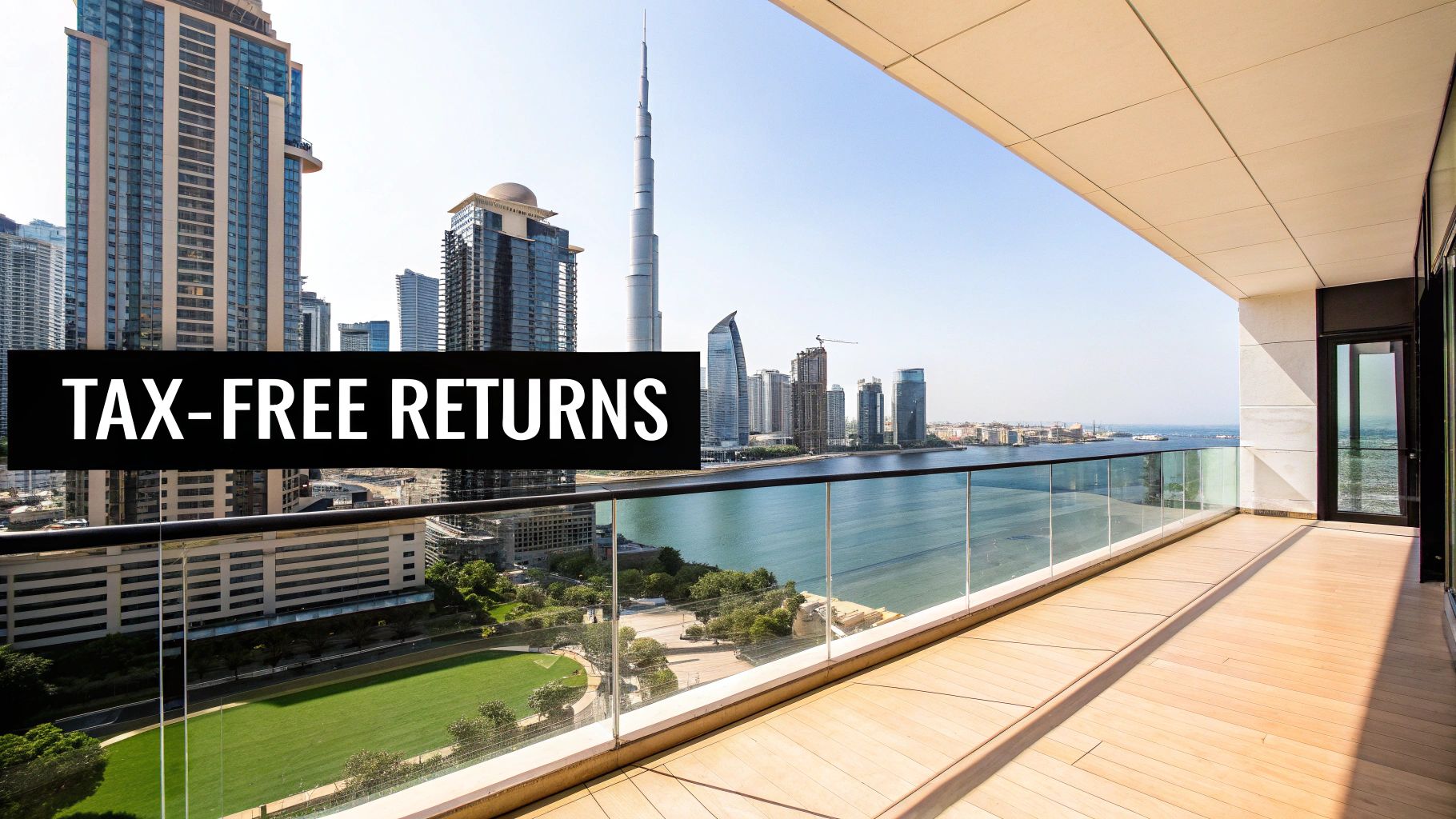
6. United Arab Emirates (Dubai) – Tax-Free Returns & Luxury Market
The United Arab Emirates, with Dubai as its crown jewel, presents a compelling proposition for global property investors. Its inclusion as one of the best countries for property investment is built on a foundation of zero income tax on rental earnings and capital gains, world-class infrastructure, and a dynamic luxury market. This tax-efficient environment, combined with a robust economy, creates a high-demand rental landscape.
The Investment Thesis
Dubai’s core appeal is its tax-free framework, allowing investors to retain 100% of their rental income. This is amplified by strong rental demand from a growing expatriate workforce and booming tourism, leading to gross rental yields that frequently range from 6% to 9%. The government’s reforms legalised foreign freehold ownership in designated areas, opening the market to international capital.
The city’s reputation as a global hub for business and leisure ensures a constant influx of tenants, from young professionals seeking studios to high-net-worth individuals leasing luxury villas. This diverse demand allows investors to tailor their strategy, whether focusing on professional lets or premium short-term holiday rentals.
Actionable Investor Strategy
- For High-Yield Seekers: Target studio or one-bedroom flats in professional hubs like Business Bay. A studio costing around AED 500,000 (£110,000) can generate rental yields of 7-9% from the constant demand from young professionals.
- For Capital Growth & Luxury Lets: Focus on prime developments in Downtown Dubai or Palm Jumeirah. A luxury flat in Downtown Dubai can achieve gross yields of over 6.5% tax-free, while a villa on the Palm Jumeirah is ideal for lucrative short-term holiday lets.
- Tax & Cost Optimisation: While there is no income tax, investors must budget for a one-off 4% Dubai Land Department (DLD) registration fee and annual service charges. Engage a reputable property management company that specialises in navigating short-term rental regulations.
Understanding the fee structure is vital for accurate ROI calculations. For a broader perspective on how different tax regimes impact returns, you can understand property taxes in various global markets. Prioritising newer developments will ensure your property remains competitive and commands premium rental rates.
7. Australia – Stable Growth & Residency Path
Australia stands out as a beacon of stability and long-term growth in the Asia-Pacific region, making it one of the best countries for property investment for those prioritising security. Its transparent legal system, strong economy, and desirable lifestyle attract a steady stream of international investors and skilled migrants, underpinning consistent housing demand.
The Investment Thesis
The core of Australia's investment appeal is its proven track record of long-term capital growth, with major cities like Sydney and Melbourne historically delivering annual appreciation of 5-7%. While rental yields are more modest, typically ranging from 3-5%, the market's stability and predictable growth cycles offer a compelling risk-adjusted return.
Furthermore, Australia provides structured pathways to residency through its investor visa programmes. This dual benefit of asset growth and a potential route to living in a highly developed, English-speaking nation makes it an attractive proposition for high-net-worth individuals and families.
Actionable Investor Strategy
- For Capital Growth Investors: Focus on blue-chip suburbs in Sydney (e.g., Eastern Suburbs) or Melbourne (e.g., inner-bayside). A typical two-bedroom flat in these areas is positioned for strong, long-term appreciation over a 7-10 year holding period.
- For Balanced Yield & Growth: Consider high-growth corridors in Brisbane or Perth. A detached house in a developing Brisbane suburb for around AUD 550,000 (£290,000) can offer a better yield-to-growth ratio than the larger capital cities.
- Tax Optimisation & Residency: High-income earners can leverage Australia’s "negative gearing" policy, where investment property expenses can offset other taxable income. Prospective residents should investigate the requirements for investor visas.
Investors must budget for transaction costs, primarily stamp duty, which can range from 4-6% of the purchase price. It is essential to engage a local solicitor and buyer's agent to navigate state-specific regulations and the Foreign Investment Review Board (FIRB) approval process, which is mandatory for non-residents purchasing established dwellings.
8. Canada – Stable Market & Immigration-Friendly
Canada offers a compelling proposition for international investors, combining a historically stable property market with welcoming immigration policies. Its standing as one of the best countries for property investment is built on strong economic fundamentals, consistent population growth driven by immigration, and a reliable legal framework that protects property rights.
The Investment Thesis
The core of Canada’s appeal is its reputation for long-term, sustainable growth. While major hubs like Toronto and Vancouver offer robust capital appreciation of 4-6% annually alongside modest yields of 3-5%, emerging secondary markets present a different opportunity. Cities such as Calgary and Edmonton provide higher gross rental yields, often between 5-7%, at a much lower entry price.
This dual-market dynamic allows investors to tailor their strategy, choosing between long-term wealth preservation or higher cash flow. Furthermore, Canada’s pro-immigration stance ensures a constant influx of new residents, underpinning rental demand and supporting property values across the country.
Actionable Investor Strategy
- For Yield-Focused Investors: Target secondary markets with strong economic drivers. A single-family home in Calgary, priced around CAD 450,000 (£260,000), can generate a 5.5-6% yield. Emerging neighbourhoods in Montreal also offer multi-unit properties with yields of 5-6%.
- For Capital Growth: Focus on prime real estate in Toronto or Vancouver. A downtown Toronto condominium may cost around CAD 800,000 (£465,000) but benefits from consistent appreciation.
- Strategic Leverage: Utilise Canada's stable mortgage market. A typical down payment of 20-25% for foreign investors allows for strategic leveraging to amplify returns on investment, especially on multi-unit properties like duplexes.
Investors should budget for transaction costs, which typically run from 3-5% of the purchase price and include land transfer tax and legal fees. Hiring a professional property management company (costing 6-8% of gross rent) is a prudent step for overseas investors.
9. Greece – Emerging Recovery & Golden Visa Opportunity
Greece represents a compelling emerging market recovery story, offering significant upside potential. Its position as one of the best countries for property investment is anchored by one of Europe's most accessible Golden Visa programmes, improving property values in key urban centres, and a resilient tourism sector that fuels attractive rental yields.

The Investment Thesis
The core of the Greek proposition lies in its post-crisis rebound. Property prices, while rising, are still below their pre-2008 peaks, suggesting considerable room for capital growth. Annual appreciation in desirable Athens neighbourhoods is currently reaching 6-9%. This growth is paired with a recovering rental market, delivering gross yields of 4-6% in cities and potentially higher on tourism-focused islands.
A major driver for non-EU investors is the Greek Golden Visa, which offers a five-year renewable residency permit for a minimum property investment of just €250,000 in many areas (note: the threshold is higher in prime locations like central Athens). This creates a powerful dual incentive: securing a foothold in a recovering EU market while gaining residency and visa-free travel within the Schengen Area.
Actionable Investor Strategy
- For Capital Growth & Residency: Focus on Athens regeneration projects. Renovating a flat in Plaka or Koukaki for around €300,000 can capture annual appreciation of 7-9% while generating a steady 5-6% rental yield.
- For High Yield-Focused Investors: Target the short-term holiday let market on popular islands. A villa in Mykonos or Crete, though requiring a higher initial outlay, can generate substantial seasonal income, with potential yields reaching 8-10% during the high season.
- Balancing Risk and Reward: Consider a hybrid strategy. A flat in Athens offers year-round rental demand, while a smaller holiday home on an island like Crete provides high seasonal yields.
Investors must account for transaction costs, which typically range from 6-8%, and conduct thorough due diligence, including a meticulous title check with an independent lawyer. It is also vital to investigate regulations on short-term lets, as popular areas are introducing stricter rules.
10. Germany – Stable Value & Rental Income Focus
Germany stands as a bastion of stability in the European property market, offering a compelling proposition for conservative investors. Its inclusion as one of the best countries for property investment is built on a powerful economy, transparent legal frameworks, and strong, consistent demand for rental accommodation, making it an ideal choice for those prioritising reliable cash flow.
The Investment Thesis
The core of Germany's appeal lies in its economic prowess and political stability. This environment fosters a highly regulated yet dependable rental market, supported by strong employment. Gross rental yields typically range from a solid 3-5% in major cities like Berlin and Frankfurt. While capital appreciation is more modest, averaging a sustainable 2-4% long-term, the market is shielded from the volatility seen elsewhere.
Germany's tenant-friendly laws and rent control measures (Mietpreisbremse) mean investors must focus on long-term value and income generation. This regulatory environment rewards a buy-and-hold strategy, attracting investors who value security and steady, long-term wealth accumulation.
Actionable Investor Strategy
- For Yield-Focused Investors: Target up-and-coming districts in major cities. A two-bedroom flat in Berlin's Kreuzberg, costing between €400,000 and €500,000, can generate a monthly rent of €1,400 to €1,700, achieving a yield of around 4%.
- For Balanced Growth & Income: Consider premium neighbourhoods in powerhouse cities like Munich. An €800,000 property may offer a lower yield of 2.8-3.2% but complements this with stronger, more reliable annual appreciation prospects.
- Tax Optimisation: Structuring your investment through a German limited liability company (GmbH) can offer enhanced asset protection. Holding a property for over ten years also exempts any capital gains from taxation for private investors.
Before investing, it is essential to understand the market's specific regulations. For a broader perspective on income-focused strategies, you can explore some of the best buy-to-let locations globally. Always budget for high transaction costs, which can reach 8-12% of the purchase price, and engage a professional property manager to navigate Germany's robust tenant protection laws.
Top 10 Countries for Property Investment — Comparative Overview
| Market | 🔄 Implementation Complexity | ⚡ Resource Requirements | ⭐📊 Expected Outcomes | 💡 Ideal Use Cases | Key Advantages |
|---|---|---|---|---|---|
| Portugal – High Yield & Golden Visa Gateway | Moderate — Golden Visa paperwork, NHR registration | €280k+ property; 8–10% transaction costs; medium management | ⭐⭐⭐⭐ — Rental 4–7% (short‑term 8–12%); growth 8–12% | Residency + rental income; digital nomads, expats | Golden Visa residency; NHR tax benefits; EU stability |
| United States – Diverse Markets & High Absolute Returns | High — 50+ state rules, FIRPTA compliance | High capital; financing available; professional PM recommended | ⭐⭐⭐⭐ — Yields 5–12% (secondary); growth 3–8% | Yield in secondary markets; tech-hub appreciation | Deep market, financing options, strong legal protections |
| Spain – Mediterranean Lifestyle & EU Entry Point | Moderate — Golden Visa process, municipal rental rules | €500k+ for Golden Visa; seasonal management for tourism | ⭐⭐⭐ — Rental 4–6%; growth 5–8% (premium locations) | Lifestyle + buy‑to‑let; retirees, holiday rentals | Mediterranean lifestyle; strong tourism infrastructure |
| United Kingdom – Stable Growth & Established Market | Moderate‑High — complex tax rules, landlord regulations | High entry prices (£500k+); substantial transaction costs | ⭐⭐ — Rental 3–5%; long‑term growth 4–6% | Long‑term capital preservation; institutional investors | Mature legal system, transparency, deep financing market |
| Turkey – Emerging Market Growth & Citizenship Benefits | High — legal/title checks; currency & political risk | €250k+ for citizenship; lower prices but higher volatility | ⭐⭐⭐⭐ — Rental 7–10%; growth 10–15% (Istanbul prime) | Citizenship seekers; high‑growth speculative investors | Citizenship pathway; high yields; low entry prices |
| United Arab Emirates (Dubai) – Tax‑Free Returns & Luxury Market | Moderate — freehold rules, licensing for short lets | High capital for premium assets (€500k+); registration fees ~1% | ⭐⭐⭐ — Yields 5–9% (short‑term higher); growth 5–8% | Tax‑sensitive HNW investors; short‑term luxury lets | 0% income/capital gains tax; strong tourism & amenities |
| Australia – Stable Growth & Residency Path | Moderate — FIRB approvals, visa ties for investors | High entry (Sydney/Melbourne); FIRB surcharges; long holds | ⭐⭐⭐ — Rental 3–5%; growth 5–7% long‑term | Residency seekers; long‑term capital growth | Stable economy, negative gearing, English‑speaking market |
| Canada – Stable Market & Immigration‑Friendly | Low‑Moderate — provincial rules, occasional surcharges | Mid‑high capital in major cities; better yields in secondary | ⭐⭐⭐ — Yields 3–7% (varies); growth 3–6% | Immigration + stable returns; multi‑unit investments | Immigration pathways, transparent legal protections |
| Greece – Emerging Recovery & Golden Visa Opportunity | Moderate — Golden Visa paperwork, tourism seasonality | €250k+ for Golden Visa; tourism management in islands | ⭐⭐⭐ — Rental 4–8% (islands higher); growth 6–9% | Low‑cost EU residency; tourism‑driven income | Lowest EU Golden Visa threshold; strong tourism upside |
| Germany – Stable Value & Rental Income Focus | Moderate — strict rent controls, tenant laws | Mid capital (major cities €400k–€800k); regulatory compliance | ⭐⭐ — Rental 3–5%; growth 2–4% long‑term | Conservative cash‑flow investors; rental income focus | Strong tenant demand, legal predictability, steady returns |
Building Your Global Portfolio: A Strategic Approach
Embarking on an international property investment journey transitions you from a domestic buyer to a global portfolio strategist. This article has navigated the diverse landscapes of ten leading destinations, from the established markets of the United Kingdom and Germany to the high-growth environments of Turkey and the United Arab Emirates. We have analysed how countries like Portugal, Spain, and Greece offer a blend of lifestyle appeal and attractive residency programmes, while giants like the United States provide unparalleled market diversity.
The central takeaway is clear: there is no single "best" country for property investment. Instead, the optimal choice is a carefully calibrated match between your financial objectives, risk tolerance, and the unique characteristics of each market. Your investment thesis must be the compass that guides your decision-making.
Synthesising Your Strategy: From Analysis to Action
To move from reading this guide to making a confident investment, you must crystallise your priorities. Are you primarily seeking high rental yields to generate passive income? Or is your focus on long-term capital appreciation and wealth preservation? Perhaps the goal is more holistic, aiming for a second home that also serves as a strategic asset with residency benefits.
Let’s re-examine the core investor profiles:
- For the Yield-Focused Investor: If strong, consistent rental income is your primary driver, markets like Portugal, specific high-demand urban centres in the US, and emerging districts in Turkey should be at the top of your list.
- For the Growth-Oriented Investor: Those with a higher risk appetite seeking substantial capital growth should look towards markets with strong economic tailwinds. Dubai, Turkey, and recovering southern European markets like Greece offer significant upside potential.
- For the Stability-Seeker: If your priority is wealth preservation, the mature, transparent markets of the UK, Germany, and Canada are unparalleled. They offer strong legal frameworks, political stability, and a long history of property value retention.
- For the Lifestyle and Residency Investor: For those seeking more than just a financial return, the "Golden Visa" programmes in Portugal, Spain, and Greece present a unique value proposition, providing a property asset and a gateway to European residency.
Your Next Steps: A Practical Checklist
Choosing one of the best countries for property investment is just the beginning. Execution determines success. Before you commit capital, follow a structured due diligence process:
- Define Your "Why": Clearly articulate your investment goals. Is it for retirement income, diversification, a holiday home, or a residency permit?
- Conduct Macro-Research: Deepen your research into the economic fundamentals, political stability, and property laws of your top 2-3 chosen countries.
- Assemble Your Local Team: Identify and vet a team of on-the-ground professionals, including a reputable estate agent, an independent property lawyer, and a tax advisor who specialises in foreign ownership.
- Secure Financing and Understand Costs: Explore mortgage options for non-residents and create a detailed budget that includes all ancillary costs: stamp duty, legal fees, property taxes, and ongoing maintenance.
- Plan a Visit: If feasible, a personal visit is invaluable. It allows you to experience the neighbourhood, inspect properties, and meet your local team.
Ultimately, building an international property portfolio is a powerful strategy for diversifying wealth. By aligning your personal goals with the right market and executing a disciplined due diligence process, you can transform this complex aspiration into a tangible and rewarding reality.
Navigating the complexities of international property law, tax, and market analysis requires specialist expertise. At World Property Investor, we provide the in-depth guides, data-driven reports, and expert insights you need to make informed decisions with confidence. Visit World Property Investor to access our exclusive resources and take the next step in building your global portfolio.