
Identifying the best countries to buy property requires more than just spotting trends; it demands a forensic analysis of market fundamentals, legal frameworks, and long-term economic stability. For the discerning global investor, the ideal location balances capital appreciation with strong rental yields, while navigating a landscape of varying tax regimes and foreign ownership rules. This guide moves beyond the headlines, offering a practical breakdown of the world's most compelling property markets.
We compare established powerhouses like the United States and the United Kingdom against high-growth emerging markets and lifestyle destinations such as Portugal and the UAE. Each country is evaluated on critical metrics including average rental yields, typical entry costs, tax implications for non-residents, and the stability of its legal system. Our analysis references data from national statistical offices and major economic bodies to ensure accuracy.
This roundup is a resource for a diverse range of investors. Whether you are a first-time buyer exploring international markets, an experienced professional seeking to diversify, or a high-net-worth individual pursuing property-linked residency, the following sections provide the actionable insights needed to build a resilient international portfolio. We examine core data, from price-to-rent ratios to foreigner-specific buying regulations, equipping you with the necessary information to make an informed investment decision.
1. United States – Growth and Stability
The United States represents a cornerstone of global property investment, offering unparalleled market diversity, legal transparency, and robust property rights. For international investors, its appeal lies in a stable economic framework and a wide spectrum of opportunities, from bustling urban centres to high-growth suburban communities. This makes it one of the best countries to buy property for investors seeking long-term value.
Market Snapshot and Opportunities
The U.S. property market is a collection of distinct regional markets, each with its own dynamics. For example, cities like Austin, Texas, have seen explosive growth driven by the tech sector, creating high demand for residential rentals. In contrast, markets like New York City offer prime commercial real estate, while Florida continues to attract international capital due to its favourable tax laws and vibrant economy.
This diversity allows investors to tailor their strategy. An investor might target high-appreciation potential in tech hubs, stable rental income in Midwest cities, or luxury holiday lets in coastal regions. The availability of sophisticated financing options and a transparent transaction process further reduces barriers for foreign buyers.
Key Takeaway: The US market’s strength is its scale and variety. Investors can diversify across different states and asset classes, such as residential, commercial, and industrial, to mitigate risk and capitalise on regional growth cycles.
Practical Steps for Foreign Investors
- Research State-Specific Laws: Property and tax laws vary significantly between states. Florida has no state income tax, making it attractive for rental income, whereas California has higher taxes but strong appreciation. Engage a US-based solicitor and tax advisor familiar with foreign investment.
- Secure Financing: While all-cash purchases are common, many US lenders offer mortgages to foreign nationals, though they often require a larger deposit (typically 30-40%) and more extensive documentation.
- Plan for Remote Management: If you do not plan to reside in the US, hiring a reputable property management company is crucial for handling tenant screening, maintenance, and rent collection.
Before committing, it is vital to learn how to properly evaluate a property's investment potential to ensure your chosen asset aligns with your financial goals.
2. Portugal – European Gateway with Tax Benefits
Portugal has rapidly become one of Europe's most sought-after property investment destinations, blending lifestyle appeal with compelling financial incentives. Its main attractions include relatively affordable property prices compared to other Western European nations, a favourable tax environment, and residency-by-investment programmes. This combination of stability and growth potential makes it one of the best countries to buy property for investors seeking a foothold in the Eurozone.

Market Snapshot and Opportunities
Portugal’s property market offers diverse opportunities, from city-centre renovations to coastal holiday homes. Cities like Lisbon and Porto have seen significant capital appreciation, driven by tourism and a growing tech scene. Renovating historic buildings in Lisbon’s Alfama or Baixa districts for the short-term rental market has proven highly profitable. Meanwhile, the Algarve region remains a perennial favourite for holiday lets and retirement properties.
Beyond the main hubs, areas like Cascais offer luxury coastal living, while Porto’s waterfront is undergoing significant development, presenting opportunities for capital growth. The country's "Golden Visa" programme, though recently modified, continues to attract non-EU investors, linking property investment to a pathway for residency and boosting market demand.
Key Takeaway: Portugal offers a unique mix of lifestyle and investment. Tax incentives like the Non-Habitual Resident (NHR) scheme, combined with a strong tourism sector, create fertile ground for both capital growth and high rental yields.
Practical Steps for Foreign Investors
- Engage Local Experts: Hire a Portuguese solicitor (advogado) and a tax advisor early in the process. They are essential for navigating the bureaucracy, conducting due diligence, and structuring your purchase tax-efficiently.
- Obtain a Fiscal Number: All property buyers, resident or not, must obtain a Portuguese fiscal number (Número de Identificação Fiscal – NIF). This is a straightforward process that your legal representative can handle on your behalf.
- Understand the Costs: Factor in transaction costs, which typically include a property transfer tax (IMT) of up to 8% and stamp duty. Gaining a clear picture of these expenses is vital, and you can learn more about how to understand property taxes for global investments to prepare.
3. United Kingdom – Prime London and Regional Markets
The United Kingdom is a globally recognised hub for property investment, prized for its stable legal framework, historical price resilience, and market liquidity. Its appeal extends from the prime postcodes of London to high-yielding regional cities, making it one of the best countries to buy property for investors seeking a blend of capital growth and steady rental income. The market’s maturity and transparency offer a secure environment for international buyers.
Market Snapshot and Opportunities
While London’s property market has long been a magnet for global capital, particularly in exclusive areas like Mayfair and Belgravia, the highest rental yields are now often found outside the capital. Cities such as Manchester and Birmingham have undergone significant urban regeneration, attracting major businesses and a growing population of young professionals. This has fuelled demand for high-quality rental accommodation, with city-centre apartment conversions and new-build developments offering attractive returns.
This two-tiered market allows investors to align their strategy with their risk appetite and financial goals. A prime London property offers a prestigious, stable asset with long-term capital preservation potential, whereas a buy-to-let portfolio in a regional hub like Birmingham provides a stronger income stream and potential for higher near-term growth.
Key Takeaway: The UK market’s strength lies in its dual opportunities. Investors can choose between the established prestige and stability of London or pursue higher rental yields and appreciation potential in thriving secondary cities driven by infrastructure investment and economic diversification.
Practical Steps for Foreign Investors
- Understand Stamp Duty Land Tax (SDLT): This is a significant upfront cost. Rates are tiered, and foreign buyers typically pay a 2% surcharge on top of standard rates. Factoring in SDLT, which can range from 5% to 15% of the purchase price, is essential for accurate financial modelling.
- Navigate Buy-to-Let Regulations: The UK’s rental sector is heavily regulated. Landlords must understand rules like Section 24, which limits mortgage interest tax relief, and ensure properties meet all safety standards. Engage a solicitor and an accountant who specialise in property investment.
- Secure Financing and Appoint Professionals: While cash purchases are straightforward, many UK lenders offer mortgages to non-residents, usually requiring a deposit of 25-40%. Appointing a reputable solicitor to handle conveyancing and a letting agent to manage the property is vital for compliance and smooth operations.
4. United Arab Emirates – Tax-Free Dubai and Abu Dhabi
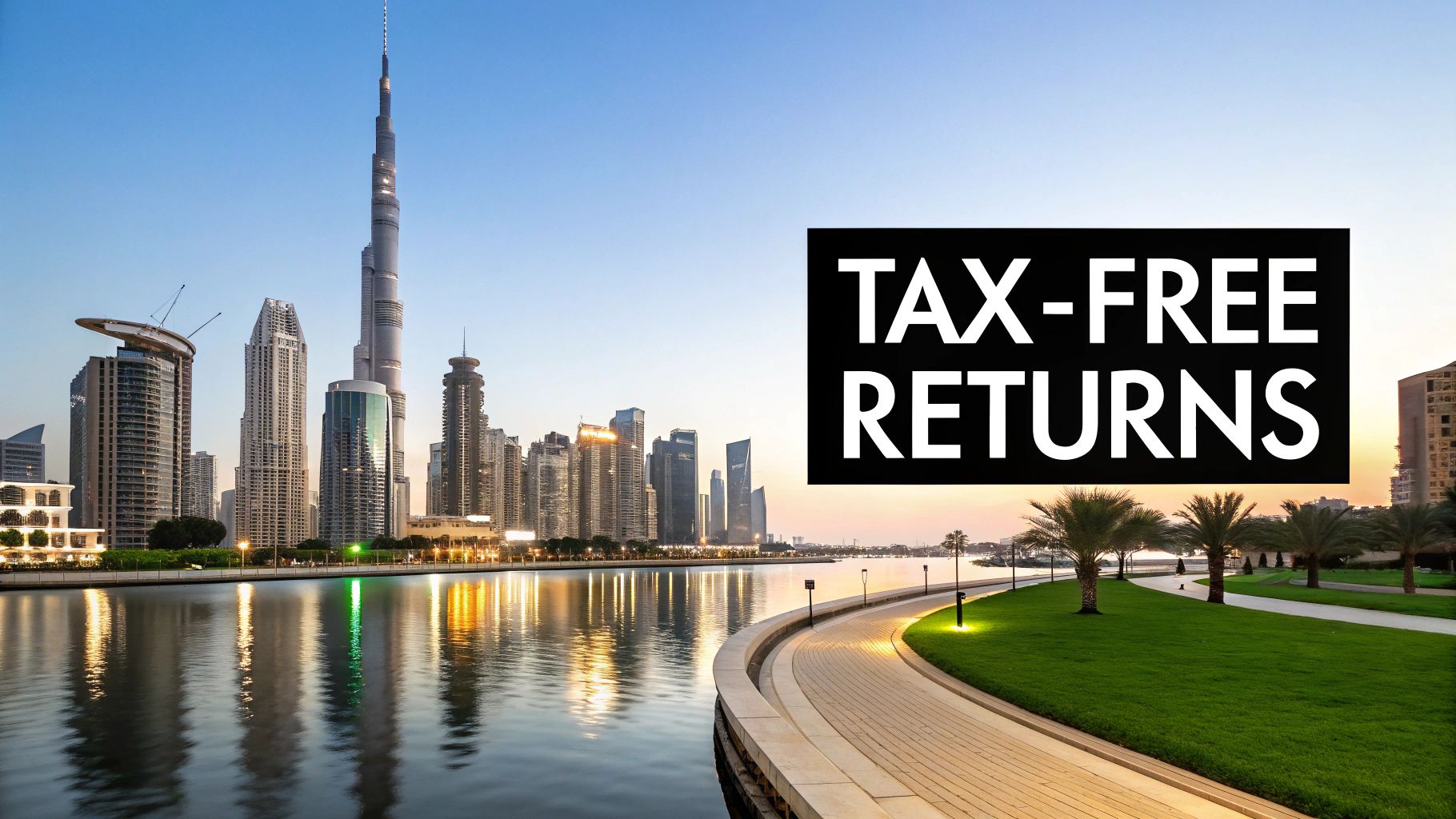
The United Arab Emirates (UAE) has rapidly emerged as a global hub for property investment, driven by its tax-free environment, world-class infrastructure, and pro-business policies. For international investors, the primary appeal is the absence of income tax on rental returns and capital gains, positioning the UAE as one of the best countries to buy property for maximising net yields. Its strategic location and diverse expatriate population ensure consistent rental demand.
Market Snapshot and Opportunities
The UAE’s property market is dominated by two key emirates: Dubai and Abu Dhabi. Dubai offers a dynamic, fast-paced market known for high-rise apartments in areas like Downtown Dubai and luxury villas on Palm Jumeirah. It attracts a diverse mix of tenants and tourists, leading to strong rental yields, particularly for short-term lets. Abu Dhabi, the nation's capital, presents a more stable, mature market with a focus on premium waterfront developments and family-oriented communities, appealing to long-term investors seeking steady rental income.
Recent reforms have expanded freehold ownership for foreigners into designated zones, making direct investment more accessible. The market also offers a significant number of off-plan projects from reputable developers, often with attractive payment plans. This allows investors to enter the market at a lower initial cost, a key consideration when reviewing the pros and cons of buying off-plan properties.
Key Takeaway: The UAE’s tax-free status on rental income and capital gains is its defining advantage. Investors can choose between Dubai's high-yield, dynamic environment and Abu Dhabi's stable, capital-growth-focused market.
Practical Steps for Foreign Investors
- Focus on Designated Freehold Areas: Foreign nationals can only purchase property on a freehold basis in specific zones designated by the government. Research these areas, such as Dubai Marina or Saadiyat Island in Abu Dhabi, before committing.
- Engage a RERA-Registered Agent: The Real Estate Regulatory Agency (RERA) in Dubai and similar bodies in other emirates regulate the market. Always work with a certified agent to ensure compliance and a secure transaction.
- Understand Service Charges: Owning property in the UAE involves annual service charges for the maintenance of common areas and amenities. Factor these costs into your net yield calculations, as they can vary significantly between developments.
5. Spain – Mediterranean Appeal with Recovery Growth
Spain combines a desirable Mediterranean lifestyle with a property market that has demonstrated significant recovery and growth potential. Its appeal for international investors is rooted in affordable property prices compared to other Western European nations, a robust tourism sector driving rental demand, and attractive residency options. This blend makes it one of the best countries to buy property for those seeking both capital appreciation and a high quality of life.
Market Snapshot and Opportunities
Spain's property market is highly diverse, offering a range of investment profiles. Major urban centres like Madrid and Barcelona provide opportunities for residential conversions and high-demand rental apartments, attracting young professionals and international students. Coastal regions, such as the Costa del Sol (including Malaga) and the Balearic Islands, are prime markets for holiday lets, capitalising on a world-class tourism industry.
For investors seeking higher yields or unique projects, regions like Andalusia offer opportunities for rural farmhouse restorations that can be converted into boutique hotels or holiday homes. The market's ongoing recovery from its previous downturn means there are still pockets of undervalued assets, particularly in secondary cities and inland areas, which are now gaining popularity.
Key Takeaway: Spain offers a balanced investment proposition. You can secure strong rental yields from tourism-driven properties while also benefiting from the steady capital appreciation seen in its recovering urban and coastal markets.
Practical Steps for Foreign Investors
- Understand Acquisition Costs: Budget for total acquisition costs of approximately 10-15% of the property price. This includes Property Transfer Tax (ITP), VAT (on new builds), notary fees, land registry fees, and legal costs.
- Secure an NIE Number: A Foreigner's Identity Number (Número de Identificación de Extranjero) is mandatory for all foreign property buyers in Spain. This should be one of your first steps, as it is required to open a bank account and sign the deeds.
- Engage Local Professionals: Hire a Spanish solicitor (abogado) who is independent of the seller and estate agent. They will conduct due diligence, check for debts on the property, and ensure all legal requirements are met. A local tax advisor is also essential to structure your ownership efficiently.
To maximise returns, it is crucial to explore the most promising areas. You can find more detail by researching the best buy-to-let locations in Spain and beyond.
6. Australia – Strong Fundamentals with Regulatory Strength
Australia presents a compelling case for property investors, blending a high-quality lifestyle with strong economic fundamentals and a transparent legal system. Its reputation for political stability and consistent population growth, driven by immigration, underpins a resilient housing market. For those seeking long-term capital appreciation and stable rental returns, Australia remains one of the best countries to buy property, despite its premium price points.
Market Snapshot and Opportunities
The Australian property market is characterised by its high-demand urban centres. Cities like Sydney and Melbourne offer world-class amenities and robust job markets, commanding premium property values and attracting significant global investment. Beyond the major capitals, cities such as Brisbane and regional hubs on the Gold Coast or in Byron Bay present opportunities for growth and high-yielding holiday lets.
Investment opportunities are diverse, from inner-suburb apartments in Melbourne catering to young professionals, to family homes in Sydney’s leafy North Shore. The key challenge for non-resident investors is the Foreign Investment Review Board (FIRB) framework, which generally directs foreign capital towards new-build properties. This policy helps stimulate construction, offering investors modern assets with potential for strong initial rental demand.
Key Takeaway: Australia’s strength lies in its stable, mature market backed by strong population growth. While regulations steer foreign buyers towards new developments, this ensures high-quality stock and contributes directly to the housing supply, offering a secure, albeit regulated, investment pathway.
Practical Steps for Foreign Investors
- Understand FIRB Regulations: Before anything else, familiarise yourself with the FIRB rules. In most cases, non-residents are restricted to purchasing new dwellings and must obtain FIRB approval before committing to a purchase.
- Factor in Additional Costs: Foreign buyers are typically subject to a significant foreign investor stamp duty surcharge, which can be around 7-8% on top of standard duties, varying by state. These costs must be built into your financial modelling.
- Engage Local Expertise: The Australian property market has state-specific regulations. It is essential to hire a local solicitor or conveyancer and a tax advisor who specialises in foreign investment to navigate the purchase process and optimise your ownership structure.
7. Canada – Stable Market with Accessibility for Foreigners
Canada’s property market is renowned for its political and economic stability, offering a secure environment for international investors. With strong property rights, a transparent legal system, and relatively few restrictions on foreign ownership, it presents a compelling case. The country’s diverse regional economies and consistent immigration-driven demand make it one of the best countries to buy property for those prioritising long-term, stable growth.
Market Snapshot and Opportunities
Canada’s real estate landscape is highly regionalised. Major centres like Toronto and Vancouver are global property hotspots known for high appreciation, attracting significant international capital into their condominium and residential markets. However, emerging secondary markets are gaining prominence. Calgary, for instance, offers attractive yields in multi-family rental buildings, benefiting from a resurgent energy sector, while Montréal presents opportunities in downtown renovation projects with strong rental demand.
Recent market corrections, driven by interest rate adjustments, have created more balanced conditions and new entry points for savvy investors. This allows for strategies beyond simple appreciation, such as targeting rental income in cities with growing populations or investing in undervalued neighbourhoods poised for gentrification.
Key Takeaway: Canada’s strength lies in its blend of stability and regional opportunity. Investors can choose between high-value, established markets and higher-yield, growing secondary cities to align with their specific risk and return objectives.
Practical Steps for Foreign Investors
- Understand Provincial Regulations: Property and tenancy laws differ by province. British Columbia, for example, has a speculation and vacancy tax that may apply to foreign owners. It is crucial to engage a local solicitor to navigate these nuances.
- Secure Financing and Manage Currency: Major Canadian banks offer mortgages to non-residents, typically requiring a deposit of at least 35%. Plan a foreign exchange strategy to mitigate currency fluctuation risks when transferring funds.
- Budget for All Costs: Beyond the purchase price, factor in land transfer taxes (which vary by province and municipality), legal fees, and ongoing property taxes. These can add a significant amount to your initial investment.
8. Germany – Steady Growth with Emerging Tech Hub Potential
Germany stands as a bastion of economic stability in Europe, offering property investors a market characterised by steady, reliable growth and strong legal protections. Its appeal lies in a powerful economy, a high standard of living, and property prices that remain relatively affordable compared to other major global hubs. This makes Germany one of the best countries to buy property for cautious investors prioritising long-term value and rental income security over speculative gains.
Market Snapshot and Opportunities
The German property market is diverse, with distinct opportunities in its major cities. Berlin's burgeoning tech scene has created significant demand for rental apartments, particularly in districts like Friedrichshain and Kreuzberg. Meanwhile, established powerhouses like Munich and Hamburg offer premium residential properties that attract stable, long-term tenants, albeit at a higher entry point. Frankfurt, as a key financial centre, provides a robust market for buy-to-let properties aimed at finance professionals.
This regional diversity allows investors to align their strategy with their risk appetite. You can pursue higher yields in up-and-coming districts of major cities or opt for the security of prime real estate in established economic hubs. Germany’s strong tenant culture and legal framework favour long-term tenancies, providing predictable and consistent rental income streams for landlords.
Key Takeaway: Germany's strength is its blend of economic stability and emerging growth potential. Investors can benefit from secure, long-term rental income, underpinned by strong tenant demand and a robust legal system.
Practical Steps for Foreign Investors
- Understand Acquisition Costs: Factor in significant ancillary costs, which typically range from 8-15% of the property price. These include property transfer tax (Grunderwerbsteuer), notary fees, and estate agent commissions.
- Research Rent Control (Mietpreisbremse): Many German cities have rent control regulations that limit how much you can increase rent. Investigate the specific rules in your target area to accurately forecast your rental income and ensure compliance.
- Engage a German Tax Advisor: Germany's tax laws are complex. A local tax advisor can help you structure your purchase in the most tax-efficient way, especially regarding rental income and potential capital gains tax.
9. Mexico – Emerging Growth with Coastal Dominance
Mexico presents a compelling case for investors seeking high rental yields, currency diversification, and significant lifestyle benefits. Its property market is heavily influenced by strong tourism demand, particularly in coastal regions like Playa del Carmen, Cancun, and Puerto Vallarta. While these areas dominate investor interest, urban centres such as Mexico City offer a maturing and sophisticated real estate market, making Mexico one of the best countries to buy property for a balanced portfolio.
Market Snapshot and Opportunities
Mexico's primary investment appeal lies in its tourism-driven rental markets. Coastal hotspots offer robust income potential from holiday lets, with properties ranging from beachfront apartments in Playa del Carmen to exclusive villas in Puerto Vallarta. Currency fluctuations between the Mexican Peso and major global currencies like the US dollar or Pound Sterling can present both risks and significant opportunities for savvy investors.
Beyond the coasts, Mexico City’s real estate market has shown considerable maturity. Neighbourhoods like Polanco and Condesa attract long-term tenants and offer stable rental income from luxury apartments. The country’s growing economy and its status as an emerging market provide a unique combination of high-yield potential and capital appreciation.
Key Takeaway: Mexico excels for investors targeting high-yield holiday rentals. Its coastal dominance is undeniable, but urban centres offer diversification and long-term stability, appealing to those willing to navigate an emerging market's dynamics.
Practical Steps for Foreign Investors
- Understand the ‘Fideicomiso’ System: Foreigners cannot directly own land within 100 km of international borders or 50 km of the coast. Instead, property is held through a bank trust known as a fideicomiso. This is a secure and standard legal mechanism that grants you all ownership rights.
- Engage Local Professionals: Partnering with a reputable local solicitor (notario) and an established real estate agent is essential. They will guide you through the purchase process, conduct due diligence, and ensure the title is clean.
- Factor in Currency Risk: Your return on investment will be influenced by exchange rate movements. It is wise to factor potential currency fluctuations into your financial projections and consider strategies to mitigate this risk.
For investors keen on high-growth potential, it is beneficial to explore more about Mexico’s position in emerging property markets.
10. New Zealand – Quality of Life with Modest Returns
New Zealand appeals primarily to lifestyle-focused investors seeking a secure, high-quality environment coupled with a stable property market. Its allure is rooted in political stability, breathtaking scenery, and a safe, welcoming culture. While it may not offer the explosive growth of emerging economies, it presents a solid choice for those prioritising capital preservation and personal enjoyment alongside their investment, making it one of the best countries to buy property for a balanced portfolio.
Market Snapshot and Opportunities
The New Zealand property market is characterised by steady, albeit modest, growth. The primary challenge for non-residents is the Overseas Investment Amendment Act 2018, which restricts foreigners from buying most existing residential homes. However, opportunities remain in new-build apartments within large developments and specific land types where foreign investment is permitted.
Cities like Auckland offer potential in new apartment complexes, catering to urban professionals. Wellington’s market is underpinned by its status as the capital, providing a consistent tenant base of government and corporate employees. For those targeting tourism, Queenstown remains a hotspot for holiday lets, although regulations are tight. The post-earthquake redevelopment of Christchurch also continues to present unique investment scenarios in both residential and commercial sectors.
Key Takeaway: New Zealand is a "lifestyle first" investment. The financial returns are secondary to the benefits of owning property in one of the world's most stable and scenic countries. Focus on new developments or specific land types where foreign ownership is permitted.
Practical Steps for Foreign Investors
- Verify Eligibility: Before anything else, confirm your eligibility to purchase. The Overseas Investment Office (OIO) website provides clear guidelines. Most foreign buyers will be restricted to purchasing newly built properties off-plan or in large apartment complexes.
- Focus on Exempted Properties: Direct your search towards new builds, as these are generally exempt from foreign buyer restrictions. Engage with developers or real estate agents specialising in this niche market.
- Understand Local Council Rules: Regulations, particularly concerning short-term rentals (like in Queenstown), can be strict and vary significantly by council. Conduct thorough due diligence on local planning and zoning laws to ensure your investment strategy is viable.
Top 10 Countries to Buy Property — Quick Comparison
| Market | Implementation Complexity 🔄 | Resource Requirements ⚡ | Expected Outcomes ⭐ / 📊 | Ideal Use Cases 💡 | Key Advantages |
|---|---|---|---|---|---|
| United States – Growth and Stability | Medium — state-by-state regulatory variance 🔄 | High — $50,000–$500,000+; financing available ⚡ | ⭐⭐⭐⭐ — 6–10% annual ROI; liquid markets 📊 | Diversified portfolios, long-term appreciation, rental income 💡 | Transparent legal system, diverse markets, strong financing |
| Portugal – European Gateway with Tax Benefits | Medium — NHR/GV paperwork and bureaucracy 🔄 | Medium — €280,000+ for Golden Visa; €50k+ general ⚡ | ⭐⭐⭐ — 5–8% ROI; tax benefits for up to 10 years 📊 | Residency seekers, short-term rentals, EU access goals 💡 | NHR tax regime, lower prices vs Western Europe, Golden Visa |
| United Kingdom – Prime London and Regional Markets | Medium–High — stamp duty, landlord rules, post‑Brexit shifts 🔄 | High — £200,000–£1,000,000+; higher entry costs ⚡ | ⭐⭐⭐ — 4–7% yield plus appreciation potential 📊 | Capital preservation, London prestige, regional yield plays 💡 | Mature market, strong legal protections, global demand |
| United Arab Emirates – Tax-Free Dubai and Abu Dhabi | Low–Medium — freehold zones; straightforward reforms 🔄 | Medium — AED 500,000 ($136k)–AED 2M+ ⚡ | ⭐⭐⭐⭐ — 4–9% rental yields; tax-free income 📊 | High-yield rentals, luxury assets, tax-efficient holdings 💡 | No income/capital gains tax, modern infrastructure, expat demand |
| Spain – Mediterranean Appeal with Recovery Growth | Medium — regional bureaucracy and visa rules 🔄 | Medium — €50,000–€500,000+; €500k for Golden Visa ⚡ | ⭐⭐⭐ — 4–7% yields; recovery-driven appreciation 📊 | Tourism rentals, coastal lifestyle properties, secondary cities 💡 | Affordable entry, strong tourism, EU protections |
| Australia – Strong Fundamentals with Regulatory Strength | High — FIRB approvals; foreign buyer limits 🔄 | High — AUD $500k–$1.5M+; surcharges apply ⚡ | ⭐⭐ — 3–5% yield; historically strong appreciation 📊 | Long-term growth, new-builds, regional yield strategies 💡 | Stable institutions, tax incentives, transparent market |
| Canada – Stable Market with Accessibility for Foreigners | Medium — provincial variation in rules 🔄 | Medium — CAD $300k–$1M+; mortgage options ⚡ | ⭐⭐ — 2–4% yield; appreciation potential 📊 | Stable holdings, condo investments, provincial diversification 💡 | Few federal foreign restrictions, strong legal framework |
| Germany – Steady Growth with Emerging Tech Hub Potential | Medium — tenant protections, acquisition taxes 🔄 | Medium — €200k–€800k+ ⚡ | ⭐⭐ — 2–4% yield; steady long-term income 📊 | Long-term rentals, tech-hub apartments, value-focused buys 💡 | Stable economy, long leases, affordable vs some EU peers |
| Mexico – Emerging Growth with Coastal Dominance | Medium–High — restricted zones, legal structures (fideicomiso) 🔄 | Low–Medium — $100k–$500k+ ⚡ | ⭐⭐⭐⭐ — 6–12% rental yields; variable appreciation 📊 | Vacation rentals, coastal investments, higher-yield plays 💡 | High yields, low entry costs, strong tourism demand |
| New Zealand – Quality of Life with Modest Returns | High — foreign buyer restrictions in major markets 🔄 | Medium–High — NZD $500k–$1.5M+; residency factors ⚡ | ⭐⭐ — 3–5% yields; modest appreciation 📊 | Lifestyle investors, regional safety-focused buys 💡 | High quality of life, safe legal environment, stable market |
Strategic Takeaways for Your Global Portfolio
Navigating the global real estate market is less about finding a single 'best' country and more about identifying the right market for your specific investment thesis. As this guide has demonstrated, the landscape of the best countries to buy property is incredibly diverse, offering a spectrum of opportunities from stable, mature economies to dynamic, high-growth emerging markets. Your ideal investment hinges on a clear understanding of your personal goals, risk appetite, and long-term financial strategy.
Aligning Your Strategy with the Right Market
The journey to a successful international property investment begins with self-assessment. Are you seeking slow, steady capital appreciation and generational wealth preservation? If so, the established, legally transparent markets of the United Kingdom, Germany, or Canada might be your primary focus. These jurisdictions offer lower perceived risk and predictable returns, backed by decades of market data and robust tenant demand, particularly in their major metropolitan centres.
Conversely, if your priority is maximising monthly cash flow and achieving higher rental yields, your attention should turn elsewhere. The tax-efficient environment of the United Arab Emirates, with its world-class infrastructure in Dubai, or the burgeoning tourist hotspots in Mexico, present compelling opportunities for strong rental income. These markets often come with higher potential returns but also require a more hands-on approach to due diligence and a greater tolerance for market volatility.
Key Insight: The concept of 'best' is relative. An investor targeting a 7% net rental yield will have a completely different shortlist of countries to an investor prioritising a 'golden visa' programme or long-term asset security within a G7 nation.
The Balanced Approach: Blending Lifestyle and Returns
A significant portion of today's global investors are looking for more than just financial returns; they are seeking a blend of lifestyle enhancement and asset growth. This is where countries like Portugal and Spain truly shine. They offer the stability and legal security of EU membership, combined with attractive residency programmes, favourable tax regimes for certain expatriates, and an enviable quality of life. An apartment in Lisbon or a villa on the Costa del Sol can serve as both a high-performing holiday let and a personal retreat, offering a dual-purpose return on your investment.
Similarly, Australia and New Zealand appeal to those prioritising quality of life alongside stable, albeit more modest, investment returns. While entry costs can be high and foreign ownership regulations are stringent, the long-term fundamentals of population growth and economic stability make them secure havens for capital.
Actionable Next Steps for Your Portfolio
Choosing from the world's best countries to buy property is a significant financial undertaking that demands meticulous planning. Simply reading a guide is the first step; the critical work comes next.
- Define Your 'Why': Clearly articulate your primary objective. Is it cash flow, capital growth, diversification, residency, or a combination? Write it down.
- Conduct Deep-Dive Research: Narrow your list to two or three countries that align with your 'why'. Move beyond high-level articles and delve into city-specific market reports, local tax laws, and financing options available to non-residents.
- Assemble Your Professional Team: Before you even view a property, identify a reputable, independent solicitor, a tax advisor familiar with both your home country and your target country's regulations, and a trustworthy local real estate agent or buyer's agent. This team is your most valuable asset.
- Model the Financials: Create a detailed spreadsheet. Factor in all acquisition costs (stamp duty, legal fees, agent commissions), ongoing expenses (property management, maintenance, local taxes), and potential income tax liabilities. Stress-test your model with lower rental occupancy rates and unexpected repair costs to ensure the investment remains viable.
Ultimately, building a global property portfolio is a powerful wealth-creation tool. By moving beyond domestic markets, you unlock diversification, tap into different economic cycles, and access opportunities unavailable at home. The key is to approach it with a clear strategy, a commitment to rigorous due diligence, and the right professional guidance. This disciplined approach transforms a daunting prospect into a calculated, rewarding, and truly global investment journey.
Ready to move from research to action? The experts at World Property Investor provide in-depth market analysis, investor guides, and professional connections to help you confidently navigate your international property purchase. Let us help you build your global portfolio with clarity and confidence. Visit us at World Property Investor to learn more.