
Investing in international property offers a powerful path to portfolio diversification, rental income, and even a new lifestyle or residency status. However, navigating the complexities of foreign markets—from legal frameworks and tax implications to local economic trends—can be a formidable challenge. The stakes are high, and making an informed decision requires a clear, data-driven understanding of the opportunities and risks involved. This guide is designed to cut through the hype, providing a practical analysis of the best countries to buy property for a range of investor profiles and objectives.
We move beyond surface-level recommendations to deliver a comprehensive breakdown of what truly matters. For each featured country, you will find a structured overview covering critical investment factors. We examine market fundamentals, including current price trends and typical rental yields, to help you assess potential returns on investment (ROI). Furthermore, we clarify the practicalities of acquisition, detailing foreign ownership restrictions, applicable taxes, and associated purchasing fees. This ensures you can accurately budget for your investment without encountering unforeseen costs.
Whether you are an experienced investor seeking high-growth emerging markets, a professional looking for a "golden visa" through property acquisition, or a first-time buyer exploring buy-to-let opportunities in established holiday destinations, this analysis provides the necessary insights. We compare established markets known for their stability with emerging hotspots offering higher potential returns, outlining the ideal buyer for each location. From the sun-drenched coasts of Portugal to the dynamic urban centres of the UAE, consider this your essential roadmap to making a strategic and successful international property investment.
1. Portugal Real Estate Market
Portugal has firmly established itself as one of the best countries to buy property, attracting global investors with its appealing blend of affordability, high quality of life, and stable political environment. The market offers a compelling value proposition compared to other Western European nations, boasting strong rental yields and a clear path to EU residency.
For years, Portugal's property market has been bolstered by significant foreign investment, particularly through its now-modified Golden Visa programme. This influx has fuelled urban regeneration projects, transforming historic districts into prime residential hubs. A prime example is Lisbon’s Príncipe Real district, which has seen remarkable growth in luxury property values. Similarly, Porto's waterfront Ribeira neighbourhood has undergone extensive redevelopment, creating high-demand rental and residential properties.
Key Investment Insights
- Market Fundamentals: The Portuguese property market has shown consistent price growth, with average house prices rising steadily over the past decade, according to national statistics. Rental yields in major cities like Lisbon and Porto typically range from 4% to 6%, offering attractive returns for buy-to-let investors.
- Ideal Buyer Profile: Portugal is ideal for lifestyle investors seeking a second home in the sun, retirees drawn to the Algarve's coastal communities, and digital nomads capitalising on the country's welcoming atmosphere. It also suits investors looking for a foothold in the EU market with potential for long-term capital appreciation.
- Foreign Ownership & Taxes: Foreign ownership is unrestricted. Transaction costs include a property transfer tax (IMT) and stamp duty, typically totalling 6-8% of the purchase price. Favourable tax schemes like the Non-Habitual Resident (NHR) regime, while updated, still offer benefits for new residents.
Strategic Action Plan
To maximise your investment, consider exploring secondary cities like Braga or Coimbra, where property prices are lower and appreciation potential is higher. When evaluating older properties, factor in renovation costs, as modernising historic buildings can unlock significant value. Engaging a local, reputable real estate agent is crucial for navigating bureaucracy and identifying the best opportunities. To deepen your understanding of the market, you can learn more about investing in Portuguese real estate.
2. Spain Real Estate Market
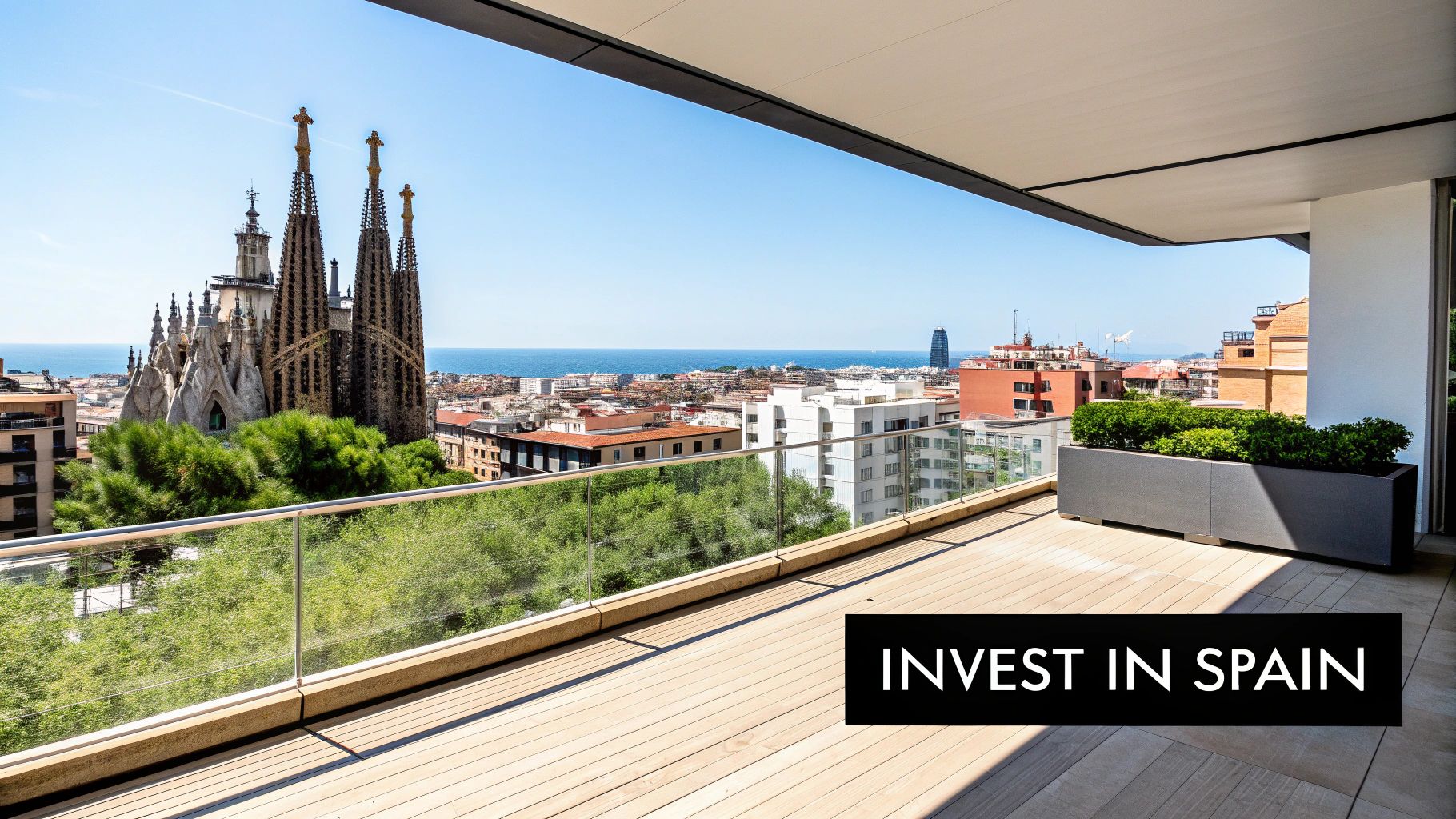
Spain remains one of the best countries to buy property, offering a vibrant mix of cosmopolitan cities, sun-drenched coastlines, and a stable EU economy. Having rebounded robustly since the 2008 financial crisis, the market presents excellent value, strong rental demand fuelled by tourism and expatriates, and diverse investment opportunities across its varied regions.
The country's appeal is bolstered by its world-class lifestyle, robust infrastructure, and a transparent legal framework for property acquisition. This combination has attracted significant foreign investment, particularly in prime locations. For example, Barcelona's Gothic Quarter has seen extensive renovation of historic buildings into luxury apartments, while Madrid’s exclusive Salamanca district continues to command premium prices. Coastal areas like the Costa del Sol remain perennial favourites for holiday-let investors, with resort properties often generating impressive rental returns.
Key Investment Insights
- Market Fundamentals: The Spanish property market is characterised by regional diversity. While major cities maintain strong capital growth, rental yields on the Costa del Sol can reach 5-7%, driven by a thriving tourism sector. Prices have shown sustained, healthy growth in recent years, recovering well above pre-crisis levels in prime areas.
- Ideal Buyer Profile: Spain is perfect for lifestyle investors seeking a holiday home, retirees drawn to the Mediterranean climate, and buy-to-let entrepreneurs capitalising on the robust short-term rental market. It also attracts those pursuing the Spanish Golden Visa for a route to EU residency.
- Foreign Ownership & Taxes: Ownership is fully open to foreigners. Key transaction costs include a Property Transfer Tax (ITP), which varies by region (typically 6-10%), plus VAT (IVA) on new builds, stamp duty, notary, and registry fees.
Strategic Action Plan
To uncover greater value, investors should look beyond the prime markets of Madrid and Barcelona to burgeoning secondary cities like Valencia and Málaga. These areas offer lower entry prices with strong potential for appreciation. When considering coastal properties for tourism rentals, it is vital to research local regulations, as cities like Barcelona and Palma have strict controls on short-term lets. Engaging a bilingual lawyer (abogado) is non-negotiable to navigate regional tax variations and ensure a secure transaction. For those focused on income, you can find more information about Spain's buy-to-let locations.
3. United Arab Emirates (Dubai/Abu Dhabi) Real Estate Market
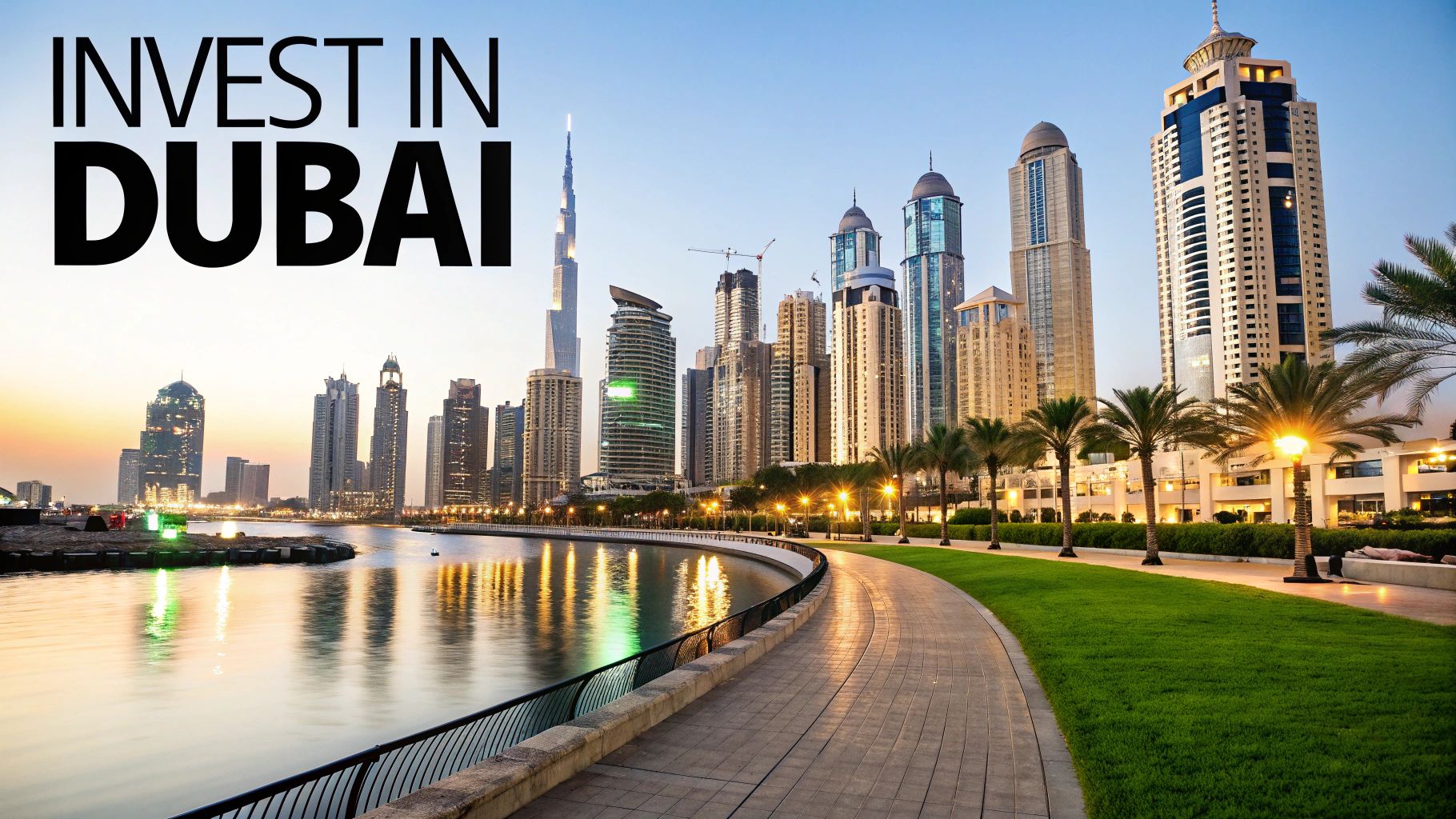
The United Arab Emirates has rapidly positioned itself as a global hub for real estate investment, making it one of the best countries to buy property. Led by Dubai and Abu Dhabi, the market is defined by its world-class infrastructure, tax-free rental income, and luxurious, modern developments. This business-friendly environment offers investors high rental yields and a secure, cosmopolitan lifestyle.
The UAE's property market is driven by strong expatriate demand and a government focused on economic diversification. Landmark projects such as the Palm Jumeirah and Downtown Dubai have not only created iconic skylines but have also established new benchmarks for luxury living. These high-profile developments continue to attract a diverse pool of international investors, from high-net-worth individuals to professionals seeking long-term residency.
Key Investment Insights
- Market Fundamentals: Dubai’s real estate market offers some of the highest rental yields globally, often ranging from 5% to 8% in prime areas. While historically volatile, the market has shown increased maturity and stability, with steady capital appreciation in sought-after communities, according to data from the Dubai Land Department.
- Ideal Buyer Profile: The UAE is perfect for investors seeking high rental returns and capital growth, expatriates looking for a primary residence in a dynamic global city, and business owners capitalising on the pro-investment legal framework. It also appeals to those desiring a property-linked visa for long-term residency.
- Foreign Ownership & Taxes: Foreign nationals can purchase freehold properties in designated areas. A key attraction is the absence of income tax on rental earnings and capital gains. Transaction costs are relatively low, with the Dubai Land Department (DLD) fee at 4% of the property value, plus administrative fees.
Strategic Action Plan
To maximise returns, concentrate on established communities like Dubai Marina or Downtown Dubai for consistent rental demand. It is crucial to understand the distinction between freehold and leasehold ownership before committing to a purchase. Exploring off-plan projects from reputable developers can offer significant capital appreciation upon completion. Always factor in service charges and the hot climate’s impact on maintenance costs. To explore your options further, you can find helpful information about financing an overseas investment property.
4. Thailand Real Estate Market
Thailand's property market presents a unique opportunity for investors, combining affordable luxury with high rental demand driven by its status as a global tourism hub. The kingdom is recognised as one of the best countries to buy property for those seeking strong yields and a low cost of living, offering a distinct value proposition in Southeast Asia. The market is particularly attractive to those looking for holiday lets and properties catering to the expatriate and digital nomad communities.
Foreign investment has significantly shaped Thailand’s real estate landscape, particularly in the condominium sector. In Bangkok, areas like Sukhumvit have become hotspots for high-rise developments offering strong rental yields from a large expatriate population. Similarly, coastal destinations like Phuket and Pattaya have seen a surge in resort-style condominiums and villas in areas such as Patong and Kata, which are in constant demand from international tourists and retirees, ensuring a steady stream of rental income.
Key Investment Insights
- Market Fundamentals: The Thai property market offers exceptional value, with gross rental yields in prime urban and coastal areas often ranging from 5% to 8%. While capital appreciation can be more moderate than in Western markets, the consistent cash flow from tourism-driven rentals is a major draw.
- Ideal Buyer Profile: Thailand is perfect for investors targeting high-yield holiday lets, retirees seeking an affordable and high-quality lifestyle, and entrepreneurs capitalising on the country's booming tourism sector. It also appeals to buyers looking for a second home in a tropical climate with a vibrant culture.
- Foreign Ownership & Taxes: Foreigners can own condominium units freehold, provided that foreign ownership in the building does not exceed 49%. For land and houses, long-term leaseholds are the standard and secure route. Transaction costs are relatively low, typically including a transfer fee, stamp duty, and specific business tax, which often total around 3-6% of the property value.
Strategic Action Plan
To maximise returns, concentrate on properties in high-demand tourist or expatriate hubs like Phuket, Pattaya, or Bangkok's central business district. For long-term growth, consider emerging retirement destinations such as Hua Hin. Engaging a reputable property management company is essential for handling rentals and maintenance, especially for overseas investors. It is also crucial to fully understand the property tax implications in Thailand before committing to a purchase.
5. Mexico Real Estate Market
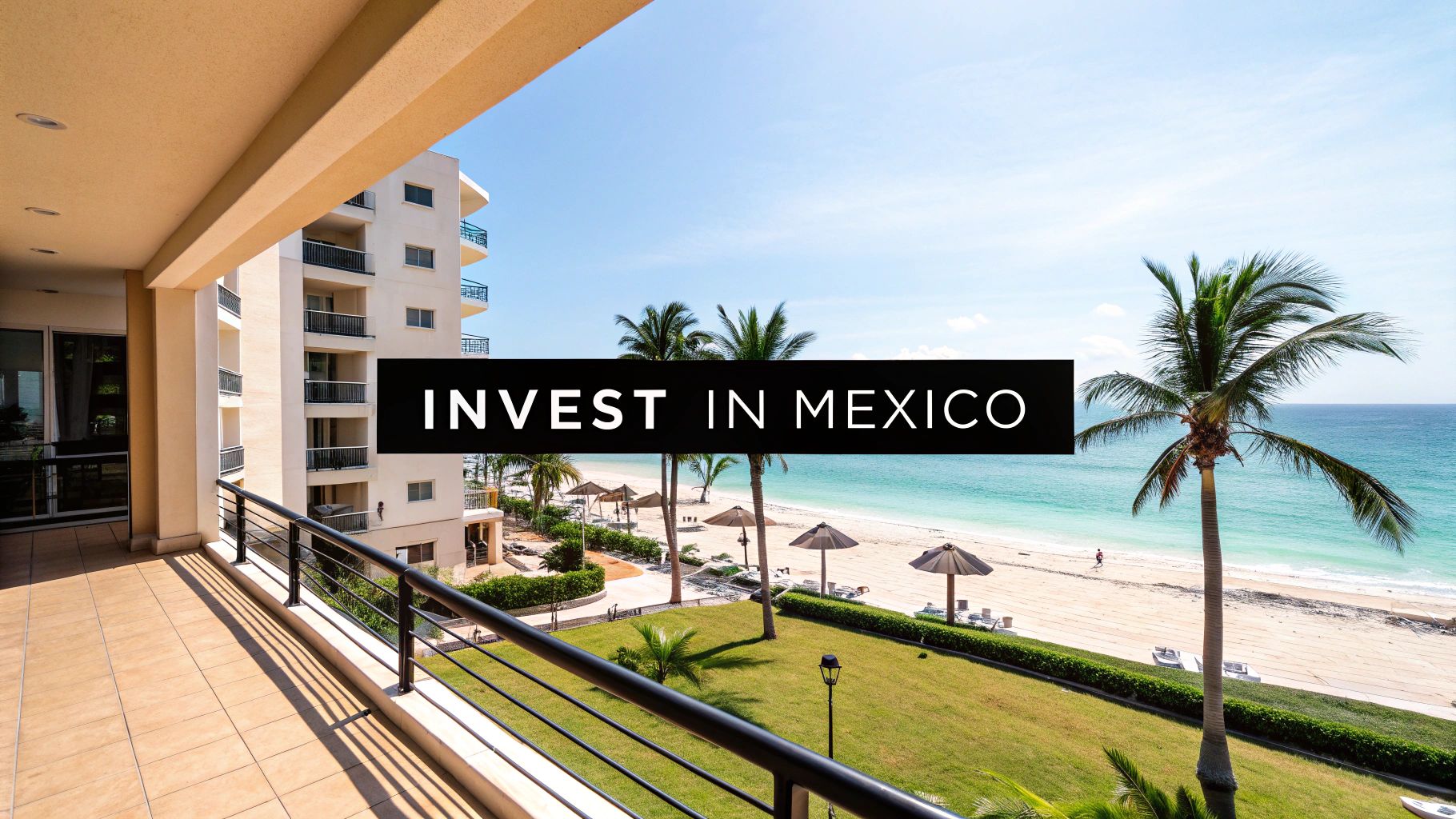
Mexico stands out as one of the best countries to buy property, offering a unique combination of affordable real estate, vibrant culture, and robust tourism-driven rental demand. Its diverse market caters to a wide range of investors, from those seeking high-yield holiday lets in coastal hotspots to others targeting long-term capital appreciation in major urban centres. The country’s proximity to North America makes it a particularly attractive and accessible destination for a large pool of buyers and renters.
The Mexican property market is buoyed by its strong tourism sector and a growing number of expatriates and retirees. Popular coastal destinations like Cancún and Playa del Carmen have seen significant development in resort-style condominiums, while colonial cities such as San Miguel de Allende attract lifestyle buyers seeking historic charm. In urban areas, neighbourhoods like Polanco and Roma in Mexico City offer sophisticated apartments with strong potential for price growth, appealing to both domestic and international investors.
Key Investment Insights
- Market Fundamentals: Mexico’s property market offers attractive rental yields, particularly in tourist areas where short-term let returns can reach 8-12%. While nationwide price growth is moderate, prime locations have shown consistent appreciation. The market is highly segmented, with luxury coastal properties operating differently from residential real estate in Mexico City.
- Ideal Buyer Profile: Mexico is perfect for North American investors seeking an accessible second home, buy-to-let entrepreneurs capitalising on the strong holiday rental market, and retirees drawn to the low cost of living and warm climate. It also appeals to those looking for a diverse portfolio with both high cash flow and growth potential.
- Foreign Ownership & Taxes: Foreigners can own property directly, but there are restrictions within 50 km of the coast and 100 km of international borders, known as the 'Restricted Zone'. In these areas, ownership is facilitated through a bank trust (fideicomiso). Transaction costs, including acquisition tax and notary fees, typically range from 4-7% of the property value.
Strategic Action Plan
To secure your investment, it is essential to work with an established real estate agent and a reputable notary to navigate the fideicomiso process for coastal properties. For buy-to-let investments in areas like the Riviera Maya, ensure you factor in hurricane insurance and property management fees. Differentiating your strategy based on location is key; focus on coastal regions for rental income and major cities like Mexico City for long-term capital appreciation. A deep understanding of how location drives real estate investment success is crucial for making informed decisions in Mexico's varied market.
6. Greece Real Estate Market
Emerging from its economic recovery, Greece has repositioned itself as one of the best countries to buy property, offering exceptional value in the Mediterranean. The market combines affordable entry points with the stability of EU membership and a highly attractive Golden Visa programme, making it a prime target for international investors seeking both lifestyle and returns. The nation's powerful tourism industry underpins strong rental demand, particularly in coastal and island locations.
The Greek property market's rebound has been driven by renewed investor confidence and government initiatives aimed at attracting foreign capital. This has spurred development and renovation projects across the country. For example, historic homes in Athens' Plaka district are being meticulously restored, while luxury villas in Mykonos and Santorini continue to attract high-net-worth individuals. The island of Crete is also seeing significant investment in new resort and residential communities, offering diverse opportunities.
Key Investment Insights
- Market Fundamentals: After a prolonged downturn, Greek property prices are on a solid upward trajectory, yet remain significantly lower than many Mediterranean counterparts. Rental yields are particularly strong in tourist hotspots, often ranging from 5% to 7%, especially for short-term holiday lets.
- Ideal Buyer Profile: Greece is perfect for investors seeking residency through property via its Golden Visa programme. It also attracts lifestyle buyers dreaming of an island home, buy-to-let investors capitalising on the robust tourism sector, and bargain hunters looking for undervalued assets with high growth potential.
- Foreign Ownership & Taxes: There are no restrictions on foreign ownership in most of Greece, though some border areas require special permission. Transaction costs are relatively low, with the property transfer tax at just 3.09%. An annual property tax (ENFIA) applies, which varies based on the property's size and location.
Strategic Action Plan
To maximise returns, focus your search on properties eligible for the Golden Visa, which requires a minimum investment of €250,000 in certain areas (though this has increased in prime locations). Prioritising island and coastal areas will allow you to tap into the lucrative holiday rental market. It is imperative to engage a local solicitor to conduct thorough due diligence and a title search, as historic land registry issues can be complex. For portfolio diversification, consider acquiring multi-unit buildings in up-and-coming Athenian neighbourhoods to generate multiple rental income streams.
7. Malaysia Real Estate Market
Malaysia presents a compelling case as one of the best countries to buy property, particularly for investors seeking affordability, modern infrastructure, and a multicultural environment in Southeast Asia. The market offers a diverse range of opportunities, from luxury high-rise condominiums in bustling urban centres to serene retirement villas, all underpinned by a stable economy and welcoming foreign ownership policies.
The country's appeal is significantly enhanced by government initiatives like the Malaysia My Second Home (MM2H) programme, which provides a long-term visa for eligible foreigners, encouraging residential investment. This has cultivated established expatriate communities in key areas. For instance, Kuala Lumpur’s KLCC district is renowned for its premium condominiums offering views of the Petronas Towers, while Penang’s Georgetown combines UNESCO World Heritage charm with modern coastal developments, attracting both lifestyle buyers and buy-to-let investors.
Key Investment Insights
- Market Fundamentals: Malaysia's property market is known for its price stability and affordability compared to regional neighbours like Singapore. Rental yields in prime locations such as Kuala Lumpur and Penang typically average between 3% and 5%, providing a steady income stream for investors. The market also includes emerging hotspots like Ipoh, which is gaining traction as a retirement destination.
- Ideal Buyer Profile: The country is perfect for expatriates looking for a high-quality, low-cost lifestyle, investors targeting capital growth in a developing economy, and retirees drawn to its excellent healthcare and warm climate. It also appeals to those seeking a strategic base in Asia with strong regional connectivity.
- Foreign Ownership & Taxes: Foreigners can own freehold properties, though there are minimum purchase price thresholds that vary by state, generally starting from RM 1 million (£168,000). Transaction costs are relatively low, including stamp duty and legal fees, typically amounting to 3-5% of the property value. Real Property Gains Tax (RPGT) is applicable on disposal, but rates reduce over time.
Strategic Action Plan
To maximise your investment, focus on properties within established and well-connected districts like Mont Kiara or Damansara in Kuala Lumpur for reliable rental demand and appreciation potential. It is crucial to understand the regulations regarding "Bumiputera lots," which are reserved for specific ethnic groups, though exemptions can sometimes be obtained. Always verify a developer's track record by reviewing their completed projects. For more details on the purchasing process, you can explore guides on buying property in Malaysia as a foreigner.
8. New Zealand Real Estate Market
New Zealand stands out as one of the best countries to buy property for investors who prioritise stability, exceptional quality of life, and robust legal protections. Its real estate market is highly developed and transparent, offering a secure environment backed by a strong economy and spectacular natural landscapes. The market's consistent long-term capital appreciation, particularly in its major urban centres, makes it a compelling choice for high-net-worth individuals and lifestyle-focused buyers.
Despite its geographical remoteness, New Zealand’s property sector is a globally recognised safe haven. This reputation has fuelled significant price growth, especially in prime locations. For instance, waterfront properties on Auckland’s North Shore and harbour-view homes in Wellington consistently command premium prices and demonstrate resilient value. Further south, Queenstown's luxury resort market attracts international attention, while Christchurch offers unique opportunities linked to its ongoing regeneration and rebuild efforts.
Key Investment Insights
- Market Fundamentals: New Zealand has a history of strong house price growth, though it has moderated recently due to interest rate rises. Rental yields in cities like Auckland and Wellington generally sit between 2.5% and 3.5%, reflecting a market geared more towards capital gains than high rental income.
- Ideal Buyer Profile: This market is perfectly suited for high-net-worth investors seeking a secure asset and a potential residency pathway. It also attracts lifestyle buyers and families looking for a safe, high-quality environment. It is less suitable for investors hunting for high cash-flow rental properties.
- Foreign Ownership & Taxes: Ownership is restricted for non-residents, who are generally unable to buy existing homes. However, investors can purchase new-build apartments off-plan or acquire land to develop. High-value investors may qualify via the Investor Plus visa, requiring a minimum NZ$3 million investment. There is no stamp duty, but a capital gains tax (the "bright-line test") applies to profits from residential property sold within a specific period, currently ten years for most properties.
Strategic Action Plan
To invest successfully, focus on qualifying property types like new-build developments in high-growth corridors around Auckland or Wellington. Given the restrictions, engaging with a solicitor specialising in overseas investment is essential from the outset to ensure compliance with the Overseas Investment Act. For those eligible, exploring the potential of Christchurch’s evolving market or the lifestyle appeal of Tauranga could yield better value. Always factor in local council rates and the high cost of earthquake insurance, especially in susceptible regions.
9. Croatia Real Estate Market
Croatia has emerged as a high-potential destination for property investment, offering a unique combination of EU stability, stunning Mediterranean coastline, and prices that remain competitive against established European markets. Its accession to the EU and, more recently, the Schengen Area has boosted investor confidence, improved infrastructure, and streamlined the buying process, making it one of the more compelling countries to buy property in for growth-focused buyers.
The market's primary driver is its booming tourism industry, which fuels demand for holiday lets and second homes along the Adriatic coast. This has led to significant appreciation and redevelopment in prime locations. For instance, properties within and around Dubrovnik’s historic Old Town command premium prices due to their scarcity and tourist appeal. Similarly, Split's waterfront and the areas surrounding Diocletian's Palace have seen a surge in renovation projects, converting historic stone houses into lucrative short-term rental units.
Key Investment Insights
- Market Fundamentals: Coastal property prices have shown robust growth, driven by international demand. Rental yields for short-term holiday lets in prime tourist spots like Dubrovnik, Split, and Hvar can reach 7-10% during the peak season, though this is highly seasonal. The capital, Zagreb, offers more stable, year-round rental yields of around 4-5% from long-term tenants.
- Ideal Buyer Profile: Croatia is perfect for investors targeting the holiday rental market, individuals seeking an affordable Mediterranean holiday home, and speculators looking for capital growth in an emerging EU economy. It also appeals to buyers wanting a foothold in a country with a rising quality of life and increasing integration with Western Europe.
- Foreign Ownership & Taxes: EU/EEA citizens can purchase property under the same rules as Croatian citizens. Non-EU citizens require approval from the Ministry of Justice, a process that has become more of a formality. Transaction costs include a real estate transfer tax (currently 3%) and agent/legal fees, typically totalling 5-7% of the purchase price.
Strategic Action Plan
To maximise returns, focus on properties with clear tourism rental potential on the Dalmatian Coast, but be sure to account for the seasonal nature of rental income. For more stable, long-term growth, consider the emerging residential market in Zagreb, where prices are lower and the rental market is less dependent on tourism. Engaging a local solicitor and a reputable real estate agent is vital to navigate regional regulations and conduct thorough due diligence. For more information, you can research the benefits of Croatia's Schengen integration for property owners.
10. Canada Real Estate Market
Canada stands out as one of the best countries to buy property due to its robust legal framework, political stability, and multicultural cities that offer a high quality of life. The market is known for long-term capital appreciation and provides diverse investment opportunities, from bustling urban centres to resource-rich provinces, making it a reliable choice for global investors.
The Canadian property market is defined by its resilience and regional diversity. Major hubs like Toronto and Vancouver have long been magnets for foreign investment, leading to significant price growth in prime areas such as Toronto's downtown condo market and Vancouver's waterfront neighbourhoods. This sustained demand has created a mature and transparent investment environment, though it has also prompted some provinces to introduce measures like foreign buyer taxes to manage affordability. Meanwhile, cities like Calgary are experiencing renewed growth, offering attractive entry points for investors.
Key Investment Insights
- Market Fundamentals: Canada's market is characterised by steady, long-term growth rather than high-yield, short-term rentals. While rental yields in major cities typically hover between 3% and 5%, the primary driver for investment is capital appreciation. The national average house price has shown consistent upward momentum over the last two decades, supported by strong immigration and a stable economy.
- Ideal Buyer Profile: Canada is perfect for investors prioritising security, long-term growth, and a potential pathway to residency. It attracts families seeking high-quality education and healthcare, professionals moving for career opportunities, and high-net-worth individuals looking for a stable asset class in a G7 nation.
- Foreign Ownership & Taxes: Foreign ownership is generally permitted, though some provinces, like British Columbia and Ontario, have specific taxes for non-resident buyers. Transaction costs include land transfer taxes, legal fees, and potential goods and services tax (GST) on new builds, typically amounting to 3-5% of the purchase price.
Strategic Action Plan
To uncover better value, look beyond Toronto and Vancouver to high-growth secondary markets like Calgary or Ottawa, which offer lower entry costs and strong appreciation potential. Foreign investors should secure mortgage pre-approval early, as qualification requirements can be stringent. It is also crucial to understand the provincial and municipal property tax structures, as these vary significantly across the country. Engaging with a mortgage broker and a real estate lawyer familiar with non-resident transactions is essential for a smooth acquisition process.
Top 10 Countries to Buy Property: Market Comparison
| Market | 🔄 Implementation complexity | ⚡ Resource requirements | 📊 Expected outcomes | 💡 Ideal use cases | ⭐ Key advantages |
|---|---|---|---|---|---|
| Portugal Real Estate Market | Moderate — some bureaucracy; Golden Visa paperwork | €280k+ for Golden Visa; avg €3k–5k/sqm (Lisbon ~€4.5k) | Rental yield 4–6%; strong appreciation 8–10% p.a. | Golden Visa/residency, buy‑to‑let in Lisbon/Porto/Algarve | NHR tax benefits, affordable vs Western Europe, EU/Eurozone stability |
| Spain Real Estate Market | Moderate–high — regional rules and legal steps | €500k+ for Golden Visa; €4.8–5.2k/sqm in major cities | Rental yield 4–7%; appreciation 5–9% p.a. | Urban investments (Barcelona/Madrid), coastal tourism rentals | Transparent market, strong infrastructure, high tourism demand |
| UAE (Dubai/Abu Dhabi) Real Estate Market | Low–moderate — clear regs but freehold/leasehold nuances | High capital: €8k–15k/sqm; no property/income tax | Rental yield 5–8%; appreciation 3–7% (volatile short‑term) | Luxury rentals, expat housing, short‑term high‑end lets | Tax‑free income, world‑class infrastructure, strong expat demand |
| Thailand Real Estate Market | Moderate–high — foreign ownership limits; leaseholds common | Low–moderate: €2k–4k/sqm; leasehold/condo structures | Rental yield 6–10%; appreciation 4–8% p.a. | Tourism short‑lets (Phuket/Bangkok), digital‑nomad rentals | Low entry costs, high tourism yields, established management services |
| Mexico Real Estate Market | Moderate — coastal ownership rules and title complexity | Low–moderate: €2k–5k/sqm; strong tourism area demand | Rental yield 7–12% in resort areas; appreciation 5–10% | Beachfront vacation rentals, proximity to US investors | High tourism income, residency pathways, affordable options |
| Greece Real Estate Market | Moderate — title checks advised; bureaucratic steps | €250k+ for Golden Visa; €2.5k–4k/sqm | Rental yield 5–8%; appreciation 4–7% p.a. | Golden Visa investments, island/coastal holiday rentals | Very affordable Western Europe prices, Golden Visa, EU benefits |
| Malaysia Real Estate Market | Moderate — ownership thresholds, Bumiputera rules | €2k–3.5k/sqm; MM2H visa considerations | Rental yield 4–6%; appreciation 4–7% | MM2H/residency buyers, KL/Penang urban investments | MM2H visa access, affordable quality, ASEAN connectivity |
| New Zealand Real Estate Market | High — strict regs and high investor thresholds | High capital: NZ$9k–12k/sqm; investor visas NZ$1.5–3m | Rental yield 3–4%; stable appreciation 4–6% | Quality‑of‑life buyers, long‑term capital growth | Strong legal protections, transparency, lifestyle appeal |
| Croatia Real Estate Market | Moderate — bureaucratic steps; seasonal volatility | Moderate: €3k–5k/sqm (coast) | Rental yield 4–7% (seasonal); appreciation 5–8% | Coastal holiday rentals, Zagreb for appreciation | EU membership, affordable Adriatic properties, tourism draw |
| Canada Real Estate Market | High — provincial regulations and limits for foreigners | High capital: CAD$6k–9k/sqm; strict mortgage rules | Rental yield 2–4%; steady appreciation 3–5% | Long‑term investors, residency pathways, diversified regions | Strong legal framework, residency programs, stable economy |
Final Thoughts
Navigating the global property market can feel like an overwhelming endeavour, but as this analysis shows, the opportunities for savvy investors are both vast and varied. From the stable, lifestyle-driven markets of Western Europe to the high-yield, dynamic cityscapes of the UAE, the best countries to buy property are not defined by a single metric. Instead, they are distinguished by a unique combination of economic stability, lifestyle appeal, investor-friendly policies, and tangible growth potential.
This guide has dissected ten distinct markets, each presenting a compelling case for a different type of investor. We have seen how Portugal's Golden Visa programme and strong rental yields attract those seeking both residency and returns. In contrast, Spain offers a mature, lifestyle-driven market perfect for holiday lets and long-term capital appreciation. Meanwhile, emerging hotspots like Croatia and established powerhouses like Canada showcase the sheer diversity of objectives that international real estate can fulfil.
Key Takeaways for the Global Investor
The journey from initial interest to successful acquisition is built on a foundation of diligent research and strategic decision-making. As you reflect on the countries detailed in this article, keep these core principles at the forefront of your strategy:
- Define Your ‘Why’: Your primary motivation dictates your ideal location. Are you chasing high rental yields (like those found in Dubai or Thailand), seeking a Golden Visa (as offered by Greece), planning a retirement home (a popular choice in Mexico or Malaysia), or diversifying a larger portfolio with stable assets (a common goal for investors in Canada or New Zealand)? Your objective is the most crucial filter.
- Due Diligence is Non-Negotiable: Never underestimate the importance of on-the-ground research and professional advice. The complexities of foreign ownership laws, property taxes, and inheritance rules can vary dramatically. Engaging a reputable, local legal expert and a trusted real estate agent is not a luxury; it is an essential risk mitigation strategy.
- Look Beyond the Purchase Price: The true cost of an investment property extends far beyond the initial sale price. Remember to factor in transaction costs (like stamp duty and legal fees), ongoing property taxes, maintenance expenses, and potential capital gains tax upon resale. A comprehensive financial model is your best tool for accurately forecasting return on investment.
- Balance Risk and Opportunity: Established markets like Canada may offer lower yields but provide greater stability and predictability. Conversely, emerging markets such as Croatia or parts of Southeast Asia might promise higher growth potential but come with increased currency risk or regulatory uncertainty. A balanced portfolio often includes a mix of both.
Your Next Steps to Buying Property Abroad
Embarking on an international property purchase is a significant financial and personal commitment. The information presented here serves as a comprehensive starting point, designed to empower you with the foundational knowledge needed to ask the right questions and identify the markets that align with your goals.
The next phase of your journey involves deepening your research and building your professional network. Start by shortlisting two or three countries from this list that most closely match your investment criteria. Begin monitoring their property portals, reading local financial news, and connecting with expatriate forums to gain real-world insights.
Ultimately, investing in overseas property is more than just a financial transaction. It is an opportunity to expand your horizons, diversify your assets, and create a tangible connection to another part of the world. Whether you are building a legacy for your family, securing a dream retirement spot, or generating a new stream of passive income, the right international property can be one of the most rewarding investments you ever make.
For investors seeking to navigate these complex international markets with confidence, World Property Investor provides in-depth analysis, exclusive market data, and expert-led resources. Our platform is designed to equip you with the tools and insights needed to make informed decisions on the best countries to buy property. Explore our membership options at World Property Investor to take your global investment strategy to the next level.