
Managing a rental property in 2026 means running a small operating business, whether you own one flat in Leeds or a spread of units across several countries. Rent collection, compliance, maintenance, tax records, listing performance, and tenant communication all sit in the same workflow. If you're still relying on spreadsheets and memory, you're carrying operational risk you don't need.
That matters even more in the UK. The private rented sector reached 5.8 million households by Q4 2025, representing 28% of all households, and average rents hit £1,224 per month, up 8.6% year on year according to the ONS data cited in the verified market summary above. In parallel, the NRLA's 2025 survey of more than 5,000 landlords found that 68% now rely on property management apps for rent tracking and tenant screening, up from 42% in 2020, which shows how firmly digital workflows have moved into the mainstream.
The practical question isn't which shiny app has the longest feature list. It's which tool removes friction from your particular strategy. A first-time landlord needs control and simplicity. A portfolio investor needs reporting and repeatable systems. An HMO operator needs room-by-room marketing and tighter operational oversight.
This guide breaks the best rental property app choices by function, not by marketing claims. Some are best for sourcing. Some are best for finance. Some are best when you need an all-in-one operating layer. If you're comparing your stack against broader property rental management software, start here and build from the task that currently costs you the most time.
1. Rightmove
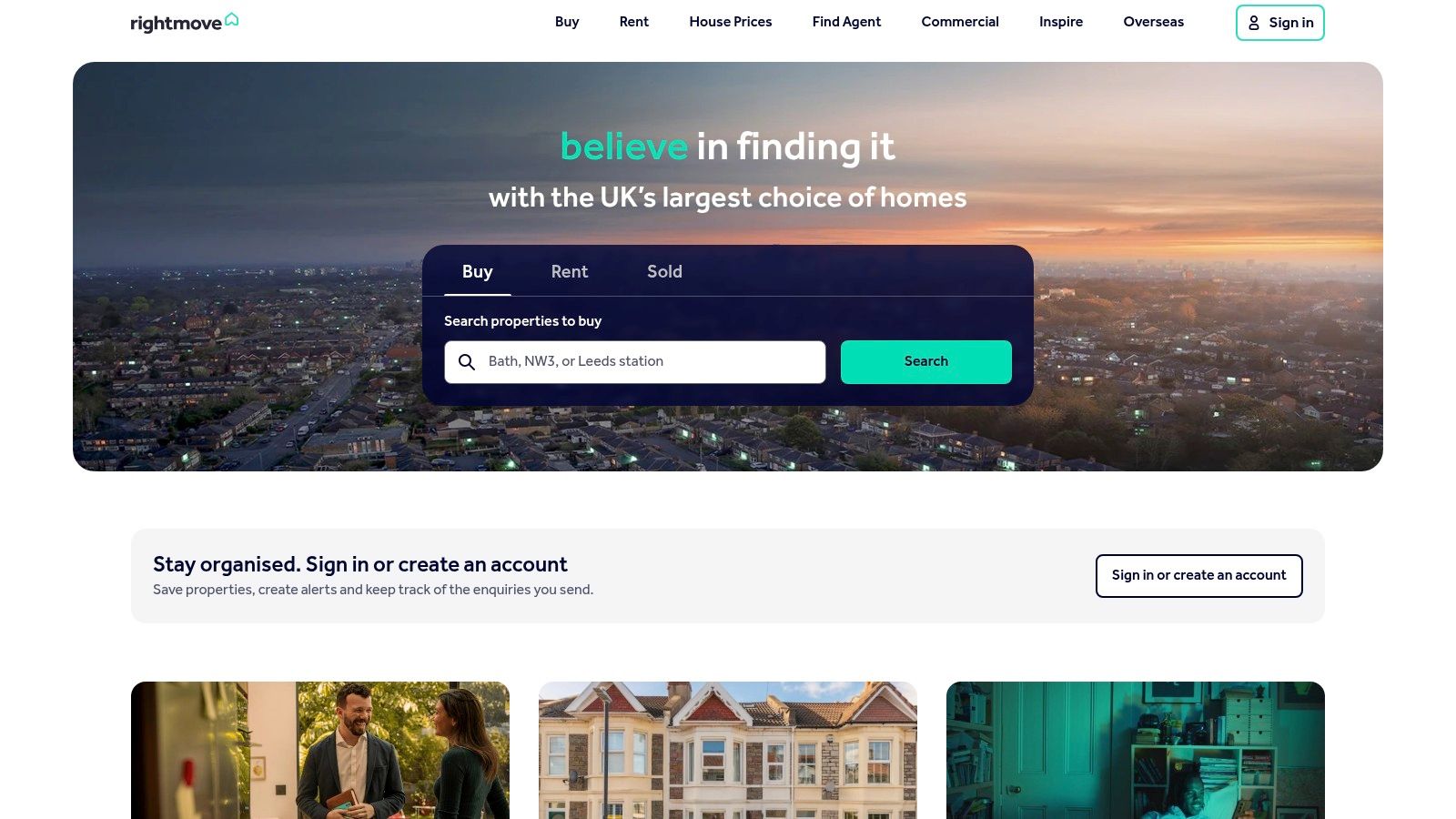
For most UK investors, Rightmove is where pricing discipline starts. If you want a live read on asking rents, listing quality, and how quickly stock is turning in a target area, you check Rightmove first. That's true whether you're buying your first terrace in the Midlands or expanding a professional portfolio in commuter markets.
Rightmove's investor value isn't just visibility. It also gives you a way to sanity-check your underwriting before you commit to a purchase. If your projected rent only works in a spreadsheet and not in the live market, the problem is usually your assumptions, not the portal.
Where it fits best
Professional landlords use it heavily. In the NRLA Property Tech Benchmark Report for 2025, Rightmove's Rental Manager tool recorded a 68% adoption rate among professional landlords managing more than 50 properties, with the same verified summary noting 92% accuracy in rent comparables for London and the South East and user satisfaction of 87% (reference link provided in verified data).
That doesn't mean it's only for large operators. A first-time landlord can use Rightmove just as effectively to compare layouts, furnishing standards, EPC visibility, and agent positioning. It's one of the fastest ways to understand what tenants in a local market are being shown.
- Best for market sensing: Saved searches and alerts help you monitor rent drift in your patch.
- Best for presentation benchmarking: Floorplans, photos, virtual tours, and EPC details show what competing stock looks like.
- Weak point for direct control: You generally can't list directly as a landlord without using an agent or a third-party route.
Practical rule: Use Rightmove to underwrite demand, not to justify optimism. If comparable stock is sitting, trim your rent assumption.
For investors still refining their buy-to-let strategy, Rightmove is less a management app than a market reality check. It won't run your tenancy, but it will stop you buying on stale assumptions. That alone protects returns.
2. Zoopla
Zoopla works best as the second screen serious investors keep open. Rightmove may be the default starting point, but Zoopla often gives you a cleaner cross-check on local pricing, neighbourhood context, and whether your target rent is supported by more than one portal.
That cross-reference matters. Asking rents can be distorted by overconfident agents, weak listings, or temporary supply imbalances. Looking at one portal alone is rarely enough if you're trying to buy well in a changing market.
Why investors keep it in the stack
Zoopla Pro has stronger relevance higher up the portfolio scale. The verified market summary states that Zoopla Pro reported 55% market penetration among institutional portfolios with more than 500 units in the 2026 PwC UK PropTech Adoption Survey, with 76% user satisfaction and coverage of 4.5 million active rentals through hyper-local geospatial analysis (reference link provided in verified data).
Retail investors don't need that enterprise layer to benefit from the portal itself. The app's practical strength is triangulation. Check the same postcode on Rightmove and Zoopla, and you'll quickly see whether a listing is competitively positioned or merely hopeful.
Don't treat portal rents as achieved rents. Treat them as the upper edge of the negotiation range until your own letting evidence says otherwise.
A few things make Zoopla useful for acquisition work:
- Area context: Local insights help you build a fuller picture around a potential purchase.
- Research efficiency: Saved searches sync well across devices, which is useful if you review deals while travelling.
- Useful as a validator: It helps confirm whether a rent projection is consistent across platforms.
For investors comparing regions, it's particularly helpful to pair portal research with local yield logic. That's where broader location work matters more than app preference. If you're deciding where to deploy capital next, this guide to the best places to buy rental property is the right next step.
3. OpenRent
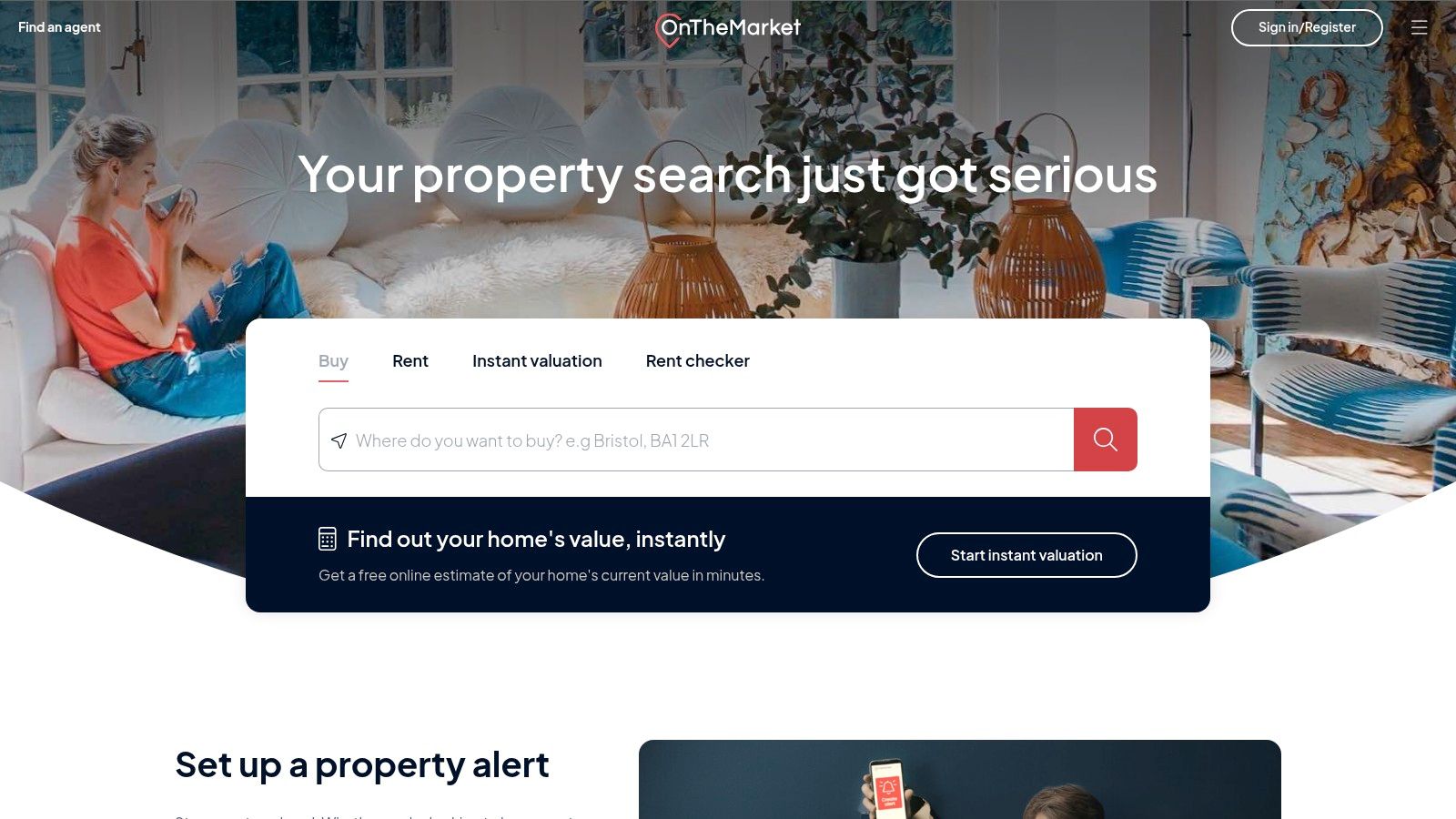
OpenRent suits landlords who want control without handing margin to a traditional letting agent. If you're comfortable handling enquiries, references, tenancy documents, and move-in administration yourself, it can remove a large chunk of friction from self-management.
Its biggest strategic advantage is that it sits between a listing portal and a lightweight operating system. You can advertise, reference, generate contracts, and handle deposit-related steps without bouncing between several disconnected services.
Best for hands-on landlords
OpenRent is strongest for landlords with a small to mid-sized portfolio who still want direct visibility over tenant selection. That tends to include first-time landlords, accidental landlords, and investors who've grown through a few acquisitions but don't yet need enterprise software.
What works well is the single workflow. You can move from listing to applicant handling to tenancy setup in one environment. That reduces admin leakage, which is where smaller landlords often lose time and make avoidable mistakes.
What doesn't work as well is portfolio-level reporting. If you want detailed financial analytics, cashflow dashboards, or deeper operating metrics, you'll still need a separate finance tool.
- Strong fit: Self-managing buy-to-let owners who value cost control.
- Less ideal: Operators needing advanced maintenance workflows or a large team structure.
- Important trade-off: Reach improves when you pay for portal distribution, so the cheapest setup isn't always the most effective one.
The right way to use OpenRent is to pair it with a hard-nosed yield view. Before listing, run your target rent through a proper rental yield calculator and test the deal against realistic vacancy and repair assumptions, not just best-case occupancy.
4. SpareRoom
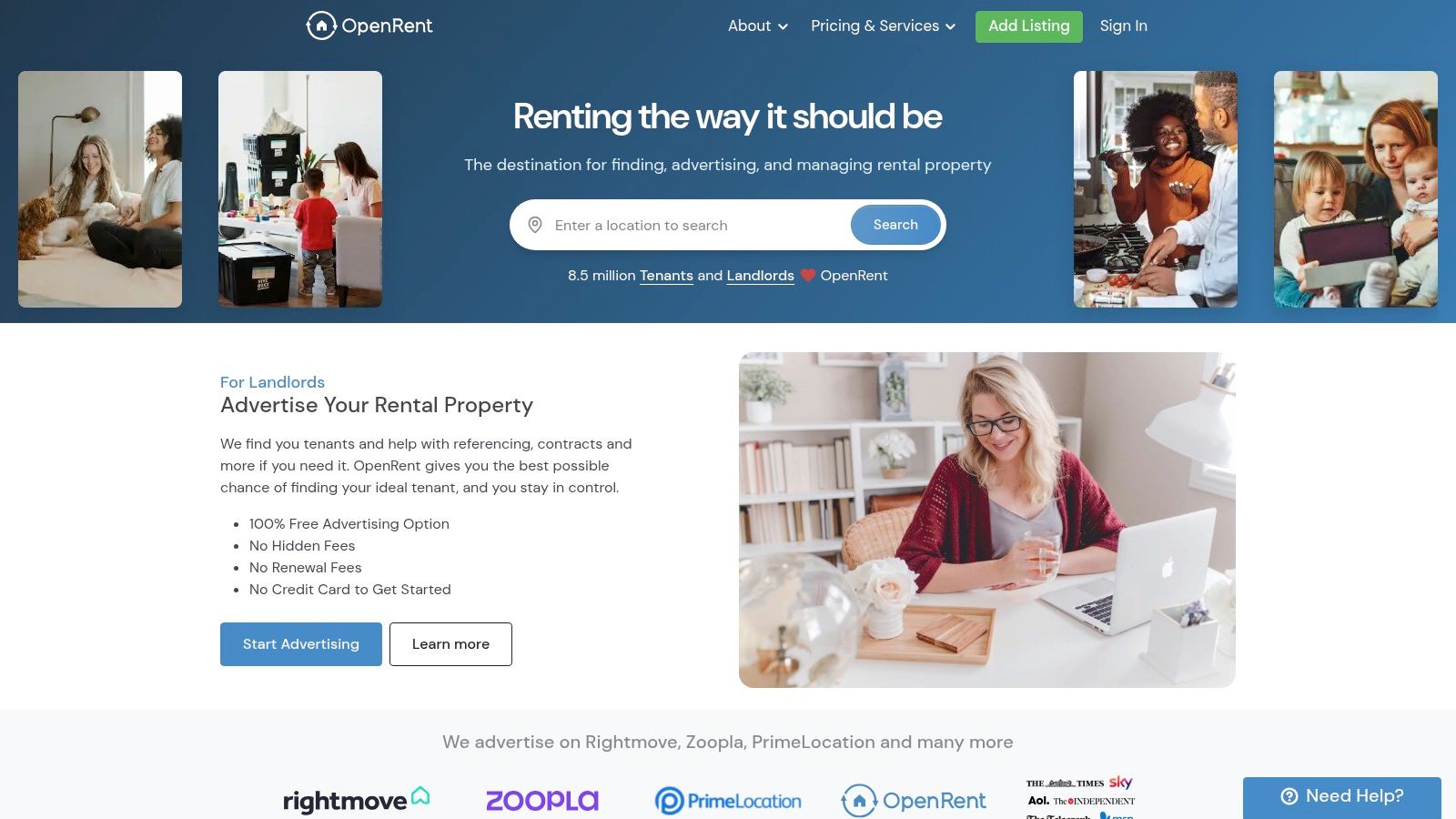
If you run HMOs, SpareRoom isn't optional. It's the clearest read on room-by-room demand in the UK, and it often tells you more about a local HMO market than the major portals do.
That's because HMO economics are different. You're not just underwriting one tenancy. You're underwriting several micro-tenancies, each with its own turnover risk, pricing sensitivity, and presentation standard. A room that looks acceptable on a whole-house portal may underperform badly on SpareRoom.
Where it wins and where it doesn't
SpareRoom is excellent for testing whether your HMO concept matches what real tenants in that location are seeking. You can study room pricing bands, furnishing norms, transport language, and the difference between listings that feel generic and those that attract quick interest.
For HMO specialists, the app does two jobs. It finds tenants, and it acts as a live market scanner before you buy or refurbish. That's more valuable than many investors realise.
Its weakness is quality control. User-generated listings vary widely, so you need to look past poor photos and weak copy to identify the true competitive set. You also need to accept that the best visibility often sits behind paid upgrades.
A strong HMO operator doesn't ask, “Can I fill six rooms?” The better question is, “Can I fill them repeatedly, at the right price, with the right tenant mix?”
Use SpareRoom if you focus on house shares, room lets, or assets where occupancy depends on room-level demand rather than whole-property demand. Skip it if you only hold standard single-let flats. In that case, it adds noise rather than insight.
5. StuRents
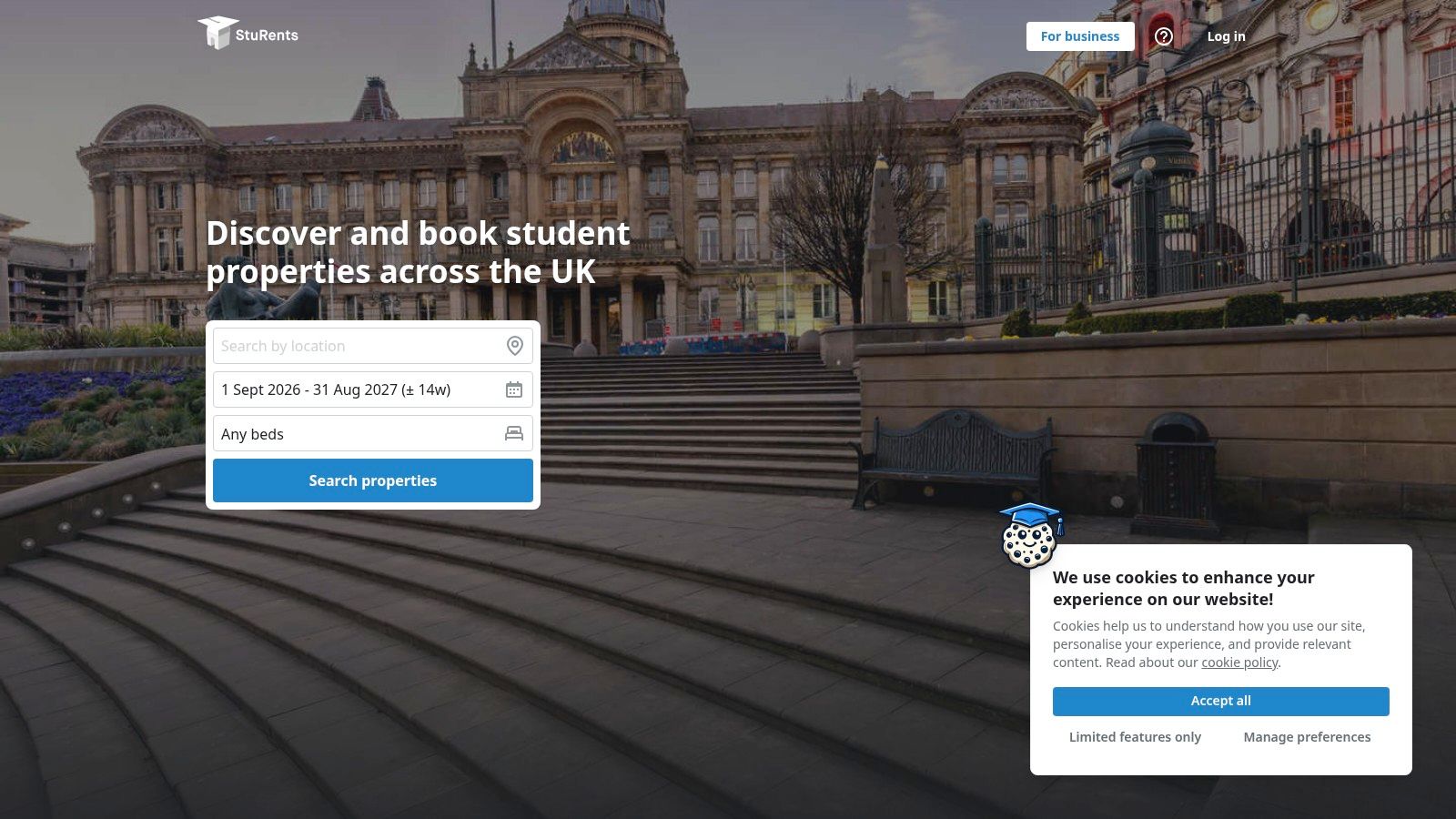
Student property is a specialist business. The leasing cycle is seasonal, the customer group behaves differently, and group tenancies add extra administration. StuRents stands out because it's built around that reality instead of trying to force student stock into a general rental workflow.
In university towns, that focus matters. A standard portal can show listings, but it won't necessarily reflect the timing, group application patterns, or academic-year rhythm that drive student occupancy.
Best for a narrow but valuable niche
StuRents fits investors who own or plan to buy in student-heavy locations where group lets are normal. If your asset sits near a major campus and your annual strategy depends on securing next year's tenants early, a specialist platform usually performs better than a generic one.
The attraction is operational fit. Group applications, digital contracting, and student-oriented listing exposure reduce the friction that often appears when several tenants are trying to move in together on a fixed timetable.
There are clear limits:
- Highly effective in student markets: It aligns with student demand patterns.
- Weak outside the niche: It doesn't add much value for standard family lets or conventional city flats.
- Seasonality matters: Workflow and enquiry intensity come in waves, so you need to manage around the cycle.
This is one of those tools that's excellent if your strategy matches it and almost irrelevant if it doesn't. Investors sometimes overbuy “all-purpose” software when a niche platform would solve the actual leasing problem faster. Student landlords should resist that temptation.
6. Landlord Studio
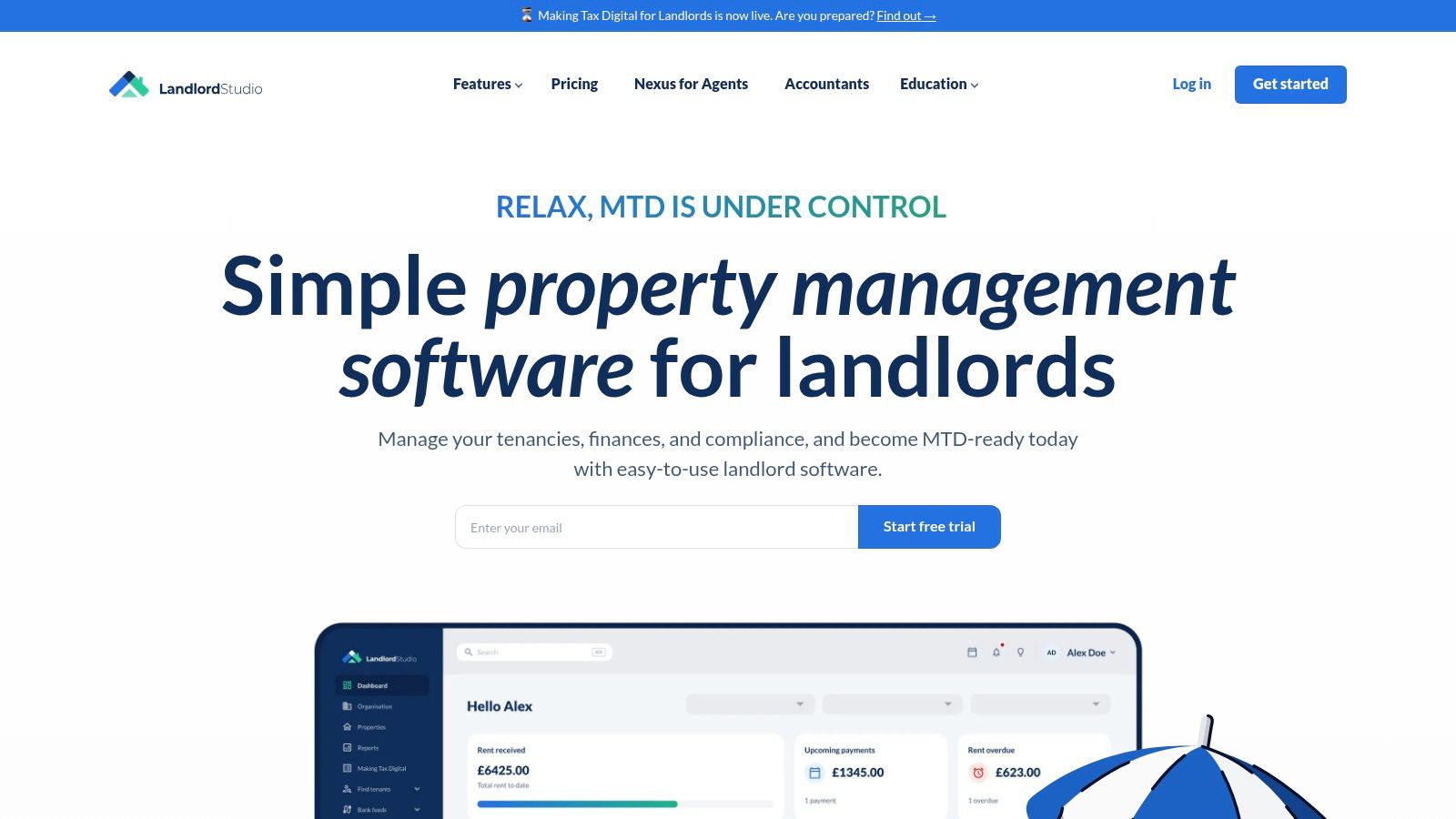
Landlord Studio is one of the better choices for owners who need tighter financial control without buying enterprise software. It's mobile-first, practical, and especially useful for landlords who want cleaner records for tax and day-to-day expense tracking.
Its appeal is simple. Most landlords don't fail because they can't market a property. They lose money because the bookkeeping is sloppy, the documentation is fragmented, and the portfolio's true cash position only becomes clear at tax time.
Why it matters now
The digital shift in UK landlording isn't abstract. The verified market summary notes that the 2016 introduction of Section 24 tax changes created profit squeezes of 20% to 30%, pushing 1.2 million landlords into tech solutions by 2023 per HMRC filings. That's exactly the kind of pressure that makes finance apps more important than flashy listing tools.
Landlord Studio's strength is record-keeping discipline. Receipt scanning, expense categorisation, key date tracking, and report generation make it easier to keep your books in shape throughout the year rather than trying to reconstruct them under pressure.
That said, it isn't a tenant acquisition platform. You'll still need something else for listing, enquiries, and broader tenancy marketing.
- Best for first-time landlords who hate admin: It reduces manual record-keeping.
- Useful for growing portfolios: It creates cleaner property-level financial visibility.
- Not enough on its own: You still need a sourcing or listing app alongside it.
For investors scaling gradually, this sort of finance discipline becomes the bridge between owning a few rentals and managing a real business. If that's your trajectory, this guide on how to build a portfolio of properties is a useful companion read.
7. Hammock
Hammock is for landlords who care about live financial visibility more than broad operational bells and whistles. If your biggest pain point is rent monitoring, arrears visibility, reconciliation, and profit tracking across multiple units, it solves a real problem.
That makes it especially useful once a portfolio starts to get messy. With several tenancies running at once, small gaps in payment monitoring turn into reporting blind spots very quickly.
The real advantage
The UK market has already validated this sort of workflow. According to the NRLA's 2025 survey of more than 5,000 landlords, 68% rely on property management apps for rent tracking and tenant screening, and the same verified summary notes that top apps such as Landlord Vision and Arthur Online hold 4.8 out of 5 user ratings on Trustpilot from more than 2,500 reviews, while automated rent collection reduced late payments by 34% for users in a 2024 UK PropTech Association study ([verified market summary fact set, no additional source URL provided]).
Hammock sits in that financial automation lane. It uses banking connectivity to show what has been paid, what hasn't, and how each property is performing. That's useful not just for bookkeeping, but for management decisions. If one unit repeatedly underperforms after repairs, fees, and arrears, you can see it sooner.
If you can't see arrears and net cashflow clearly, you're not managing a portfolio. You're reacting to one.
Its limitation is equally clear. It doesn't replace a full tenant-facing or maintenance-led platform. If you need contractor workflows, resident communication, or more complex compliance processes, you'll probably pair it with another app rather than rely on it alone.
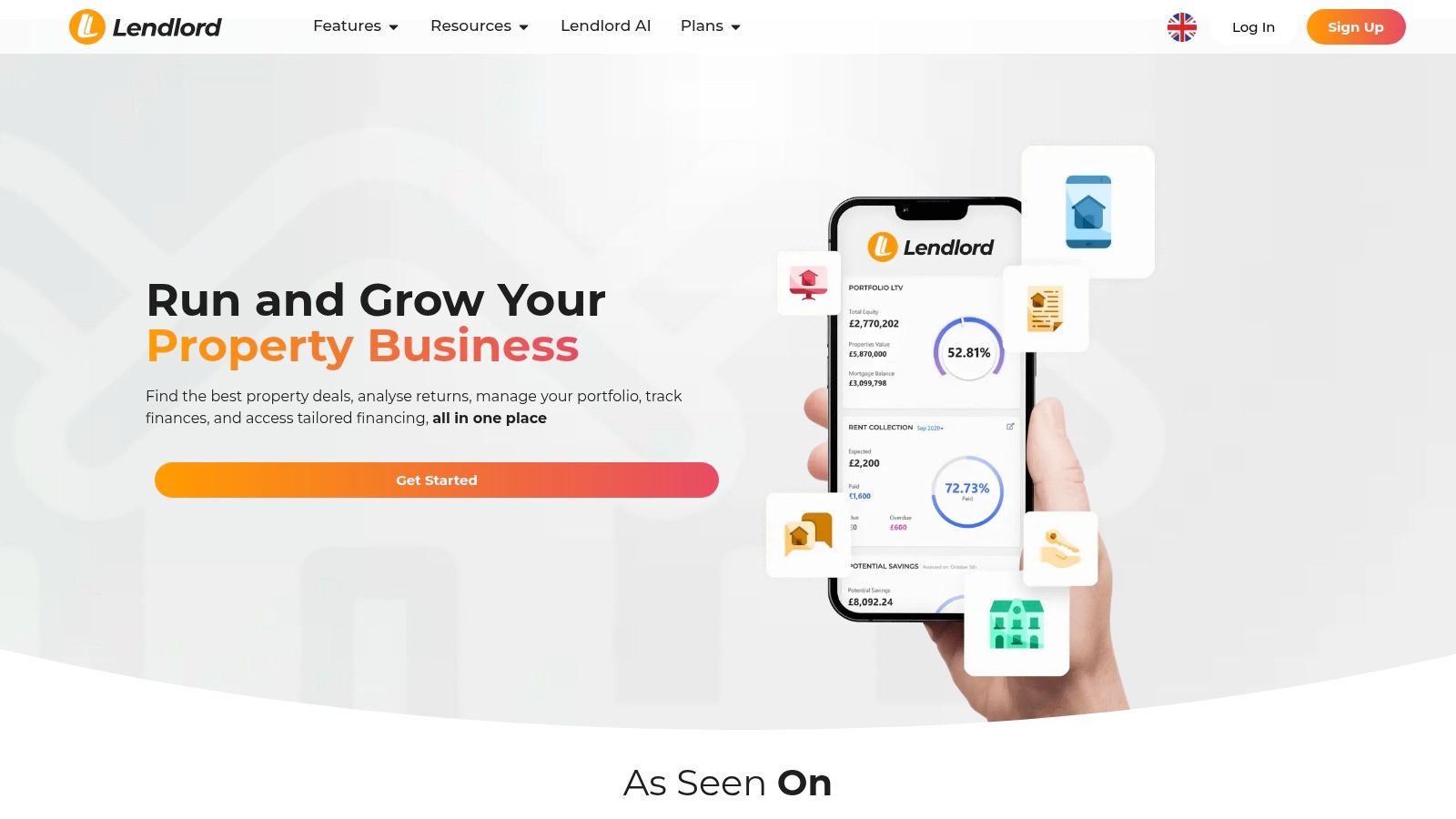
8. Lendlord
Lendlord is built for acquisition-minded investors. It's less about day-to-day tenancy management and more about answering the questions that matter before and after a purchase. What yield does this deal produce? What's the cashflow after finance? How exposed is the portfolio to rate pressure? Where is the equity building?
That orientation makes it particularly useful for investors who are still buying, refinancing, or reshaping their holdings. If you're actively comparing opportunities, Lendlord can be more valuable than a more generic management app.
Best for growth-focused investors
Its deal analyser and portfolio dashboards are the draw. You can model returns, review debt levels, and track a portfolio through an investment lens rather than just an admin lens. That's important because not every profitable tenancy sits inside a good investment, and not every low-maintenance property gives you attractive capital efficiency.
This type of tool becomes more relevant when you move from collecting rent to allocating capital. That's the shift many landlords miss. They remain operators when they should be thinking like portfolio managers.
The broader market backdrop supports that mindset. The verified market summary states that 52% of landlords plan portfolio expansion, that apps processed £45 billion in UK rental payments in 2025, and that Zoopla's Rental Market Report recorded average gross yields of 7.2% in high-demand areas such as Manchester, compared with 5.4% in London, while Savills projects 2.1% capital growth for 2026 and a need for 1.5 million new rental units by 2030 ([verified market summary fact set, no additional source URL provided]).
- Use Lendlord when: You're analysing acquisitions and optimising portfolio structure.
- Skip it when: You need tenant messaging, maintenance management, or listing distribution.
- Best profile: The portfolio investor, not the accidental landlord.
9. OnTheMarket
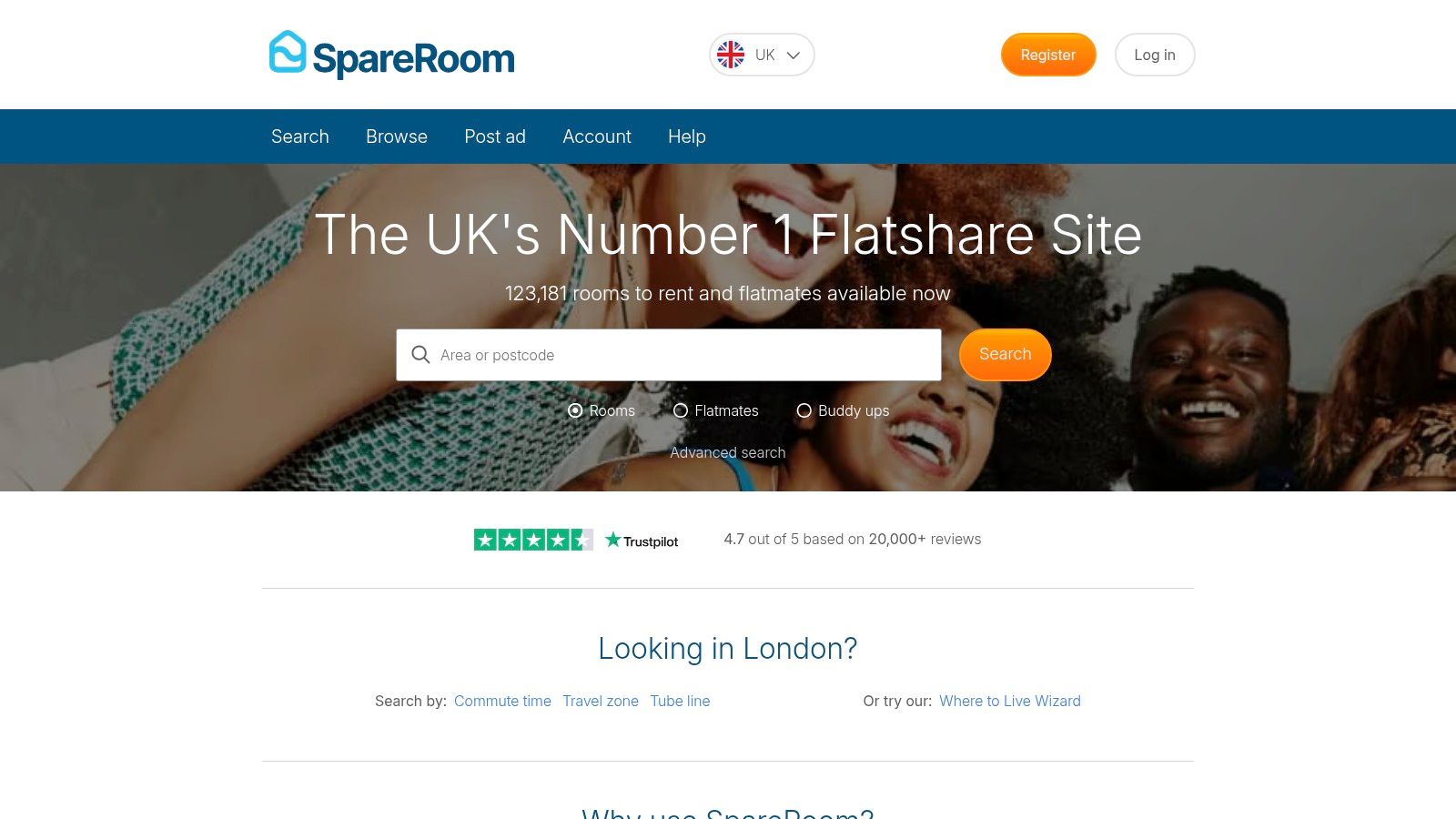
OnTheMarket is a secondary portal, but that undersells its value. In fast-moving local markets, a slightly smaller portal with occasional early access can be more useful than a larger one you check too late.
Its appeal is straightforward. Some listings appear there first through the ‘Only With Us' mechanism, which can matter if you're trying to secure a rental or monitor newly marketed stock before it spreads across larger portals.
A timing tool more than a full research stack
For investors, OnTheMarket works best as an alerting layer rather than a standalone market database. Keep notifications on in target areas and use it to spot fresh supply, then compare the same local inventory against Rightmove and Zoopla.
That's particularly useful in markets with thin stock, where speed matters and one extra day can decide whether you get the viewing, the tenant, or the first serious look at local pricing movement.
What it won't do is replace the larger portals for total market coverage. Inventory is generally smaller, and landlord control is still limited in the same way as the other major portals.
- Worth using for speed: New listing alerts can help in competitive submarkets.
- Less useful for broad inventory depth: It isn't the full market.
- Good investor behaviour: Treat it as an early-warning feed, not as your only source of truth.
Investors often think the best rental property app must be the biggest platform. In practice, the best one is often the one that gives you a small informational edge at the right moment. OnTheMarket can do that.
10. Arthur Online
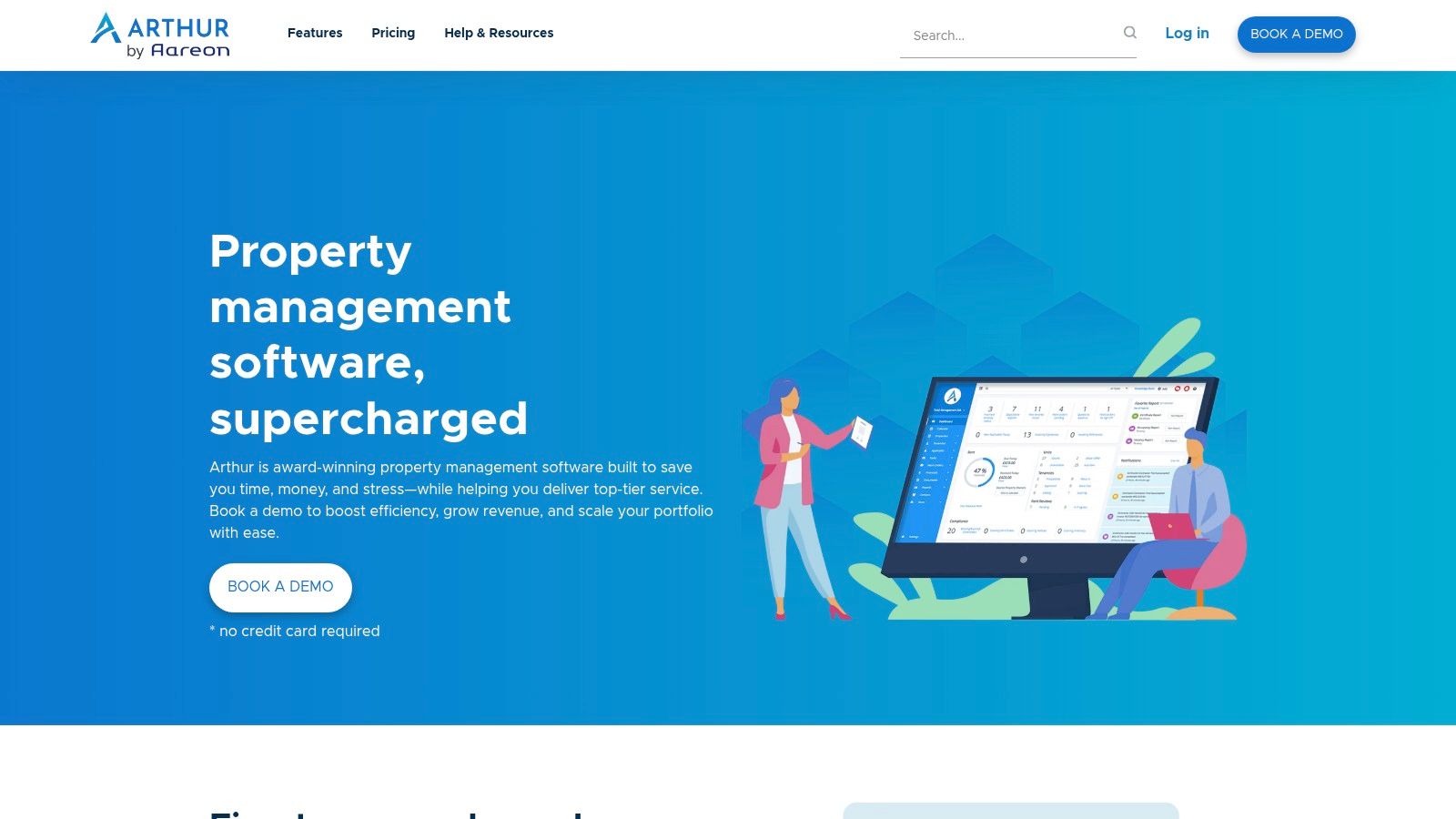
Arthur Online sits at the professional end of the spectrum. If you manage a complex portfolio, multiple stakeholders, recurring maintenance volume, or a large HMO or block operation, it starts to make sense in a way simpler apps don't.
This is software for landlords and operators who need workflow control, not just convenience. You're coordinating managers, tenants, contractors, owners, and finance systems in one environment. That's a different requirement from collecting rent on a handful of units.
When the complexity is worth it
The UK compliance environment has pushed more landlords towards structured software. A 2025 Rightmove Landlord Survey of 3,200 respondents found that 75% use apps for compliance tracking, up from 38% in 2019, while the same verified summary states that automated Right to Rent checks are associated with £2.4 billion in annual fines avoided and that virtual inspection usage rose sharply after the eviction moratorium, processing 1.8 million digital tenancies by 2023 ([verified market summary fact set, no additional source URL provided]).
Arthur Online is well suited to that reality because it combines stakeholder-specific apps, maintenance workflows, communications, and accounting integrations. It's built for process-heavy operations where missed tasks create real risk.
Its downside is obvious. If you own one or two properties, it's likely too much software. More features won't improve your returns if your operating model is still simple.
The right enterprise tool should reduce complexity you already have. It shouldn't introduce complexity you don't need.
For investors with overseas exposure, that distinction matters even more. If you're managing rent flows, contractors, and reporting across borders, stronger systems help you stay in control of overseas rental income without relying on memory and email chains.
Top 10 Rental Property Apps Comparison
| App / Platform | Core Features (✨) | User Experience & Quality (★) | Value & Pricing (💰) | Target Audience (👥) | Unique Selling Point (🏆) |
|---|---|---|---|---|---|
| Rightmove | Nationwide listings; rich filters; virtual tours | ★★★★★, unrivalled inventory & market signal | 💰 Free to search; listing via agents/third-parties | 👥 Investors, landlords, renters | 🏆 Largest UK property portal, best market visibility |
| Zoopla | UK search; area stats; historic pricing | ★★★★☆, slick app & strong data cross-check | 💰 Free to search; fewer listings than Rightmove | 👥 Investors, market researchers, renters | 🏆 Excellent local insights & price history |
| OpenRent | Direct listings; tenant referencing; contracts | ★★★★, end-to-end letting workflow | 💰 Low fixed fees; paid portal syndication | 👥 Self-managing landlords | 🏆 Cost-effective full tenancy creation platform |
| SpareRoom | Room & flatshare search; in-app messaging | ★★★★★, most liquid rooms marketplace | 💰 Freemium; paid Early Bird boosts | 👥 HMO investors, students, sharers | 🏆 Leader for rooms & fastest letting times |
| StuRents | Student-group listings; digital contracts | ★★★★, student-focused UX; seasonal peaks | 💰 Niche pricing; often seasonal demand | 👥 Student housing investors & landlords | 🏆 Tailored for student lettings and group lets |
| Landlord Studio | Income/expense tracking; MTD reports | ★★★★, mobile-first, tax-focused UX | 💰 Freemium; paid tiers for bank feeds & multi-units | 👥 Self-managing UK landlords | 🏆 Strong MTD compliance & receipt scanning |
| Hammock | Open Banking rent tracking; P&L in real-time | ★★★★, powerful automation for finance | 💰 Subscription; pricing scales per tenancy | 👥 Portfolio landlords focused on finances | 🏆 Live cashflow & arrears alerts via Open Banking |
| Lendlord | Deal analyser; portfolio dashboards; finance hub | ★★★★, investor-centric analytics | 💰 Freemium; advanced analytics on paid tiers | 👥 Active property investors & portfolio builders | 🏆 Robust underwriting & deal-sourcing tools |
| OnTheMarket | UK listings; push alerts; clean UI | ★★★, simple, fast search experience | 💰 Free to search; agent-listed properties | 👥 Investors in fast-moving markets | 🏆 'Only With Us' 24‑hr exclusive listings advantage |
| Arthur Online | Stakeholder apps; maintenance workflows; integrations | ★★★★☆, enterprise-grade, comprehensive | 💰 Tiered enterprise pricing, higher cost | 👥 Professional landlords, agents, HMO operators | 🏆 Full-scale property management for large portfolios |
Building a Digital-First Property Investment Business
The best rental property app is rarely one app. It's usually a stack. One tool helps you source. Another handles finance. A third manages lettings or operations. The mistake investors make is buying software by category headline rather than by bottleneck.
If you're a first-time landlord, start with the task most likely to go wrong. That's often listing and tenancy setup, or financial record-keeping. OpenRent and Landlord Studio are a sensible pairing for that profile because one helps you get the tenancy in place and the other helps you run the numbers properly afterwards.
If you're a portfolio investor, your priorities change. You need portfolio visibility, underwriting discipline, and cashflow reporting. That's where a combination such as Rightmove or Zoopla for market intelligence, Lendlord for acquisition analysis, and Hammock for financial monitoring becomes more compelling than any all-in-one promise.
For HMO specialists, demand mapping and operations matter more than generic property search. SpareRoom should sit at the centre of the letting strategy, with Arthur Online becoming more relevant as the operation grows more complex. Student landlords are the same in principle. Use niche software when your niche creates niche problems.
The wider market supports taking software seriously. The verified market summary notes that the UK private rented sector reached 11.4 million tenants in 2025, up 15% since 2020, and that 75% of landlords in the Rightmove Landlord Survey use apps for compliance tracking. It also states that apps like Rentila and Goodlord achieved 95% tenant approval rates in the Deloitte PropTech analysis, while void periods fell from 4.2 to 3.3 weeks and cash-on-cash returns rose to 8.7% across the properties analysed. In the same summary, predictive maintenance platforms such as Fixflo are linked to £1.2 billion in maintenance claims and an 18% cost reduction, with upcoming EPC C standards projected to affect 27% of rentals in 2026. Those aren't abstract technology stories. They are operating and margin stories.
That's why tech adoption has moved from optional to normal. In a market with more regulation, tighter tax treatment, and constant pressure on net returns, the landlord who can see issues early usually performs better than the landlord who is merely busy. Better visibility means fewer missed renewals, faster response to arrears, cleaner tax records, and more confidence when expanding.
Keep the implementation simple. Don't migrate everything at once unless your existing system is failing. Start with one pain point, fix it, then add the next layer. That approach produces better habits and less disruption than buying a bloated system you never fully use.
For investors interested in the broader direction of property technology, this 2026 guide to real estate chatbots is a useful companion read.
If you're researching your next market, comparing yields, or planning a cross-border buy-to-let strategy, World Property Investor offers practical guides built for international buyers who want clear, data-led property insight without the sales gloss.