
For astute global investors, identifying high rental yield countries is a cornerstone of building a profitable international property portfolio. While capital appreciation is a long-term goal, robust rental income provides immediate cash flow, mitigates mortgage costs, and offers a crucial buffer against market volatility. The pursuit of yield, however, is a complex endeavour; headline figures can mask underlying risks, from currency fluctuations and opaque regulations to high taxation and unforeseen management costs.
This definitive guide for 2025 provides a data-driven analysis of ten compelling markets offering superior rental returns. It compares established European hubs, such as Spain and Portugal, with high-growth emerging economies like Turkey and Mexico. We dissect the gross and net yields an investor can realistically expect, moving beyond simple percentages to present a complete picture of the investment landscape.
Each country profile includes a balanced assessment of the pros and cons, typical property prices in key cities, and actionable insights into navigating foreign ownership rules and tax obligations. This roundup is designed to equip you with the practical, impartial intelligence needed to make informed decisions. Our goal is to help you invest with confidence, understand the fundamentals of each market, and ultimately maximise your returns on the global stage.
1. Portugal – Gateway to European Yields (7-10% Gross Rental Yield)
Portugal has firmly established itself as one of Europe's most compelling markets for property investors, particularly for those prioritising rental returns. The country offers an attractive blend of affordable property acquisition costs, relative to other Western European nations, and robust rental demand. This environment, fuelled by tourism, a burgeoning digital nomad scene, and a steady inflow of expatriates, makes gross yields of 7-10% achievable.
The investment appeal extends beyond simple supply and demand. Favourable initiatives like the (now reformed) Golden Visa and the Non-Habitual Resident (NHR) tax regime have historically drawn significant foreign capital, shaping a market accustomed to international investment. While these programmes have evolved, their legacy has created a mature support infrastructure for overseas buyers. As one of the most accessible high rental yield countries in the Eurozone, Portugal presents a balanced risk-reward profile.
Market Snapshot & Key Figures
- Typical Yields: Gross yields often range from 5% in prime Lisbon postcodes to over 10% in secondary cities like Coimbra or Braga for well-managed properties.
- Example (Lisbon): A modern one-bedroom flat in the popular Príncipe Real district, purchased for €350,000, can command a monthly rent of €1,800 to €2,000 from long-term professional tenants.
- Example (Porto): In the revitalised Bonfim area, a refurbished apartment costing €220,000 could generate €1,200 per month, pushing gross yields towards 6.5%.
Actionable Investor Strategy
To maximise returns, investors should look beyond the saturated prime areas of Lisbon's historic centre.
- Target Secondary Cities: Cities like Porto, Braga, and Covilhã often present lower entry prices and less regulatory pressure, leading to superior net yields.
- Focus on In-Demand Units: One and two-bedroom apartments consistently show the highest demand from both long-term renters and the lucrative short-term holiday market.
- Factor in All Costs: Be realistic with your financial modelling. Budget approximately 20-25% of your gross rental income for property management fees, maintenance, local taxes (IMI), and potential void periods to accurately calculate net yield.
For a deeper dive into the specifics of European property markets, learn more about investing in overseas property. Portugal remains a top contender for investors seeking strong, sustainable rental income within a stable and growing EU economy.
2. Turkey – High-Yield Emerging Market (8-15% Gross Rental Yield)
Turkey presents a dynamic, high-potential property market for investors focused purely on rental returns, offering gross yields that are often unparalleled in Europe. The country's unique position, bridging Europe and Asia, fuels a powerful combination of robust tourist demand and a large, youthful domestic rental population. This dynamic allows for gross yields of 8-15%, especially for investors willing to navigate the complexities of an emerging market.
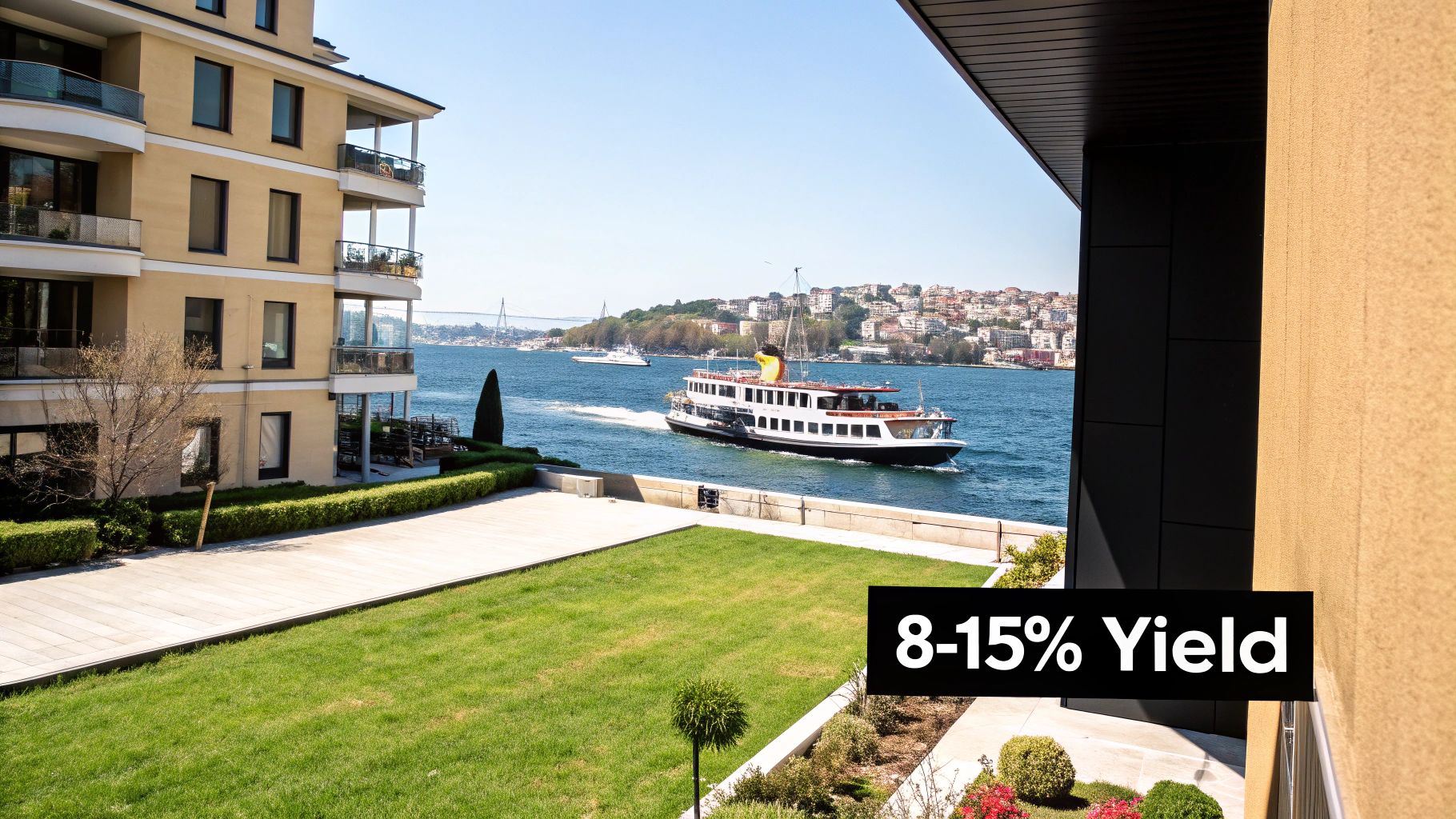
While economic volatility and lira fluctuations present tangible risks, the underlying fundamentals of affordable property prices and high rental demand remain compelling. Government initiatives, such as the Citizenship by Investment programme, continue to attract significant foreign capital. For the risk-tolerant investor, Turkey is one of the few high rental yield countries that offers the potential for both substantial cash flow and long-term capital appreciation if timed correctly.
Market Snapshot & Key Figures
- Typical Yields: Gross yields can range from 7% in Ankara's business districts to over 15% for high-demand short-let properties in tourist hotspots during peak season.
- Example (Istanbul): A two-bedroom apartment in a sought-after area like Beyoğlu, purchased for €150,000, could realistically generate a monthly rent of €1,000 to €1,400.
- Example (Antalya): Along the Mediterranean coast, a modern villa valued at €250,000 can command rental income of €1,500 to €2,500 per month, particularly from seasonal holiday lets.
Actionable Investor Strategy
Success in Turkey requires a strategic approach that balances high-yield opportunities with risk management.
- Focus on Tourist Hubs: Concentrate on established destinations like Istanbul, Cappadocia, and the Mediterranean coast (Antalya, Bodrum) where rental demand is consistent and less dependent on the local economy.
- Mitigate Currency Risk: Develop a hedging strategy to protect against lira depreciation. Consider pricing rents in a stronger currency like the Euro or US Dollar where legally permissible, or plan to repatriate profits when the exchange rate is favourable.
- Prioritise Due Diligence: Engage reputable, independent legal counsel to verify property titles (Tapu) and ensure compliance with all local regulations. This is non-negotiable in a market with varying levels of transparency.
- Target Furnished Units: In high-tourism zones, furnished properties command a premium and attract a wider pool of tenants, from holidaymakers to expatriates, significantly boosting potential rental income.
Navigating this market requires careful planning, but the rewards can be substantial. For those looking to understand similar high-growth environments, you can explore more about top emerging property investment markets. Turkey remains a standout choice for seasoned investors seeking to maximise their rental income.
3. Spain – Balanced European Investment (4-7% Gross Rental Yield)
Spain presents a compelling proposition for investors seeking a balance between healthy rental yields and the stability of a mature European market. With gross rental yields typically ranging from 4-7%, the country offers a more predictable investment environment than many emerging markets, alongside the potential for steady capital appreciation. Its appeal is driven by a powerful combination of year-round tourism, a large expatriate community, and significant demand from students and professionals in its major cities.
The market's attractiveness is enhanced by a transparent legal framework and established residency routes for investors, making it a cornerstone for many diversified property portfolios. As one of the most established high rental yield countries in the EU, it delivers reliable rental income streams with lower volatility, making it a sound choice for risk-averse investors.
Market Snapshot & Key Figures
- Typical Yields: Gross yields can start at 4% in prime Madrid or Barcelona districts and reach over 7% in high-demand areas of Valencia or coastal cities like Málaga.
- Example (Barcelona): A one-bedroom flat in the historic Gothic Quarter, purchased for €400,000, can generate a monthly rent of €1,200 to €1,500 from long-term tenants.
- Example (Málaga): On the Costa del Sol, a well-located apartment costing €250,000 could achieve €900 to €1,200 per month, with significant peaks during the summer tourist season.
Actionable Investor Strategy
Success in the Spanish market requires a nuanced approach that considers regional variations and rental demand drivers.
- Target Multiple Demand Streams: Focus on city centres or tourist-adjacent areas that attract a mix of long-term residents and short-term holidaymakers to smooth out seasonal income fluctuations.
- Understand Regional Regulations: Research the specific rules of the autonomous community you are investing in. Regions like Catalonia and Andalusia have distinct regulations for rental properties.
- Account for Community Fees: When calculating your net yield, factor in community fees (gastos de comunidad), which can range from €150-€300 per month for modern apartment blocks with amenities.
Navigating the diverse regional markets is key to unlocking Spain's full potential. For a broader comparison of its market against other global hotspots, you can explore the best countries to invest in property. Spain remains a top-tier choice for investors who prioritise stable, long-term returns within a highly desirable and well-regulated European economy.
4. Greece – Recovery Market with Strong Yields (6-10% Gross Rental Yield)
Greece represents a compelling recovery market for property investors, offering the potential for significant yields combined with capital growth. Emerging from a challenging economic period, the country's real estate sector is buoyed by a resurgent tourism industry, increasing foreign investment, and attractive property prices that remain low by European standards. This dynamic creates an environment where gross rental yields of 6-10% are readily achievable, particularly in high-demand urban and island locations.
The investment case is strengthened by government incentives and a stabilising economic outlook. The Greek Golden Visa programme, which offers residency for a property investment, has been a major catalyst for foreign capital. This, combined with ongoing EU support and urban regeneration projects, provides growing confidence for long-term investors. For those seeking entry into one of the most promising high rental yield countries in the Mediterranean, Greece offers a unique combination of value and potential.
Market Snapshot & Key Figures
- Typical Yields: Gross yields can range from 5-6% for long-term lets in prime Athens neighbourhoods to over 10% for well-managed short-term holiday lets on popular islands during peak season.
- Example (Athens): A renovated one-bedroom apartment in a gentrifying central district like Psyrri, purchased for €150,000, can generate €750 per month from a long-term professional tenant.
- Example (Crete): A two-bedroom beachfront property near Chania, costing €220,000, could achieve rental income of €1,000 to €1,200 per month, attracting a mix of seasonal tourists and year-round lifestyle renters.
Actionable Investor Strategy
To capitalise on the Greek market, investors must adopt a strategy that balances tourism demand with long-term rental stability.
- Leverage Residency Programmes: For non-EU investors, the Golden Visa can be a strategic entry point, securing EU residency while building a property portfolio.
- Target Mixed-Use Locations: Focus on areas in Athens, Thessaloniki, and the major islands (like Crete) that have consistent year-round demand from both tourists and a local population. This mitigates the risk of seasonal vacancy.
- Factor in Seasonality: When modelling your finances, build in a vacancy reserve of 20-25%, especially for island properties heavily reliant on summer tourism. This ensures your projections remain realistic.
Understanding how to properly project your income and expenses is fundamental to success. For a detailed guide on financial modelling, you can learn more about how to calculate your return on investment for real estate. Partnering with a local property manager experienced in navigating short-term rental regulations is also crucial for maximising returns and ensuring compliance.
5. Mexico – High-Yield Emerging Opportunity (8-12% Gross Rental Yield)
Mexico has emerged as a powerhouse for property investors seeking high returns, leveraging its proximity to the US market and a globally renowned tourism sector. The country presents a compelling risk-reward profile, where affordable property prices meet exceptionally strong rental demand, making gross yields of 8-12% a realistic target. This demand is driven by a vibrant tourism industry, a rapidly growing community of North American expats and retirees, and an increasing number of international remote workers.
The investment landscape is supported by laws favourable to foreign ownership, although specific structures like a fideicomiso (bank trust) are required in coastal and border zones. Despite the additional legal steps, the potential for significant cash flow makes Mexico one of the most attractive high rental yield countries in the Americas. The combination of established infrastructure in tourist hotspots and growing professional hubs creates diverse opportunities for investors.
Market Snapshot & Key Figures
- Typical Yields: Gross yields can range from 7% for stable long-term lets in major cities to over 12% for well-managed short-term holiday lets in prime coastal locations.
- Example (Cancún): A modern two-bedroom beachfront condominium purchased for approximately £240,000 ($300,000) can generate between £1,200 and £2,000 ($1,500-$2,500) per month, depending heavily on the season.
- Example (Mexico City): In the desirable Polanco neighbourhood, a two-bedroom flat costing around £320,000 ($400,000) could secure a stable, year-round rental income of £950 to £1,300 ($1,200-$1,600) per month from professional tenants.
Actionable Investor Strategy
To capitalise on Mexico's potential, investors must tailor their strategy to the specific market segment they are targeting.
- Target Established Tourist Destinations: For reliable short-term rental demand, focus on proven markets like Cancún, Playa del Carmen, and Tulum. These areas benefit from consistent tourist flows and well-developed property management infrastructure.
- Focus on Expat Hubs: In cities like Mexico City or Guadalajara, target expat-heavy neighbourhoods such as Polanco, Condesa, or Chapultepec. These areas offer stable, year-round demand from long-term professional tenants.
- Understand the Legal Framework: Conduct thorough legal due diligence on property titles and understand the requirements of the fideicomiso system if buying in restricted zones. Obtaining Temporary Resident status can simplify legal and taxation processes.
- Plan for Seasonality: In beach markets, your financial model must account for significant fluctuations in rental income between high and low seasons. A robust cash reserve is essential to manage these periods effectively.
6. Bulgaria – Eastern Europe Value Play (7-11% Gross Rental Yield)
Bulgaria represents one of Europe's most compelling value propositions for property investors, offering exceptionally high rental yields within a stable EU framework. The country combines dramatically lower acquisition costs compared to Western Europe with solid and growing rental demand. This formula, driven by a growing IT sector in Sofia and year-round tourism, makes gross yields of 7-11% highly attainable.
The investment case is strengthened by Bulgaria's pro-business environment, including one of the EU's lowest flat tax rates and accessible residency options linked to property investment. While it remains an emerging market, its EU membership provides a secure legal and political backdrop, making it a standout among high rental yield countries for investors seeking both strong cash flow and significant capital appreciation potential.
Market Snapshot & Key Figures
- Typical Yields: Gross yields commonly range from 6-8% for long-term lets in Sofia to over 11% for well-managed short-term holiday lets in prime resort locations like Bansko or Sunny Beach.
- Example (Sofia): A one-bedroom flat in the desirable Lozenets district, acquired for €150,000, can secure a monthly rent of €550 to €650 from young professionals or international tenants.
- Example (Bansko): In the popular ski resort, a studio apartment purchased for €120,000 could generate €600 to €900 per month during the peak winter season, offering exceptional seasonal returns.
Actionable Investor Strategy
To capitalise on Bulgaria’s potential, a targeted approach focusing on specific high-demand niches is crucial.
- Target Sofia’s International Hubs: Focus on neighbourhoods with strong expat and professional appeal, such as Lozenets and Vitosha, which command premium rents and have more stable demand.
- Leverage Seasonal Tourism: Consider dual-season locations like Bansko, popular for skiing in winter and hiking in summer, to maximise year-round occupancy for holiday lets.
- Prioritise Furnished Properties: To attract the lucrative expat and short-term rental market, offering fully furnished, turnkey properties is essential and can significantly increase your rental premium.
- Factor in Currency: Although the Bulgarian Lev (BGN) is pegged to the Euro, building currency hedging into your financial model is a prudent step for non-Eurozone investors.
7. UAE/Dubai – Premium Yield with Residency Benefits (5-8% Gross Rental Yield)
The UAE, with Dubai as its flagship market, presents a unique proposition for global investors: stable, tax-free rental income combined with a world-class lifestyle and residency pathways. The market offers a compelling blend of premium properties, strong and diverse tenant demand, and clear legal frameworks for foreign ownership. Gross rental yields typically sit between 5-8%, an attractive figure for a market that also offers significant potential for capital appreciation and unparalleled tax efficiency.
Dubai's appeal is underpinned by its status as a global business and wealth hub, attracting a constant flow of expatriate professionals, entrepreneurs, and high-net-worth individuals. This transient yet affluent population ensures consistent demand for quality rental accommodation. For investors seeking a balance of reliable returns, capital security, and lifestyle integration, the UAE is one of the most sophisticated high rental yield countries outside of traditional Western markets.
Market Snapshot & Key Figures
- Typical Yields: Gross yields range from 6-8% for studios and one-bedroom apartments in high-demand areas, to 4-5% for larger villas in established family communities.
- Example (Dubai Marina): A two-bedroom apartment purchased for AED 1.2M (approx. £260,000) can generate an annual rent of AED 80,000-100,000, achieving a gross yield of 6.7-8.3%.
- Example (Downtown Dubai): A studio apartment costing around AED 500,000 (approx. £108,000) could command a yearly rent of AED 35,000-40,000, delivering a solid gross yield of 7-8%.
Actionable Investor Strategy
Success in the Dubai market requires a focus on prime locations and an understanding of the local regulatory environment.
- Prioritise Freehold Areas: Concentrate on designated freehold zones like Dubai Marina, Downtown Dubai, and Business Bay, which permit outright foreign ownership and have the strongest rental demand.
- Leverage Residency Visas: The UAE's Golden Visa programme, often attainable through property investment, should be factored into your strategy as a powerful tool for wealth planning and lifestyle optimisation.
- Balance Rental Models: Combine the stability of long-term leases with the higher potential income of short-term holiday lets (where permitted) to smooth out income streams and maximise occupancy.
- Use Professional Management: Engage a reputable, regulated property management company to handle tenant sourcing, maintenance, and compliance with local RERA (Real Estate Regulatory Agency) laws, which are crucial for overseas investors.
Navigating the nuances of different neighbourhoods is key to identifying the best opportunities. For a more detailed analysis, you can discover more about the best buy-to-let locations. Dubai's mature and transparent market makes it a formidable choice for those prioritising tax-free income and long-term security.
8. Romania – Undiscovered EU Gem (7-10% Gross Rental Yield)
Romania represents a compelling, and often overlooked, opportunity for property investors seeking high yields within the European Union. The country combines emerging market growth potential with the stability and legal protection of full EU membership, creating an environment where gross rental yields of 7-10% are readily achievable. This attractive return is driven by some of the lowest property acquisition costs in Europe, coupled with rising rental demand from a growing expatriate community, a large student population, and an expanding tech sector.
The investment case is strengthened by accessible entry routes for foreign capital, making it straightforward for international investors to establish a foothold. This combination of low entry costs and strong demand makes Romania one of the most promising high rental yield countries for those willing to explore beyond the traditional Western European markets.
Market Snapshot & Key Figures
- Typical Yields: Gross yields frequently range from 6% in prime Bucharest neighbourhoods to over 10% in student-centric areas of Cluj-Napoca or for seasonal lets in Brașov.
- Example (Bucharest): A two-bedroom apartment in the sought-after Dorobanți district, purchased for €140,000, can secure a monthly rent of €600 to €800 from corporate tenants or diplomats.
- Example (Cluj-Napoca): In the city centre, a modern one-bedroom flat costing €120,000 could generate €450 to €600 per month, serving the robust student and tech professional market and achieving a gross yield of up to 6%.
Actionable Investor Strategy
To capitalise on Romania’s potential, investors should focus on key urban hubs where economic growth and demographic trends are strongest.
- Target Key Cities: Focus on Bucharest and Cluj-Napoca for consistent, year-round rental demand from professionals and expatriates. Consider Brașov for its strong tourism and lifestyle appeal.
- Furnished Properties for Higher Returns: Offering fully furnished units is crucial for attracting the lucrative short-term rental market, digital nomads, and international tenants who require move-in-ready solutions.
- Seek Local Expertise: Partner with a reputable, English-speaking local property manager. They are essential for navigating the language barrier, local regulations, and cultural nuances, ensuring efficient operations.
- Analyse Gentrification Trends: Research up-and-coming neighbourhoods in major cities, such as Obor in Bucharest, where infrastructure investment is driving gentrification and offering significant potential for capital appreciation alongside rental income.
9. Poland – Stable Eastern European Growth (6-9% Gross Rental Yield)
Poland stands out in Eastern Europe as a bastion of economic stability and consistent growth, making it a highly attractive market for property investors. The country combines the dynamism of an emerging market with the security of EU membership, creating a predictable environment where gross rental yields of 6-9% are consistently achieved. Strong rental demand is underpinned by significant domestic migration to major urban centres, a growing professional class, and an expanding expatriate community attracted by its burgeoning tech and service sectors.
The country's appeal is amplified by its strong economic fundamentals and significant infrastructure investment, partially funded by the EU. Unlike some more volatile markets, Poland offers a balanced proposition of healthy rental income and the strong potential for capital appreciation. For investors seeking access to one of the most reliable high rental yield countries in the CEE region, Poland presents a compelling, low-volatility option.
Market Snapshot & Key Figures
- Typical Yields: Gross yields typically range from 5.5% in prime Warsaw districts to over 9% in secondary cities like Łódź or Katowice for well-managed, modern apartments.
- Example (Warsaw): In the desirable Mokotów district, a two-bedroom apartment purchased for €220,000 can realistically achieve a monthly rent of €900 to €1,100 from professional tenants or expat families.
- Example (Kraków): A well-located one-bedroom flat near the Old Town, costing around €180,000, could generate rental income of €700 to €850 per month, securing a gross yield of approximately 5%.
Actionable Investor Strategy
Success in the Polish market hinges on targeting high-demand urban centres where economic and population growth are concentrated.
- Focus on Major Cities: Prioritise investments in Warsaw, Kraków, Gdańsk, and Wrocław. These cities benefit from the most robust and consistent rental demand from both domestic and international tenants.
- Target Expat & Professional Tenants: Zero in on neighbourhoods with good transport links, international schools, and modern amenities. Properties in these areas command premium rents and attract reliable, long-term tenants.
- Optimise Income Streams: Consider a hybrid strategy. Use long-term rentals as a stable baseline income, supplemented with short-term lets during peak tourist seasons to maximise your annual return.
- Factor in Management: Engage a professional property management company familiar with Polish rental regulations. Budget for their fees (typically 10-15% of rental income), alongside taxes, insurance, and a buffer for potential void periods.
10. Croatia – Adriatic Leisure and Residential Play (6-10% Gross Rental Yield)
Croatia has emerged as a formidable investment destination, blending a stunning Mediterranean lifestyle with the security of EU membership. The country's appeal lies in its combination of affordable property prices, especially compared to its Western European neighbours, and intense seasonal rental demand driven by a world-class tourism industry. This dynamic creates an environment where gross rental yields of 6-10% are highly attainable, particularly in prime coastal and urban locations.
The market's strength is not solely reliant on tourism. A growing digital nomad scene, fuelled by a dedicated visa, and an increasing number of expatriates are creating more stable, year-round rental demand. Croatia occupies a unique sweet spot, offering the potential returns of an emerging market with the stability and legal framework of a developed EU nation, making it one of the most compelling high rental yield countries in Southern Europe.
Market Snapshot & Key Figures
- Typical Yields: Gross yields can range from 6% for long-term lets in Zagreb to over 10% for well-managed, short-term holiday lets in Dubrovnik or Split during peak season.
- Example (Dubrovnik): A studio apartment within the historic old town, purchased for €350,000, can generate €2,000 to €3,500 per month during the high tourist season (May-September).
- Example (Zagreb): A modern two-bedroom flat in the city centre, costing €220,000, can secure a stable year-round monthly rent of €900 to €1,200 from professional tenants.
Actionable Investor Strategy
To capitalise on Croatia's dual-market potential, investors should adopt a flexible rental strategy.
- Structure a Mixed Strategy: In coastal cities like Split and Dubrovnik, plan for high-yield short-term lets during the summer and switch to long-term rentals for expats or students during the quieter winter months to minimise vacancy.
- Target Established Tourism Hubs: For proven demand and premium rental rates, focus on established destinations like Dubrovnik, Split, and the islands of Hvar and Korčula.
- Budget for Seasonality: When investing in coastal properties, build a vacancy reserve of 25-30% into your financial model to account for the off-season. Partnering with a specialised local property manager is crucial for optimising occupancy.
- Focus on Furnished Properties: To maximise appeal in the lucrative short-term market, invest in fully furnished and well-equipped properties that are ready for immediate occupancy by holidaymakers.
10-Country Rental Yield Comparison
| Country / Market | 🔄 Implementation Complexity | ⚡ Resource & Cost Requirements | 📊 Expected Outcomes (Yields & Growth) | 💡 Ideal Use Cases | ⭐ Key Advantages |
|---|---|---|---|---|---|
| Portugal – Gateway to European Yields | Medium — evolving short‑term rental rules; language/regulatory friction | Moderate entry costs; Lisbon €4k–6.5k/sqm, Porto €2.5k–3.5k; factor 15–20% OPEX | Gross 7–10%; Net 4–6%; Capital growth ~3–5% | Buy-to-let for digital nomads/tourists; mixed long/short-term strategies | High Western‑Europe yields; NHR tax window; EU stability |
| Turkey – High‑Yield Emerging Market | High — legal/title checks, bureaucratic complexity, currency risk | Low entry prices; Istanbul €1.5k–3k/sqm; need hedging and strong local counsel | Gross 8–15%; Net 5–10%; Volatile capital growth 5–12% | Risk‑tolerant yield seekers; citizenship investors; coastal tourism lets | Very high yields; citizenship by investment; low prices |
| Spain – Balanced European Investment | Medium — clear legal framework but regional rental regs vary | Higher entry costs; Madrid/Barcelona €4.5k–6.5k/sqm; established management sector | Gross 4–7%; Net 2.5–4.5%; Growth ~3–5% | Stable income + capital preservation; student/expat rentals; Golden Visa | Predictable returns; EU legal certainty; diverse tenant demand |
| Greece – Recovery Market with Strong Yields | Medium — seasonal exposure; improving infrastructure; some admin friction | Low–moderate prices; Athens €2.5k–3.5k/sqm; islands higher; factor seasonal vacancy | Gross 6–10%; Net 4–6.5%; Growth 4–7% (recovery) | Value plays, Golden Visa investments; tourism and island rentals | Low entry cost base; attractive yields; Golden Visa threshold lower |
| Mexico – High‑Yield Emerging Opportunity | Medium‑high — legal/tax complexity; security & title diligence needed | Moderate entry; Cancún $2.5k–4k/sqm, Mexico City $3.5k–5.5k/sqm; consider residency/legal fees | Gross 8–12%; Net 5–8%; Growth ~4–6% | North American investors; beach tourism short‑lets; expat rentals | High yields; US proximity; favorable foreign‑ownership rules |
| Bulgaria – Eastern Europe Value Play | Medium — liquidity and management ecosystem limited; language barriers | Very low prices; Sofia €2k–3k/sqm; residence visa threshold ~€260k; low OPEX | Gross 7–11%; Net 5–8%; Growth 5–8% | Contrarian EU yield seekers; seasonal resort + city mixes | Highest EU yields at low cost; EU protections; residence options |
| UAE/Dubai – Premium Yield with Residency Benefits | Low‑medium — transparent processes, established market practices | High entry prices; Dubai AED10k–18k/sqm; but tax‑free income and Golden Visa options | Gross 5–8%; Net 5–8% (tax‑free); Growth 4–6% | Capital preservation, tax‑efficient portfolios, residency seekers | Tax‑free returns; currency stability; strong legal framework |
| Romania – Undiscovered EU Gem | Medium — bureaucratic hurdles but improving market services | Very low entry costs; Bucharest €2.2k–3.2k/sqm; residence visa from €100k | Gross 7–10%; Net 5–7.5%; Growth 5–7% | EU yield play targeting tech hubs (Bucharest, Cluj) | High EU yields, low entry, residence pathway, strong upside |
| Poland – Stable Eastern European Growth | Medium — well‑developed management, predictable regulation | Moderate prices; Warsaw €3.5k–5.5k/sqm; professional property services available | Gross 6–9%; Net 4–6%; Growth 4–6% | Long‑term stable growth investors; expat rental focus | Strong economic fundamentals; EU legal certainty; steady demand |
| Croatia – Adriatic Leisure & Residential Play | Medium — strong tourism but high seasonality and admin steps | Moderate prices; Dubrovnik €3.5k–6k/sqm; account for large off‑season vacancy | Gross 6–10%; Net 4–6.5%; Growth 3–5% | Lifestyle investors; coastal short‑term rental portfolios | Mediterranean appeal; EU protections; strong tourism recovery |
Final Verdict: Balancing Yield, Risk, and Long-Term Growth
The pursuit of high rental yield countries presents a compelling pathway for investors aiming to build substantial cash flow and accelerate portfolio growth. Markets like Turkey, Mexico, and Bulgaria highlight the potential for gross yields to climb into double digits, far surpassing what is typically available in more mature markets such as the UK or Western Europe. These opportunities, driven by factors like strong tourism, favourable economic trends, and lower property acquisition costs, are undeniably attractive.
However, as this analysis demonstrates, the headline gross yield figure is merely the starting point of a much deeper investigation. Astute investors understand that true profitability lies in the net yield—the figure remaining after accounting for local taxes, property management fees, maintenance costs, and potential void periods. A 12% gross yield in an emerging market can quickly shrink to 6% or less once these operational realities are factored in.
Synthesising the Data: Key Investor Takeaways
Navigating the landscape of high rental yield countries requires a strategic mindset that balances opportunity with pragmatism. From our exploration of diverse markets, several core principles emerge for successful international property investment:
-
Risk is Relative to Reward: The highest yields are often found in emerging economies like Turkey or Mexico. These markets offer immense upside but come with inherent risks, including currency volatility, political instability, and less transparent legal systems. In contrast, markets like Spain or the UAE offer lower but more stable yields, backed by established legal frameworks and greater economic predictability. Your personal risk tolerance must be the primary filter for your investment choices.
-
EU Membership is a Stabilising Factor: Countries within the European Union, such as Portugal, Greece, Poland, and Romania, offer a unique value proposition. They provide access to high growth and strong yields while benefiting from the legal and economic stability of the EU bloc. This can significantly de-risk an investment, offering a protective layer against extreme political or economic shocks.
-
Look Beyond the Capital City: While capitals like Lisbon or Athens are popular, some of the most impressive yields are found in second-tier cities or high-demand tourist regions. In Portugal, the Algarve may offer superior short-term let yields compared to central Lisbon. In Poland, cities like Wrocław or Kraków can present better value and higher rental demand than Warsaw. Meticulous local market research is non-negotiable.
-
Diversification is Your Best Defence: Relying on a single high-yield country is a high-stakes gamble. A more resilient strategy involves building a diversified portfolio that blends different market types. For example, you could balance a high-yield, higher-risk property in Bulgaria with a more stable, moderate-yield apartment in Dubai or Spain. This approach helps to smooth out returns and protect your capital from localised downturns.
Your Actionable Next Steps
The journey to becoming a successful global property investor begins with disciplined action. The information presented in this guide serves as a strategic map, but the next steps are crucial. Start by creating a shortlist of two to three countries that align with your financial goals, risk appetite, and desired level of hands-on management.
From there, your focus must shift to granular due diligence. This involves more than just browsing property listings; it requires a deep dive into the specific legal requirements for foreign ownership, the tax implications for non-residents, and the on-the-ground rental market dynamics. Connect with local property experts, legal advisers, and tax professionals in your chosen markets. Finally, create a detailed financial model for each potential property, forecasting not just the gross yield but a realistic net return after all expenses.
Ultimately, investing in high rental yield countries is not a passive activity but an active and strategic endeavour. By moving beyond headline figures and embracing a comprehensive, data-driven approach, you can unlock opportunities that generate powerful, long-term wealth and create a truly global, resilient property portfolio.
Ready to turn this knowledge into a tangible investment strategy? The World Property Investor platform provides in-depth country guides, market analysis, and expert insights to help you navigate international real estate with confidence. Visit World Property Investor to access the tools and data you need to make your next global property investment a success.