
Mercer's 2024 Cost of Living City Ranking places London in the global top 10 for international workers. That matters because cost-of-living rankings often act as a proxy for something property investors care about more: how hard it is to secure space in cities where capital, jobs, and global talent cluster.
The most expensive cities to live in the world aren't expensive because cafés charge more or taxis cost a premium. They're expensive because land is scarce, regulation is tight, international demand is deep, and affluent tenants will pay for access to financial districts, top schools, and political stability. For investors, those conditions can support capital preservation even when running yields look modest.
This guide approaches the subject as an investor, not a tourist. The useful questions aren't just where people spend more, but where ownership rules are restrictive, where taxes erode returns, where liquidity stays strong in downturns, and where rent levels reflect durable demand rather than a temporary boom. In prime global cities, a weak deal can hide behind a prestigious postcode. A strong one usually rests on tenant depth, legal clarity, and disciplined entry pricing.
If you're comparing real estate opportunities for investors, these cities belong on the shortlist. Some suit wealth preservation. Some suit income. A few offer both, but only if you understand the local rulebook before committing capital.
1. Singapore
Singapore stays near the top of most conversations about the most expensive cities to live in the world because it combines limited land, strong rule of law, and sustained international demand. For investors, that mix creates a market where entry is costly but vacancy risk in the right micro-location can be lower than in more speculative cities.
The strongest residential plays are usually tied to function, not prestige alone. Homes near the CBD, major MRT interchanges, and established school catchments tend to draw the broadest tenant pool, including finance professionals, senior executives, and internationally mobile families.
Investor lens
Foreign buyers need to treat Singapore as a policy-led market. Taxes and buyer restrictions can change sentiment quickly, so underwriting has to start with acquisition costs and ownership eligibility before any projection on rent or appreciation. In a city this efficient, regulatory details matter as much as the building itself.
AI-powered property staging for Singapore can also help investors market premium units remotely, especially when targeting international tenants who shortlist online before landing in the city.
Practical rule: In Singapore, buy where tenant demand is broad enough to survive policy shifts. A property that only works for one narrow tenant profile carries more risk than its address suggests.
- Prioritise transport access: Properties near business districts and established transit links tend to hold appeal across multiple tenant types.
- Watch government intervention: Cooling measures can alter buyer behaviour faster than in more lightly regulated markets.
- Focus on tenant durability: Corporate tenants, senior professionals, and long-stay expatriates often matter more than chasing headline luxury.
A sensible Singapore strategy is rarely about finding a bargain. It's about buying a scarce asset in a tightly managed market and holding it with realistic expectations on income and compliance.
2. London, UK
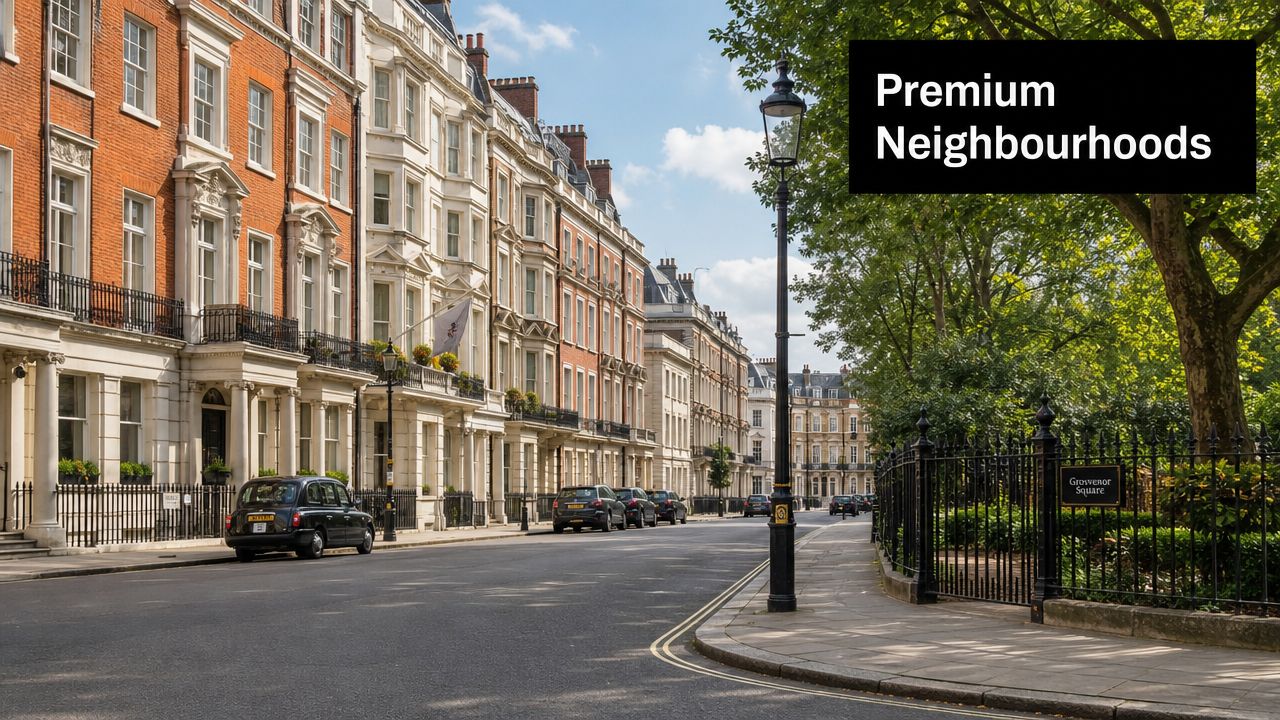
London remains one of the clearest benchmark cities for global property investors. Mercer still places it in the global top 10 for expatriate cost of living, and that ranking aligns with what investors see on the ground: steep entry costs, persistent rental pressure, and a tenant base supported by finance, law, education, culture, and international mobility.
Industry commentary cited in 2026 says London's average rent is about £2,273 per month, while Kensington can reach £3,628 per month. The same source says the city is the world's second most unaffordable housing market after Hong Kong, with a median home price 13.8 times median household income, far above the 5.1 threshold used to define “severely unaffordable”. Those figures explain why London remains central to any serious discussion of high-cost global property.
Where the investor edge sits
In London, the edge usually comes from submarket selection rather than trying to time the entire city. Prime central areas often appeal to capital-preservation buyers. Zones tied to universities, hospitals, and major employment nodes can offer a more resilient lettings story, even if the glamour factor is lower.
That's why disciplined investors compare gross yield, service charges, lease terms, licensing rules, and tax treatment before they compare architecture. A beautiful flat with weak lease economics can underperform a less fashionable unit near a transport hub.
For a deeper local breakdown, see this guide to the cost of living in London.
Tax and structure
UK property is straightforward to buy relative to some markets, but transaction taxes and ongoing tax treatment can materially change net returns. Investors often weigh personal ownership against a limited company structure, especially when they're building a portfolio rather than buying a single unit.
London still works best for investors who value liquidity, legal transparency, and long-term wealth storage more than immediate yield.
If your time horizon is short, London can feel expensive. If your horizon is long and your asset selection is disciplined, the city's depth of demand remains difficult to replicate.
3. New York City, USA
New York City remains one of the world's core pricing centres for real estate. It also appears alongside London, Nassau and Los Angeles in Mercer's 2024 list of the ten costliest cities for international workers, which is one reason global investors continue to use it as a reference market for prime urban housing.
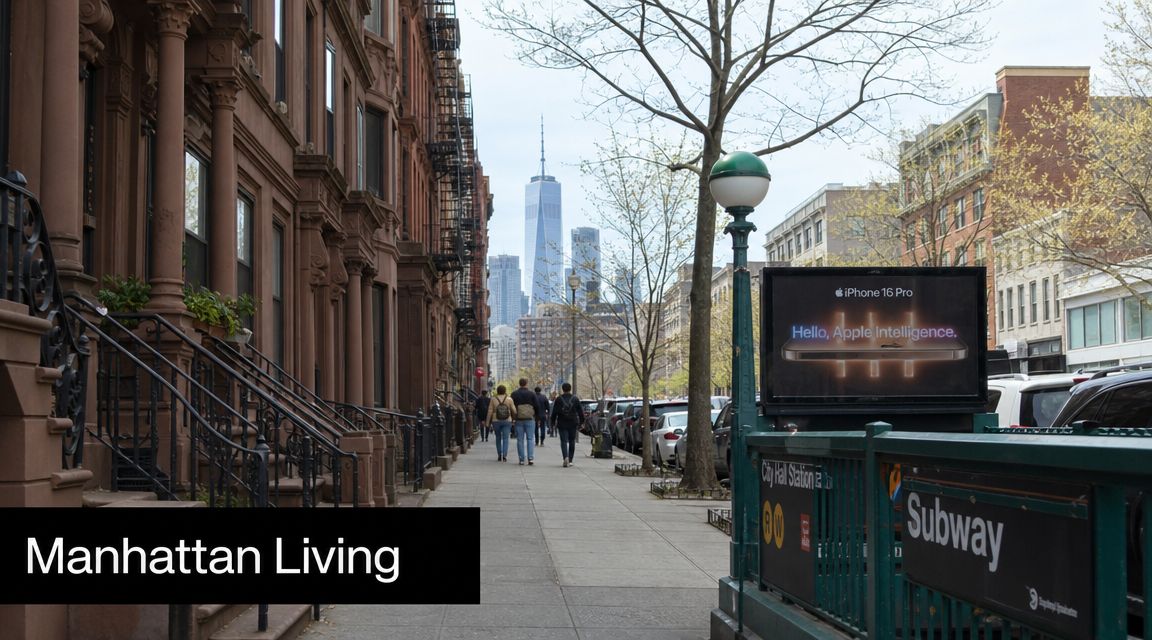
That matters because New York isn't one market. Manhattan, Brooklyn, Queens, and the outer boroughs behave differently on entry pricing, tenant turnover, local regulation, and renovation strategy. Treating the city as a single asset class is usually where underwriting goes wrong.
Borough choice matters
A prime condo in Manhattan serves a different goal from a multi-unit building in Queens or a brownstone conversion in Brooklyn. The first may appeal to buyers seeking prestige and liquidity. The second may better suit investors who need stronger cash flow and more active management options.
Investors also need to understand how rent regulation, co-op rules, condo board approvals, and building-level finance can affect flexibility. In New York, governance risk sits inside the asset itself, not just outside it.
If you're comparing American high-wealth markets, this overview of wealthy cities in the US gives useful context.
- Use entity planning carefully: Many buyers consider LLC ownership for liability and estate-planning reasons, but tax advice should be market-specific.
- Check building rules early: Co-ops can be more restrictive than many overseas investors expect.
- Think tenant profile first: Corporate renters, students, and long-term local households create very different income patterns.
New York suits investors who want exposure to the world's deepest urban economy and can tolerate complexity. If you can't underwrite regulation and building governance, the city becomes harder to own than it is to admire.
4. Zurich, Switzerland
Zurich is a classic wealth-preservation market. It doesn't attract global capital through glamour alone. It attracts it through institutional credibility, currency strength, and a legal environment that many international buyers associate with stability.
Statista's summary of the EIU's 2023 Worldwide Cost of Living Index says Singapore and Zurich jointly topped the list that year, reinforcing Zurich's role as one of the world's definitive high-cost cities. For an investor, that ranking says less about groceries and more about the price of participating in a market where safety and scarcity command a premium.
Why investors still buy
Zurich is usually a city for patience. Buyers aren't typically chasing aggressive income. They're buying into a market where the combination of constrained supply, affluent residents, and institutional order can support long-term capital defence.
That makes due diligence on local rules especially important. Switzerland's foreign ownership restrictions, cantonal tax differences, and residency considerations can shape what's possible before you ever discuss the property itself.
For broader context on living and operating costs, see this guide to living costs in Switzerland.
Buy Zurich for resilience, not excitement. If your model needs rapid rent growth to work, you're probably in the wrong Swiss city, or the wrong market entirely.
A practical example is the investor deciding between a central Zurich apartment near international schools and a lower-cost alternative in a secondary city. The Zurich purchase may produce a lower running yield on paper, but some buyers accept that trade-off because they value tenant quality, defensive demand, and Swiss-franc exposure.
5. Hong Kong
Hong Kong remains one of the most expensive cities to live in the world because its property economics are brutally simple. Land is constrained, demand has historically been international, and premium districts compress a remarkable amount of wealth into limited space.
That same scarcity can make the market attractive to investors who understand volatility and policy risk. Hong Kong often rewards patience, cash discipline, and micro-market knowledge more than broad macro commentary.
What to assess before buying
In Hong Kong, headline prestige can obscure ownership friction. Stamp duties, holding costs, and the city's sensitivity to policy and geopolitical shifts all need to be reflected in the acquisition model. A premium address doesn't excuse weak entry discipline.
Corporate lets near core business areas can still appeal where employers need flexibility for senior staff. At the same time, some investors look beyond trophy residential assets into alternative segments where pricing may be less sentiment-driven.
For local housing context, review this analysis of the Hong Kong housing market.
- Stress-test transaction costs: High acquisition friction can punish short holding periods.
- Separate prestige from utility: A unit with practical access to Central may outperform a flashier asset with a narrower audience.
- Expect sentiment swings: Hong Kong can reprice quickly when policy or capital flows change.
Hong Kong isn't a passive market for casual buyers. It suits investors who can absorb complexity and still think clearly about tenant demand, liquidity, and exit routes.
6. Paris, France
Paris has a different investment logic from London or New York. Buyers often pay for heritage, centrality, and urban permanence as much as for income. That can make pricing look demanding, but it also helps explain why prime Paris remains a status asset for domestic and international wealth.
Earlier EIU-based cost-of-living data summarised by Statista showed Paris at 104 and Zurich at 103 on a New York = 100 scale in 2021. For investors, that historical closeness is useful. It shows how Paris sits within the same upper tier of expensive global cities, even though its residential market behaves differently from Swiss or Anglo-American peers.
Strategy in the French context
Paris rewards investors who understand legal process and building quality. Co-ownership rules, renovation constraints, tenant protections, and short-let restrictions can all affect returns. In practical terms, an elegant Haussmann flat may come with more compliance and refurbishment complexity than a newer unit in another market.
A common real-world split is between buyers targeting central arrondissements for preservation and those moving outward for more income potential. Both can work, but they're different strategies and should be priced that way from day one.
In Paris, legal structure and lease rules deserve as much attention as postcode. Investors who ignore that usually overestimate flexibility and underestimate time costs.
Foreign buyers should also plan around French tax advice early. Ownership structure, succession planning, and local reporting obligations can be just as important as rental assumptions.
7. Dubai, UAE
Dubai stands apart because it combines premium living costs with a more overtly investor-oriented property culture. Buyers are often drawn by modern stock, international branding, and a business environment that many perceive as more commercially agile than older gateway cities.
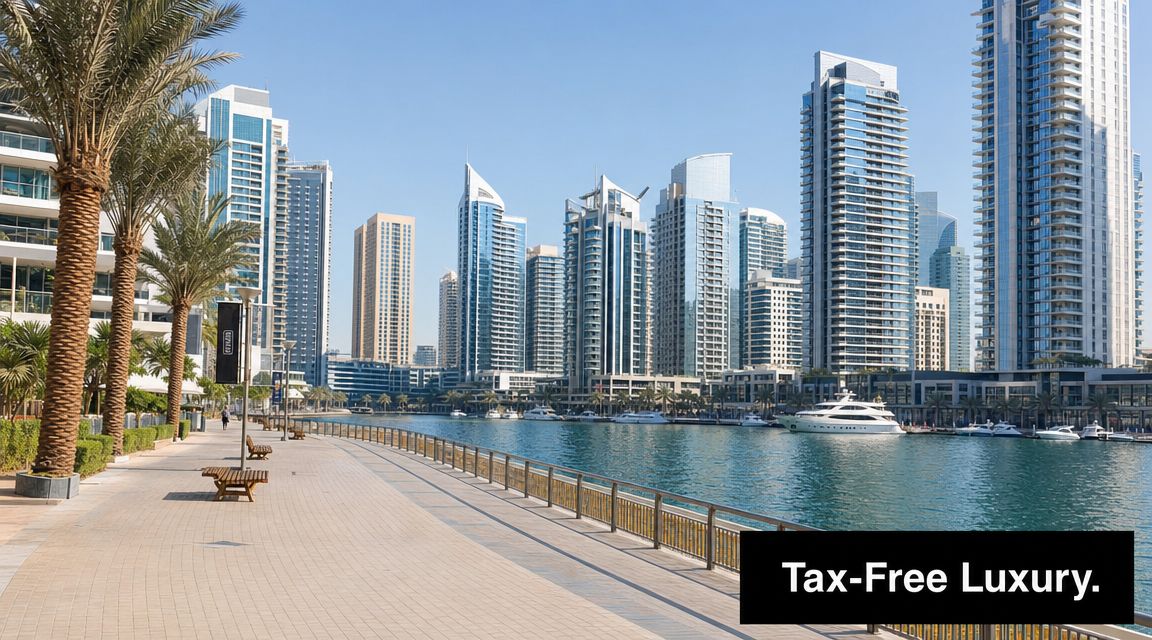
That doesn't make it simple. Supply pipelines, service charges, developer quality, and district-by-district volatility can all move returns sharply. In Dubai, the wrong building in the right area can still be a weak investment.
Where discipline matters
Dubai investors often compare Downtown, Dubai Marina, and villa communities very differently because tenant demand varies by lifestyle and lease length. A furnished apartment aimed at professionals or seasonal residents needs a different operating model from a family villa in an owner-occupier district.
The market can also look more profitable than it is if investors ignore furnishing costs, void periods, management fees, and building competition. Gross yield stories are common. Net yield discipline is rarer.
This city guide on the cost of living in Dubai helps frame the broader affordability picture.
- Check the developer: Brand, handover quality, and service standards influence lettability.
- Study future supply: New launches can cap rental growth in districts with many similar units.
- Match property type to tenant type: Short-let, corporate, and family demand each require different operations.
Dubai can suit income-focused investors better than some older prestige markets, but only if they treat it as an operating business, not a postcard.
8. Tokyo, Japan
Tokyo is one of the few global megacities where investors can still find order beneath the scale. It's expensive, dense, and highly competitive, but it's also structured. That matters for buyers who prefer transparent neighbourhood logic over sentiment-driven pricing.
The city's appeal lies in depth. Demand doesn't depend on one industry, one district, or one buyer nationality. That broad base can make Tokyo more defensive than investors expect, especially for smaller residential units in well-connected wards.
A market of micro-locations
Tokyo investing is local in the strictest sense. A short walk to a station, a specific ward, building age, and earthquake resilience can all affect tenant demand. Foreign buyers who generalise too much about “Tokyo” often miss the point. The city behaves as a network of submarkets.
In practice, compact units near major transport nodes often serve landlords better than more ambitious purchases in less functional locations. Tenant convenience still drives retention in a city where commuting patterns shape daily life.
A typical investor example is the choice between a premium unit in a flagship central ward and a simpler apartment in an emerging but well-connected area. The second option may lack prestige, yet offer a more durable balance between occupancy and operating cost.
Tokyo generally suits investors who want stability, urban scale, and a mature rental culture, but who don't need the identity value attached to London, Paris, or New York.
9. Sydney, Australia
Sydney remains one of the major English-speaking gateway cities for global property capital. Investors often approach it as a familiar legal environment with strong lifestyle demand, but that can create a false sense of simplicity. Australia's tax rules, foreign-buyer settings, and state-level compliance requirements still need careful review.
For portfolio construction, Sydney often sits between wealth preservation and income. It doesn't offer the same defensive profile as Zurich, and it doesn't always produce the same income narrative as Dubai, but it can provide a balanced exposure to a deep residential market with lasting international appeal.
What investors should look for
The useful distinction in Sydney is between trophy suburbs and practical rental corridors. Beachside prestige holds allure, but transport access, employment nodes, and universities often drive the more consistent rental story.
Investors also need to pay attention to planning constraints, maintenance on older stock, and the tax implications of ownership as a non-resident. In a city where entry costs are substantial, leakage through tax and holding expenses can do more damage than many first-time buyers expect.
A Sydney purchase usually works best when the tenant case is obvious without relying on a bullish future sale price.
A realistic example is the investor choosing between a prestige coastal apartment and a more functional inner-ring unit near established transport. The first may be emotionally appealing. The second may be easier to let, easier to understand, and easier to defend in a softer market.
10. Geneva, Switzerland
Geneva is one of those markets where price reflects who needs to be there. Diplomats, multinational staff, wealth managers, and international organisations all support demand for well-located housing. That helps explain why Geneva remains a global high-cost city despite its relatively small scale.
Mercer's 2024 ranking places Geneva among the top 10 costliest cities for international workers, alongside Zurich and London. For property investors, that confirms Geneva's place in the same premium bracket where tenants often pay for access, discretion, and institutional proximity rather than for novelty.
Defensive demand and legal caution
Geneva can appeal to investors who prioritise stability, but they need to accept the trade-off. This is usually a market where protecting capital matters more than squeezing income. Foreign ownership rules and Swiss local compliance can narrow what's available and how it can be held.
Properties near diplomatic and international employment centres often attract the most dependable tenant profiles. That doesn't remove risk, but it can improve visibility on demand compared with more discretionary luxury segments.
A practical scenario is an investor choosing between a Geneva apartment near international organisations and a cheaper asset farther from the city's global employment core. The lower entry price may look better initially, yet the stronger tenant covenant often sits with the better-located property.
Geneva is rarely a market for speed. It's a market for buyers who value legal stability, currency credibility, and a tenant base linked to international institutions.
Top 10 Most Expensive Cities Comparison
| City | Implementation complexity 🔄 | Resource requirements ⚡ | Expected outcomes ⭐ / 📊 | Ideal use cases 💡 | Key advantages 📊 |
|---|---|---|---|---|---|
| Singapore, Ultra-Premium Asian Financial Hub | High 🔄: strict foreign purchase rules, ABSD, cooling measures | Very high ⚡: premium prices, high taxes and living costs | High ⭐: strong capital appreciation; moderate yields (2.5–3.5%) 📊 | Ultra-HNW investors, corporate housing, SE Asia gateway | Political stability, world-class infra, tax-efficient investor programs |
| London, UK, Historic Financial Capital | High 🔄: SDLT, complex legal/tax considerations, regulatory shifts | Very high ⚡: prime prices, transaction fees, living costs | High ⭐: long-term capital preservation; low–moderate yields (2–3.5%) 📊 | Prestige holdings, student/professional lettings, liquidity needs | Deep liquidity, cultural amenities, strong legal protections |
| New York City, USA, Global Economic Powerhouse | High 🔄: borough-specific regs, taxes, rent controls | Very high ⚡: Manhattan-level prices, elevated management costs | High ⭐: exceptional liquidity and appreciation potential; yields 2–3.5% 📊 | Investors seeking liquidity, visa-linked projects, multi-unit income | Largest, most liquid market; diverse tenant base; strong infra |
| Zurich, Switzerland, Wealth Preservation Capital | High 🔄: cantonal permit requirements, residency hurdles | Very high ⚡: high CHF prices, low rental yields | Very high ⭐: capital preservation and CHF appreciation; low yields (1.5–2.5%) 📊 | Ultra-HNW wealth preservation, banking-linked portfolios | Political neutrality, banking/wealth management, currency stability |
| Hong Kong, Asia's Premier Financial Centre | High 🔄: stamp duties, resale taxes, political/regulatory risk | Very high ⚡: high prime prices, dense living costs | High ⭐: long-term appreciation potential; moderate yields (2.5–3.5%) 📊 | Asia-Pacific exposure, corporate housing, long-term hold | No capital gains tax, financial infrastructure, HKD peg to USD |
| Paris, France, European Culture & Luxury Capital | Medium 🔄: strict tenant laws, short-term rental limits | High ⚡: central prices and transaction costs | High ⭐: cultural/heritage value with mixed income streams; yields 2.5–4% 📊 | Luxury/heritage investments, short-term tourism lettings | Strong tourism demand, EU market access, heritage appeal |
| Dubai, UAE, Middle East Luxury Investment Hub | Medium 🔄: free-zone rules, supply cycles, evolving regs | High ⚡: variable prices but generally lower than other primes | High ⭐: strong rental yields (4–7%) and tax-free income 📊 | Yield-focused investors, 100% foreign ownership, Golden Visa seekers | Tax-free income, high yields, investor-friendly residency options |
| Tokyo, Japan, Asia's Largest Metropolis | Medium 🔄: language/cultural barriers, contact requirements | Moderate ⚡: comparatively lower prime prices | Moderate ⭐: stable preservation and modest yields (2–3.5%) 📊 | Conservative investors, long-term holds, corporate rentals | Huge market scale, excellent transport, legal transparency |
| Sydney, Australia, Southern Hemisphere Gateway | Medium-High 🔄: FIRB approvals, tax policies (negative gearing) | High ⚡: strong prices, taxes, living costs | High ⭐: capital growth with decent yields (3–4.5%) 📊 | English-speaking diversification, residency pathways, student rentals | Immigration-driven demand, lifestyle amenities, visa programs |
| Geneva, Switzerland, Diplomatic & Wealth Centre | High 🔄: cantonal restrictions, specialised tax/legal needs | Very high ⚡: premium CHF pricing, low rental yields | Very high ⭐: capital preservation for HNW; low yields (1.5–2.5%) 📊 | Diplomatic housing, wealth-management portfolios, confidentiality needs | Concentration of international organisations, banking services, stability |
Strategic Takeaways for Investing in Premium Cities
The most expensive cities to live in the world don't belong in one basket. They look similar in headlines, but they serve different investment purposes. Zurich and Geneva are classic examples of defensive markets where many buyers accept lower income in exchange for stability, legal clarity, and capital preservation. Dubai sits at the other end of the spectrum. It can support stronger income narratives, but it usually asks investors to manage supply risk, operational detail, and sharper sentiment cycles.
London occupies a middle ground, though an expensive one. Mercer's 2024 ranking places it in the global top 10 for international workers, while Julius Baer's 2025 Global Wealth & Lifestyle Report ranks London second among the world's most expensive cities for living well, up from fourth in 2023 and third in 2024. For investors, that isn't just a lifestyle statistic. It signals persistent premium-end cost pressure in a market where affluent residents and international buyers continue to support prime submarkets.
The core lesson is simple. High-cost cities reward precision, not broad optimism. You can't underwrite Singapore the way you underwrite Dubai. You can't approach New York as if it were Zurich. In some cities, the investment case rests on tenant depth and resale liquidity. In others, it rests on tax positioning, holding period discipline, or the ability to comply with foreign ownership restrictions without errors.
A good premium-city strategy starts with three questions. First, are you buying for income, capital protection, or international diversification? Second, do local taxes and acquisition costs leave enough room for the asset to perform after fees, not before them? Third, can the property attract a broad, durable tenant base if market conditions soften?
Established markets still matter because they provide legal predictability and long demand histories. Emerging premium hubs matter because they can offer more room on income and entry flexibility. The right choice depends on your objective. If you want resilience, Swiss cities and prime London may fit. If you want stronger rental momentum and a more active management model, Dubai may be more suitable. If you want scale and liquidity, New York and Tokyo remain compelling.
The investor mistake is to confuse expensive with safe, or prestigious with profitable. In premium cities, returns usually come from disciplined buying, careful tax planning, and choosing assets that solve a real housing need for a reliable tenant group.
World Property Investor helps you compare global real estate markets with practical, data-led analysis on yields, taxes, foreign ownership rules, and buying strategy. If you're deciding where to deploy capital next, explore World Property Investor for in-depth city guides, country breakdowns, and actionable research built for international buyers.