
A property can look compelling in an investment spreadsheet and still fail the moment someone checks the roof, title, permissions, insurance position or climate exposure. A property inspection checklist is therefore more than a room-by-room walk-through. It's the first underwriting filter for deciding whether a repair is manageable, a price negotiation point or a reason to walk away.
That distinction matters even more for overseas buyers. A buyer can photograph visible defects, record meter locations and ask sensible questions. A qualified surveyor must assess structure and building condition, while an engineer may need to investigate movement, contamination or specialist systems. A local lawyer should verify title, permits, foreign ownership rules and permitted use. Tax, insurance and financing advice must be checked for the relevant country rather than borrowed from UK or US practice.
Start with the physical asset, then test the legal and operational assumptions behind the projected return. Price every material finding into the purchase offer, reserve requirements, insurance terms and eventual resale risk. The inspection only creates value when it changes the investment decision.
Table of Contents
- 1. RICS HomeBuyer Report Inspection Checklist
- 2. ASTM E2273 Property Condition Assessment Standard
- 3. EPC Energy Performance Certificate Compliance Checklist
- 4. International Property Purchase Due Diligence Checklist
- 5. Holiday Let and Short-Term Rental Property Inspection Template
- 6. Commercial and Multi-Family Property Building Systems Inspection Checklist
- 7. Structural and Subsidence Risk Assessment Checklist
- 8. Environmental and Contamination Risk Due Diligence Checklist
- 8-Point Property Inspection Checklist Comparison
- Turn Inspection Findings Into an Investment Decision
1. RICS HomeBuyer Report Inspection Checklist
For a UK residential purchase, a RICS HomeBuyer Report provides a recognised way to turn visible condition into a documented decision. It can identify concerns involving structure, damp, timber decay and visible mechanical systems, but it isn't a substitute for opening up concealed areas or commissioning specialist tests. RICS survey guidance also makes clear that services are generally inspected visually. Accessible wiring may be examined without removing fittings, while gas and heating systems aren't tested where they aren't visible. RICS building survey guidance
The report is most useful when it arrives before exchange of contracts. An investor can then distinguish between a repair that belongs in a maintenance budget, a defect that justifies a price adjustment and a finding serious enough to change the deal.
Turn condition ratings into underwriting assumptions
Ask the surveyor to focus on income-critical components, not just cosmetic presentation:
- Heating and hot water: Establish whether the boiler and controls support reliable occupation, and whether a specialist engineer should inspect them separately.
- Roof and rainwater goods: Look for defects that could create internal damp, tenant complaints and progressive fabric damage.
- Electrical installation: Record visible limitations and arrange an electrician's assessment where the report identifies concern.
- Damp and timber: Trace the likely source rather than accepting a surface treatment as the solution.
- Alterations: Cross-reference extensions, loft conversions and structural changes with building control records.
Photographs and dated notes give the investor a baseline for insurance discussions and later maintenance planning. They also help a property manager understand what existed at purchase.
Practical rule: Never let a report's reassuring overall impression replace a written repair budget. A small defect can still affect financeability if it points to a larger unresolved issue.
For investors comparing professional fees with potential downside, this guide to building survey costs provides useful purchasing context. The report should sit beside the legal file, not replace it.
2. ASTM E2273 Property Condition Assessment Standard
A North American commercial or multi-family acquisition requires an investment-grade review, not a basic residential survey. An ASTM E2273 Property Condition Assessment examines building systems, deferred maintenance, capital replacement needs and code-related concerns. It records current defects while helping estimate which systems may need replacement during the planned hold period.
That scope suits apartment blocks, offices, industrial buildings and portfolios where one boiler room, roof, lift or electrical plant can affect many occupants. A lower purchase price may offer little value if deferred capital works were excluded from the initial yield calculation. The findings should therefore influence the offer, reserve, insurance discussions and likely exit risk.
Use the PCA to test the investment case
Commission the PCA early enough to support negotiation. Ask the practitioner to distinguish immediate repairs from planned capital replacements, then match likely expenditure to the intended exit date. A buyer holding a multi-family asset may accept dated equipment if the reserve is sufficient. An investor planning an early refinance or sale may require a lower-risk building.
Use the report to test five underwriting assumptions:
- Capital reserves: Budget for major systems separately from routine maintenance.
- True income analysis: Deduct credible building expenditure before assessing returns.
- Property management: Convert findings into work orders, inspections and replacement schedules.
- Portfolio comparison: Apply consistent categories to identify assets with unusual maintenance exposure.
- Lender discussions: Provide evidence where condition could affect security value or financeability.
The inspection should also clarify practical operating risks. Review plant access, tenant disruption, the likely sequence of works and whether specialist contractors are needed. These factors can turn a manageable repair into lost income or a delayed refinancing process.
A Canadian fund comparing acquisitions across provinces benefits from standardised documentation. A European investor assessing US office or industrial property also needs terminology that local lenders, consultants and insurers can interpret. For a practical explanation of commercial property inspection for investors, focus on how inspection scope supports capital planning rather than treating the PCA as a formality.
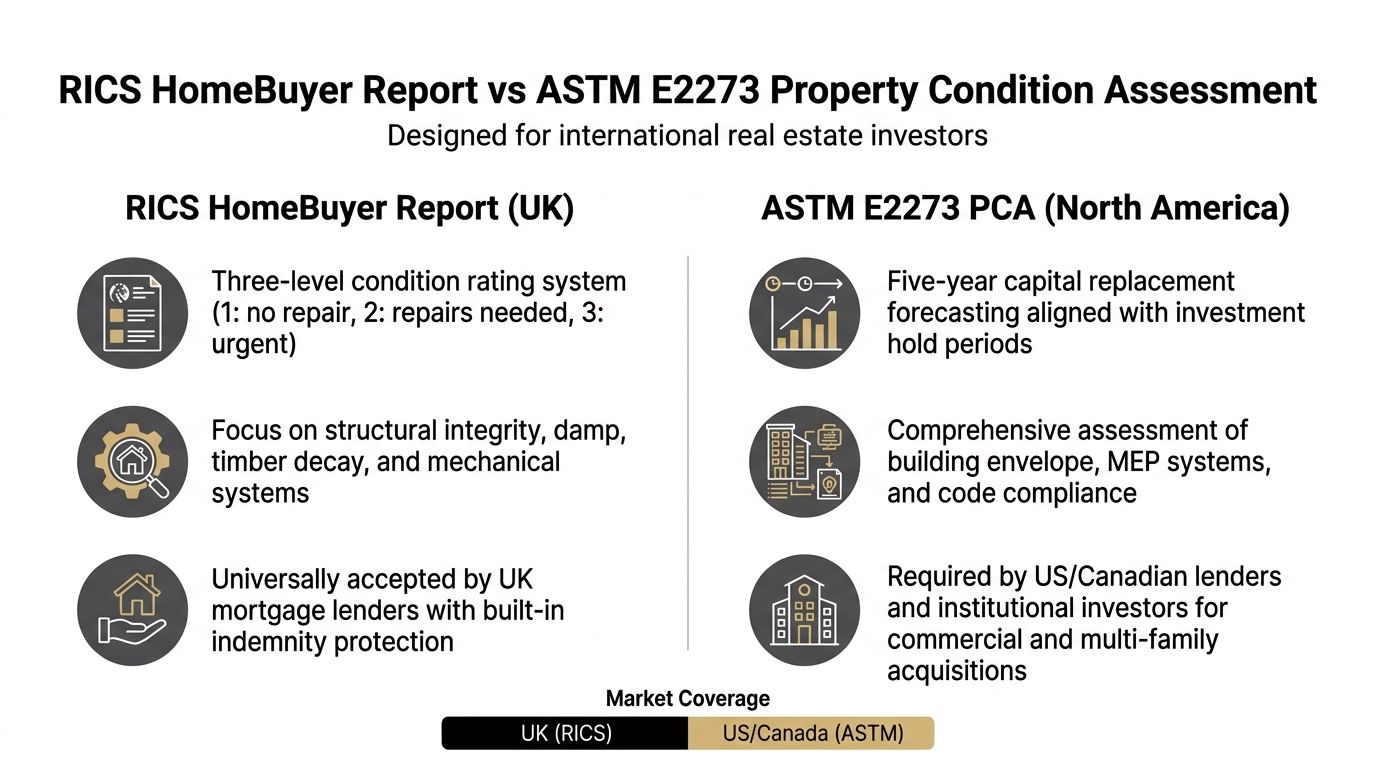
The trade-off is cost versus decision quality. A basic visual inspection may suit a simple, modern asset. It is rarely enough where multiple systems, tenants or deferred works could change the investment case.
3. EPC Energy Performance Certificate Compliance Checklist
An EPC should sit inside the investment underwriting file, not in a folder labelled “compliance”. Its A to G rating summarises energy-related features such as heating, insulation and renewable equipment, but it does not confirm that the property can achieve the suggested improvements. Those recommendations must be checked against the building, local rules, capital cost and the asset's expected income.
Obtain the certificate at the start of due diligence. Confirm that it describes the property being acquired, especially where a building has been divided into flats or materially altered. If the document does not match the physical configuration, marketing or letting may face a compliance problem, while lenders and buyers may question the reliability of the information.
Test the causes behind the rating
Inspect the building for the conditions that produce its score:
- Heat loss: Examine windows, external walls, roof insulation and visible draught paths.
- Heating controls: Record the boiler, thermostats, hot-water arrangements and distribution systems.
- Ventilation: Check bathroom and kitchen extraction, particularly where moisture or mould is present.
- Renewables: Verify the location, condition and ownership of solar panels or other equipment.
- Upgrade feasibility: Establish whether recommended works are physically possible and compatible with the building.
The certificate should then be compared with the proposed business plan. Estimate how energy works could affect rent, occupancy, tenant appeal, insurance, reserves and exit risk. Insulation may improve comfort and reduce bills, yet poorly specified work can restrict ventilation and create moisture defects. Replacing mechanical equipment may require more capital initially, but could suit the building better and reduce future maintenance exposure.
For international acquisitions, confirm which rules apply in the property's jurisdiction and whether they affect lawful letting or resale. Sustainable property investment research can help place energy spending within the wider asset strategy, but it should not replace local technical or legal advice. Do not treat today's certificate as proof of tomorrow's compliance. Ask a local adviser to confirm the current position before using the rating in a forecast.
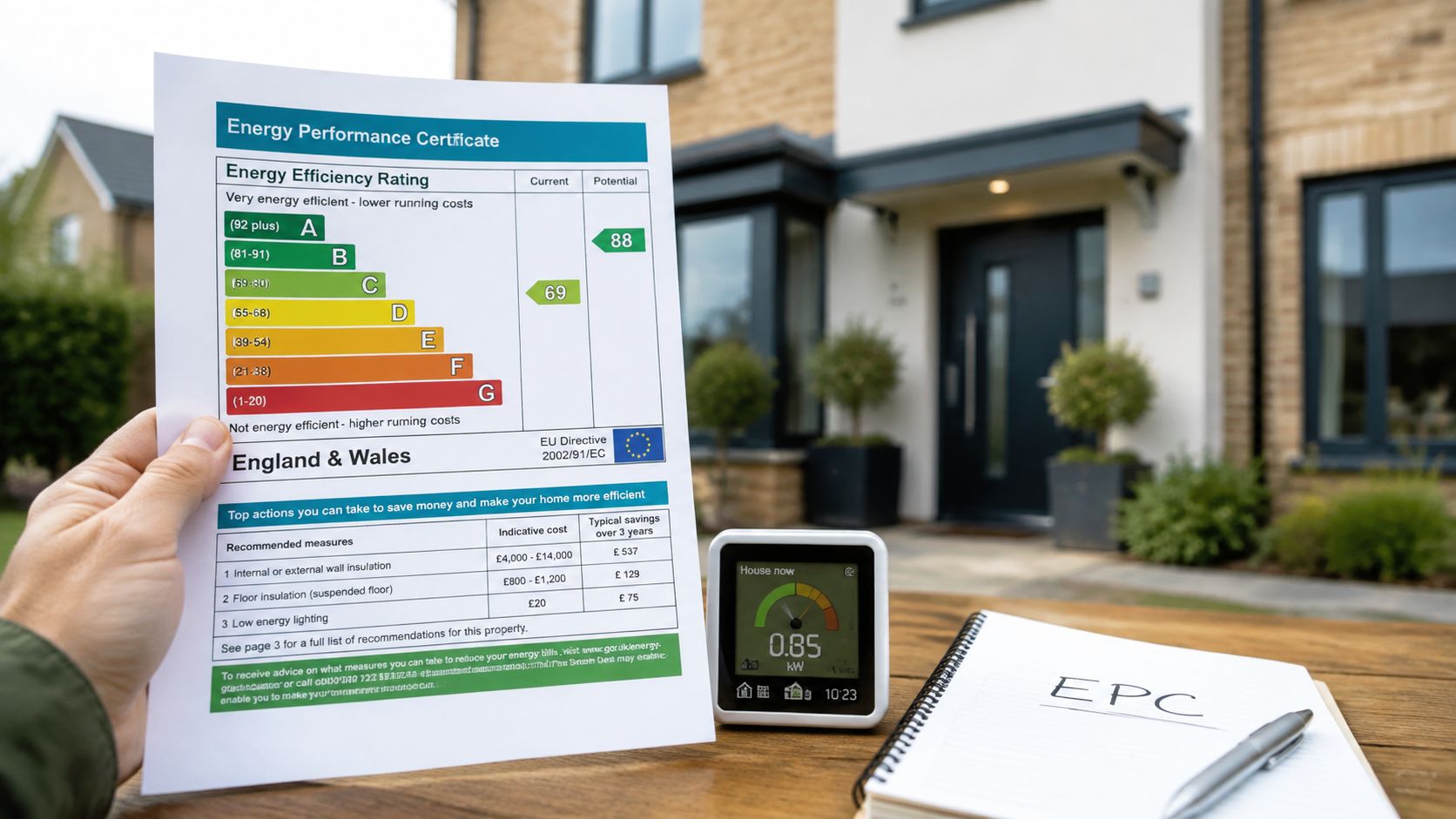
The decision is whether the upgrade protects lawful use, lowers operating friction and supports resale, or consumes capital without improving the property's market position.
4. International Property Purchase Due Diligence Checklist
Overseas property due diligence must underwrite the investment, not merely describe the building. A survey may find defects, while legal and operational checks determine whether the buyer can own, alter, let, insure and later sell the asset. Ignoring either side can leave an attractive property with an incomplete title, unauthorised works or restricted use.
Start with a local property lawyer before appointing the surveyor. The lawyer should identify the documents and ownership rules that apply in that jurisdiction, while the surveyor tests the physical condition and local construction methods. Obtain certified translations of title deeds, permits and material official records, and verify the translator's credentials.
Test the investment file
Build a clear evidence trail covering:
- Title and boundaries: Confirm ownership, registered area, access rights and shared arrangements.
- Planning and permits: Match extensions, terraces, pools and conversions with municipal approvals.
- Foreign ownership: Verify that the buyer can acquire the property and use it as intended.
- Utilities: Confirm lawful connections and review consumption history where available. Unclear access or arrears can affect completion and operating reserves.
- Neighbourhood change: Check zoning, planned infrastructure and municipal development records for effects on demand, access or resale.
- Environmental exposure: Investigate flooding, wildfire, subsidence, earthquake and other local hazards. Findings may change insurance terms and contingency reserves.
- Construction standards: Use an inspector qualified to assess the relevant country's building methods, materials and typical defects.
Local examples show why the checks must be combined. A Spanish coastal buyer may find an attractive extension is undocumented. A Portuguese purchaser may uncover a dispute over shared utility access. A Turkish holiday-let buyer may need to verify ownership eligibility and rental permissions. In Greece, geological or seismic findings can alter insurance and reserve assumptions.
Record each issue with its likely cost, required approval, effect on lawful use and impact on financeability or exit risk. A defect that is repairable may still justify a lower offer if it consumes reserves or narrows the future buyer pool.
The local surveyor and lawyer answer different questions, so neither should be asked to perform the other's role. For broader preparation, see this guide to buying overseas property. It should support, not replace, independent legal, technical and tax advice in the target country.
5. Holiday Let and Short-Term Rental Property Inspection Template
A holiday let should be underwritten as a guest-facing operating business. Inspect the physical condition, guest safety, cleaning access, internet reliability, furnishings and permission to trade, then connect each finding to reviews, operating cost, reserves and resale risk. A well-presented villa can still underperform if turnovers take too long, guests cannot control the heating or local rules restrict short-term use.
Start with the guest journey. Enter as a first-time visitor, then repeat the route as a cleaner and maintenance contractor. Check linen storage, bathroom servicing, waste removal, outdoor maintenance and arrival access. Record any layout that adds labour, delays check-ins or requires specialist equipment.
A practical inspection should answer three underwriting questions:
- Guest safety: Confirm alarms, escape routes, access control, balconies, pools and visible hazards. Remedial work may affect insurance and lawful operation.
- Durability: Examine floors, upholstery, kitchen equipment, outdoor furniture and high-touch fittings. Frequent replacement reduces operating returns.
- Turnover: Assess the movement of cleaners, linen and waste. Poor circulation can increase each changeover cost.
- Connectivity: Test Wi-Fi coverage, entertainment systems and smart entry. Weak service creates avoidable complaints and call-outs.
- Local compliance: Verify licensing, planning, safety requirements and neighbourhood restrictions before relying on forecast income.
- Market position: Compare nearby listings, reviews, pricing and seasonal positioning using local evidence.
- Seasonality: Separate strong and weak periods. Annual demand should not be treated as uniform.
Destinations such as the Lake District, Spanish coast, Cornwall, Scotland, the French Alps and other established markets can produce different operating patterns. A coastal home may face restrictions. A mountain property may attract winter bookings but weaker summer income. A rural layout may appear appealing while creating costly cleaning logistics.
A holiday-let inspection should establish whether the property can deliver the promised guest experience at a cost the forecast can support.
Use local holiday rental property management guidance to assess operating support and staffing assumptions. Arrange pest checks where furnishings, storage or frequent guest turnover create exposure, and know when to call Pestless Inc.. The conclusion should show whether findings require a lower offer, a larger reserve, revised insurance assumptions or a more cautious exit valuation.

6. Commercial and Multi-Family Property Building Systems Inspection Checklist
A commercial or multi-family inspection should test the building's income-producing infrastructure, not merely record visible defects. Review the structure, roof, mechanical and electrical plant, heating and cooling, lifts, fire safety, parking, controls and maintenance records. As the asset grows, a general walk-through becomes less reliable because one failed system can affect several occupiers at once.
Start with operational risk. Inspect the roof for water entry, ageing coverings, failed drainage and damage to insulation or services below. In plant rooms and service risers, check access, corrosion, labelling, isolation points and evidence of regular maintenance. These areas often expose future capital expenditure that a polished reception conceals.
Test systems against the business plan
Match each system to the investment strategy and planned hold period. An office conversion may have sound structure but insufficient HVAC capacity, poor escape arrangements or inadequate fire separation. A multi-family building can carry equivalent exposure through communal heating, ventilation or electrical infrastructure. Record whether a defect could reduce occupancy, increase service charges, delay refinancing or weaken the exit valuation.
Use specialist inspection where the system or legal risk requires it. A mechanical engineer can assess HVAC condition and capacity, an electrical specialist can examine distribution and resilience, and a fire consultant can review alarms, compartmentation and evacuation arrangements.
Check:
- Maintenance history: Review records for recurring failures, missed servicing and unresolved recommendations.
- Plant replacement: Identify equipment nearing the end of useful service and compare replacement timing with the hold period.
- Building management systems: Confirm that controls operate, remain supported and provide usable information for monitoring consumption and faults.
- Compliance: Verify approvals, inspections and remedial works with relevant authorities or competent specialists.
- Communal areas: Inspect lighting, drainage, fire doors, lifts, refuse storage and access routes.
- Tenant impact: Rank defects by their likely effect on occupation, service charges and rent collection.
Price specialist reports into the acquisition budget. A finding may justify a lower offer, a larger reserve, revised insurance assumptions or a slower exit timetable. Give the building manager a digital copy of the final schedule, with an owner and deadline for every action.
7. Structural and Subsidence Risk Assessment Checklist
Structural risk can change the purchase price, insurance terms and resale prospects even when a property remains habitable. Pay closer attention to older or altered buildings, shrinkable clay, former mining areas, Mediterranean ground conditions and seismic locations. A general survey may identify warning signs, but it may not establish the cause, whether movement is active or which repair is appropriate.
Start with the building's pattern of movement rather than isolated cosmetic defects. Look for stepped cracks, distortion around openings, sloping floors, sticking doors, separating joints, damaged retaining structures and defects continuing across several elevations. Record each location, direction and apparent age. Leave cracks untouched until assessed, since filling or repainting can remove useful evidence.
Build the evidence before pricing the repair
Commission a structural engineer promptly if the property is in a known risk area or the surveyor identifies significant movement. Former mining areas may require a targeted ground stability assessment. Period and timber-framed buildings often need a specialist familiar with historic construction, rather than a contractor offering a standard repair.
The property file should answer these questions:
- Previous claims: Check for subsidence insurance claims, underpinning and structural repairs.
- Alterations: Verify approvals for removed walls, extensions, roof changes and other structural work.
- Monitoring: Ask whether crack gauges or earlier reports exist, and record their conclusions.
- Insurance: Obtain specialist terms before committing if ordinary cover may be restricted.
- Contingency: Allow for investigation, temporary works and specialist repair, not only visible patching.
For overseas purchases, local geology can matter as much as the building. A standard survey may not cover earthquake design, limestone movement or hillside stability. Confirm which local engineer, authority or insurer can address those risks before relying on a familiar domestic checklist.
Do not price structural risk from a contractor's first repair suggestion. Establish the cause, obtain a written engineering opinion and compare repair options. Then reflect the remedy, approval timetable, insurance position and financeability in the offer and reserves. A slow investigation or restricted cover can also lengthen the exit period and reduce the pool of future buyers.
8. Environmental and Contamination Risk Due Diligence Checklist
Environmental risk can reduce value even when the building appears sound. Former industrial use, buried tanks, asbestos, contaminated soil, radon, flooding and coastal change may affect insurance, lending, redevelopment and resale. The evidence trail therefore needs to extend beyond a standard home survey.
Start with a desktop review for industrial or post-industrial property. Check historical land use, planning files, industrial directories, historical photographs and available environmental registers. The aim is to identify a plausible source, pathway and affected area before commissioning intrusive work.
Match investigation depth to the asset
Use the findings to decide what evidence the investment case requires:
- Historical use: Confirm whether previous activities could have left contamination or hazardous materials.
- Building materials: For older buildings, obtain the appropriate asbestos assessment before renovation or demolition.
- Ground and water: Test soil or groundwater where the initial review indicates a relevant pathway.
- Natural hazards: Check flooding, erosion, wildfire, radon and other local exposures with the relevant authority or specialist.
- Remediation: Verify completion certificates, monitoring obligations and responsibility for any remaining liability.
- Future use: Confirm that the intended conversion or development is compatible with environmental constraints.
A former petrol station may need remediation before residential conversion. A flood-prone asset may be repairable yet difficult to insure or mortgage. Coastal property can also carry a long-term erosion risk that a basic condition report will miss.
The decision is financial as well as technical. Record the likely investigation cost, remediation allowance, insurance position, lender response and effect on the exit market. If liability remains unclear, treat that uncertainty as a reserve requirement or a price negotiation point.
For transaction planning, review property conveyancing costs alongside the legal and environmental file. Conveyancing costs can include work needed to clarify title restrictions, permitted use and environmental liabilities that affect the business plan.
A Phase I-style desktop assessment is often an efficient first filter. Intrusive investigation becomes worthwhile when the evidence justifies it and the result could change the purchase, price or development plan. Specialist support may also be needed for commercial environmental testing, particularly where sampling, remediation design or regulatory reporting is required.
8-Point Property Inspection Checklist Comparison
| Item | 🔄 Implementation complexity | ⚡ Resource requirements | 📊 Expected outcomes | 💡 Ideal use cases | ⭐ Key advantages |
|---|---|---|---|---|---|
| RICS HomeBuyer Report Inspection Checklist | Moderate, single-visit, standardised process | Low–Moderate, one accredited surveyor, digital photos/report | Baseline 1–3 condition ratings, defects list, lender-accepted documentation | UK residential purchases and portfolio buys needing quick baseline checks | Widely recognised by UK lenders; standardised, lower cost |
| ASTM E2273 Property Condition Assessment Standard | High, multi-system, certified PCA with forecasting | High, certified practitioners, detailed cost estimation, system inspections | Comprehensive systems evaluation, deferred maintenance costs, 5‑yr capital forecasts, code compliance | North American commercial & multi‑family acquisitions required by lenders/REITs | Detailed capital forecasting and standardised lender/institution acceptance |
| EPC (Energy Performance Certificate) Compliance Checklist | Low, energy-focused statutory assessment | Low, accredited energy assessor, registry entry, data capture | A–G energy rating, cost/CO2 estimates, upgrade recommendations, legal compliance for marketing | Sales/lettings in EU/UK; improving marketability, rental yield and ESG reporting | Legally mandatory; transparent energy liability and upgrade guidance |
| International Property Purchase Due Diligence Checklist (Non-English Markets) | High, dual physical + legal/administrative verification across jurisdictions | High, local lawyers, surveyors, translators, longer timelines | Verified title/permits, foreign ownership compliance, local regulatory and utility risks | Purchases in non‑English or emerging markets with unfamiliar legal frameworks | Reduces legal and fraud risk; clarifies administrative/title liabilities pre‑purchase |
| Holiday Let and Short-Term Rental Property Inspection Template | Moderate, operational and guest‑facing focus | Moderate, hospitality‑savvy inspector, market/occupancy analysis, furnishing audit | Guest-safety compliance, furnishing lifecycle, turnover efficiency and occupancy risk profile | Holiday‑lets, Airbnb/short‑term rentals, high-turnover seasonal properties | Identifies regulatory/operational risks and hidden furnishing/turnover costs |
| Commercial & Multi‑Family Building Systems Inspection Checklist | Very high, enterprise systems and multi‑discipline assessments | Very high, M&E engineers, multi‑day inspections, specialist reports | In-depth systems condition, lifecycle forecasting, capital replacement planning | Institutional/commercial acquisitions and portfolio-level capital planning | Detects catastrophic system failures; supports lender/investor capital planning |
| Structural & Subsidence Risk Assessment Checklist | High, engineer-led structural & geotechnical investigations | High, structural engineers, ground surveys, monitoring, specialist tests | Subsidence/structural risk ratings, repair cost estimates, mortgage/insurance viability | Properties in clay/mining/seismic zones, period buildings or major renovations | Prevents purchase of unmortgageable properties; quantifies structural liabilities |
| Environmental & Contamination Risk Due Diligence Checklist | High, desktop research plus targeted testing and regulatory review | High, Phase I/II assessments, lab testing, remediation costing, specialist consultants | Contamination status, remediation needs, regulatory exposure, redevelopment constraints | Industrial/brownfield sites, coastal/climate‑vulnerable properties, conversions | Identifies costly environmental liabilities; informs remediation and redevelopment feasibility |
Turn Inspection Findings Into an Investment Decision
A completed report isn't the decision. It's the raw material for underwriting. Record every material finding with a photograph, location, description, likely cause, recommended specialist and expected timing. Keep the evidence in one dated file that the buyer, lawyer, lender, insurer and property manager can understand.
Classify each issue into a practical action group:
- Immediate safety: Address risks involving fire, gas, electrical systems, structural instability, escape routes or dangerous access.
- Legal compliance: Verify notice, permits, licensing, alarms, certificates, foreign ownership and permitted use.
- Operational performance: Assess heating, water, internet, access, cleaning, building systems and tenant or guest disruption.
- Capital expenditure: Forecast roof, plant, structural, energy, environmental and major fabric works.
- Monitoring: Track uncertain movement, moisture or system condition where a specialist confirms that immediate repair isn't required.
UK landlords need to treat access evidence as part of the inspection record. Under the Landlord and Tenant Act 1985 guidance, landlords in England generally give at least 24 hours' written notice before entering for inspection or repairs, unless there's an emergency. A compliant checklist should therefore record the proposed time, notice, consent or response, attendees, photographs and follow-up. This protects access and creates a more defensible record if a dispute later develops.
The same disciplined approach applies to safety. Council-style inspection materials use hazard-focused checks for smoke detectors, stairs and handrails, walls and ceilings, plumbing, electrical systems, escape routes and damp or mould. The NRLA HHSRS checklist reflects why a credible inspection should record condition, defect type, severity and action rather than merely marking a room as satisfactory.
Damp and mould deserve particular attention. Photograph affected areas, including behind furniture, around window reveals, bathroom seals and external walls, then investigate ventilation, water ingress and moisture patterns. Cosmetic cleaning may improve appearance without removing the hazard. Where the property is rented, maintain dated records and obtain specialist advice when the cause isn't clear.
For gas appliances, require the appropriate inspection by a Gas Safe registered engineer every 12 months, retain the record and provide it to tenants before occupation, as set out in the NRLA landlord compliance checklist. Don't treat a general survey as evidence that gas equipment is safe or tested.
Once the defects are classified, obtain written quotations from appropriately qualified contractors. Ask each quote to state the scope, exclusions, assumptions, access requirements, timing, warranty and whether further opening-up may reveal additional work. A low quote that omits scaffolding, permissions or reinstatement isn't a saving. It's an unreliable input.
Rebuild the investment model with the findings included. Recalculate the purchase price, cash reserve, insurance position, financeability, operating income and likely exit audience. A buyer may accept a roof replacement if the price reflects it and the work is insurable. A missing permit, prohibited holiday use, unresolved contamination or structural uncertainty may be a deal-breaker because the risk can't be controlled by a simple repair.
For UK acquisitions, choose the survey depth to match the asset. Older or altered properties are better candidates for a more detailed Level 3-style inspection, and the surveyor should be RICS-qualified with professional indemnity insurance. Written reports are usually delivered within about 5 to 7 days, according to expert homebuyer survey guidance, so build the expected turnaround into the contract timetable rather than ordering the survey too late.
Finally, compare the local rules and market fundamentals before committing. World Property Investor publishes country and city guides, market analysis, rental yield breakdowns and buying advice for international investors. Use those resources to compare locations and assumptions, but retain independent legal, technical and tax advisers for the transaction itself.
World Property Investor offers country and city research, market analyses, rental yield breakdowns and step-by-step buying guidance that can help you test an inspection-led investment case. Visit World Property Investor to compare international markets before you commit capital, then confirm the local legal, technical and tax position with qualified advisers.